Migration to Hawaii
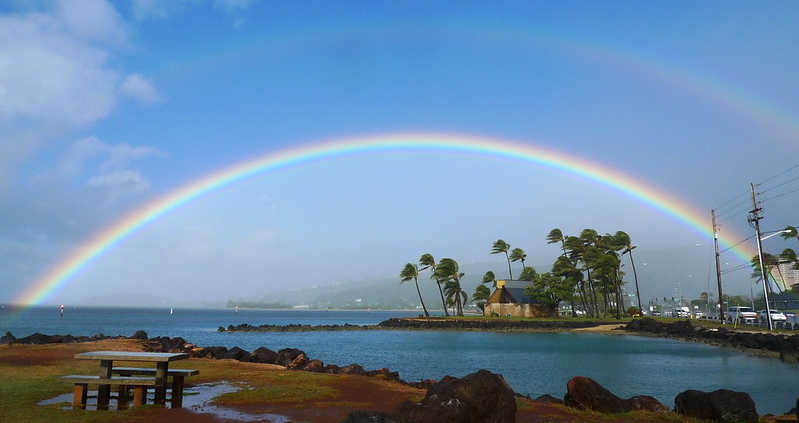 Before becoming the 50th United State, the islands that constitute the archipelago of Hawaii were first populated by South Pacific voyagers. These voyagers respected the land and sea for their agricultural and aquacultural benefits and eventually settled in the archipelago. In 1795, King Kamehameha united the various chiefdoms, and by 1810, the archipelago had become the Kingdom of Hawaii. In 1824, King Kamehameha II visited London in an effort to gain recognition for Hawaii as a nation-state, and in 1874, King Kalākaua became the first foreign leader to attend a state dinner at the White House.
By then, missionaries had also migrated to Hawaii and integrated into the government as the Reform Party. To gain control of Hawaii, the Reform Party forced King Kalākaua to sign the Bayonet Constitution, which shifted power from Native Hawaiians to landowners from the United States, Britain and Germany. The Kingdom of Hawaii ended in 1893 when wealthy businessmen who formed the Committee of Safety overthrew the government with the support of the U.S. Navy. The Committee of Safety then petitioned the United States for annexation, and Hawaii became a United States territory in 1898 and a state in 1959.
Present-Day Migration to Hawaii
Research conducted by the University of Hawaii revealed that in 2023, 80% of migrants to Hawaii were from other U.S. states. However, it also found that long-term residents are moving away, with about 58,000 residents leavingHawaii in 2023. Additionally, data from 2010 to 2023 show an increase in net migration to Hawaii that began in 2020 and reached its peak in 2021. Analysts attribute this surge to residents from other states taking advantage of remote work during the COVID-19 pandemic.
Beyond migrants from the U.S. mainland, there is also a significant population of Asian and Hispanic residents. According to 2024 U.S. Census data for Hawaii, 43.5% of the population identified as white, 57.6% as Asian, 10.2% as Hispanic and 27.4% as Native Hawaiian. Hawaii Magazine reports that Asian immigrants from Japan, China, Korea and the Philippines arrived in the 1850s as laborers contracted by American and English sugar plantation owners. After completing their contracts, many remained in Hawaii to raise their families and provide opportunities for their children.
The Impact on the Native Hawaiian Population
When Hawaii became a United States territory, Native Hawaiians experienced denationalization through loss of land, military occupation, Christianization, assimilation and marginalization. In 1896, the native Hawaiian language was banned, resulting in many Native Hawaiians primarily speaking English. Denationalization also included the Americanization of schoolchildren, and those who did not conform were often directed into labor after grade school instead of continuing their education.
Currently, Native Hawaiians are a minority in Hawaii and experience lower socioeconomic status and higher education attainment rates compared to other groups. Migration from the U.S. mainland has contributed to rising living costs, and some Native Hawaiians have relocated to the mainland as housing prices increased. Increased migration has been linked to higher prices for goods and real estate, making affordable housing more difficult to obtain.
Ongoing Efforts
In 2023, Hawaii experienced wildfires on Maui. Gov. John Green announced that he would not allow U.S. mainland buyers to make predatory offers to purchase land from local residents affected by the fires. The governor and the state attorney general placed a moratorium prohibiting the sale of properties damaged or destroyed by the wildfires.
In the aftermath of the wildfires, Bill 9 was introduced and signed into law in December 2025. Bill 9 phases out certain transient vacation rentals and returns apartment-zoned land to local residents. According to county data, 94% of units affected by Bill 9 are owned by non-Maui residents, and many do not reside in Hawaii. The law does not end tourism but aims to address housing availability for local residents. Rental units will be reclassified under hotel zoning.
Additionally, the Office of Hawaiian Affairs (OHA) was established in 1978 to advocate for Native Hawaiians. OHA works to support the preservation of Native Hawaiian land and culture, promote economic sufficiency and expand access to education and health care. The organization supports initiatives that address health, affordable housing, culture-based education and financial empowerment.
Looking Ahead
While economic pressures and migration to Hawaii continue to shape the country’s future, recent policy efforts and longstanding institutions such as the Office of Hawaiian Affairs demonstrate ongoing work to address housing access, cultural preservation and economic equity. As state leaders balance tourism, development and community needs, these initiatives reflect steps toward protecting Native Hawaiian communities while supporting sustainable growth across the islands.
– Thirza List
Thirza is based in the United States and focuses on Politics for The Borgen Project.
Photo: Flickr
