Maternal Health in Somalia
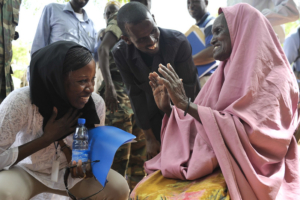 Located on Africa’s easternmost coast, Somalia is among the least-developed countries listed in the 2012 Human Development Index. The country suffers from poverty, internal conflict, human rights violations, environmental degradation and a broken healthcare system. Under these conditions, health is compromised. So far, maternal health in Somalia has been the most vulnerable.
The fate of pregnant women and mothers is particularly precarious in Somalia, as one in 12 women die due to pregnancy-related causes. In 2015, Somalia’s maternal mortality rate was 732 deaths per 100,000 live births, making it the third-highest maternal mortality rate in the world.
Access to maternal health services and antenatal care coverage remain low. Only about 26 percent of Somalis have antenatal care coverage, and the number of necessary emergency care facilities for obstetrics is 0.8 per 500,00 people. This means the number of facilities is 4.2 facilities short of the international standard of five facilities per 500,000 people.
Pregnancy or childbirth-related complications such as hemorrhage, obstructed labor, infection, high blood pressures and unsafe abortion are the main contributors to maternal morbidity and mortality in developing countries.
Although levels of maternal mortality remain unacceptably high, some efforts to improve maternal health in Somalia have succeeded. There has been a gradual and continuous decline in maternal mortality since 1990. The number of maternal deaths per 100,000 live births in Somalia decreased from 1,210 in 1990 to 732 in 2015.
The United Nations Population Fund’s (UNFPA) methods to improve coverage and health service delivery for emergency obstetric care in Somalia were recently implemented in June of 2017.
“The lives of many Somali mothers are cut short as a result of prolonged labour due to lack of access to life saving services. Many others develop complications such as obstetric fistula,” said UNFPA Somalia’s Dr. Layla Mohammed Hashi. “UNFPA is working with partners and government to ensure that we provide Comprehensive Emergency Obstetric and Newborn Care (CEmONC) services to women that need the care.”
UNFPA has joined the Somaliland Nursing and Midwifery Association (SLNMA) and the Borama Regional Hospital to help over 130,000 pregnant women requiring emergency maternal health services in the Borama and Awdal regions.
The UNFPA’s efforts complement projects that provide health services for expectant mothers. One such example is maternity waiting homes which offer women care and medical supervision at every stage of their pregnancy. In 2013, 34 maternity waiting homes had been established in Somalia and by 2015, nearly 17,000 women had delivered in these residential facilities. An additional 1,300 were transported to facilities with the adequate infrastructure and clinical capacity to care for women with pregnancy and childbirth complications.
The need for improved obstetric care services and reproductive health interventions as a means for improving female health outcomes continues to be recognized as a priority in Somalia. It will be important to evaluate changes in service utilization and morbidity and mortality ratios, as further investments are made in the development and implementation of interventions addressing maternal health in Somalia.
– Gabrielle Doran
Photo: Flickr
