Efforts to Improve Maternal and Child Health in Haiti
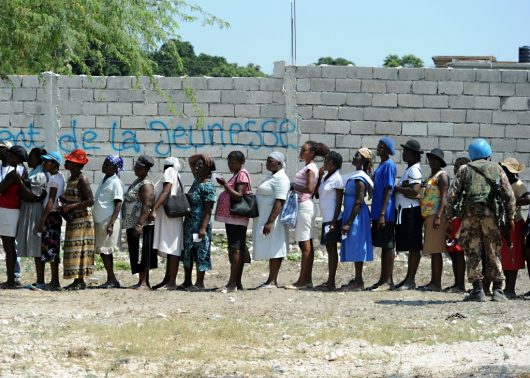 Since the earthquake that shook the small country of Haiti in 2010, minimal research has been done that concerns maternal and child health in Haiti. Haiti has the highest infant and maternal mortality rate in the western hemisphere, with the infant mortality rate at 48.2 per 1,000 lives births and the maternal mortality rate at 359 per 10,000 live births. Only 34.5 percent of women in Haiti use any form of contraceptive.
Crushing poverty, poor health infrastructure and frequent natural disasters are some of the causes of the poor situation for maternal and child health in Haiti. Many people are still displaced from the 2010 earthquake. Women have a one in 80 chance of dying due to pregnancy and childbirth, and about 50 percent of the population has no access to basic health services at all.
The first study conducted by the NIH after the earthquake that looked at maternal and child health in Haiti and includes opinions of Haitian women and healthcare workers (HCWs) was conducted in 2015. This study found that Haiti was staffed with only 2.8 HCWs per 1,000 inhabitants, and only 1.8 nurses and one physician per 10,000 inhabitants.
The study outlined six major strategies for improving maternal and child health in Haiti:
- Create a nurse-midwife program offering post-graduate certification for nurses.
- Develop and implement maternal and child health training that focuses on morbidity and mortality prevention and is specifically designed for lay birth attendants.
- Implement training for HCWs in obstetric and pediatric complications.
- Develop relationships between lay birth attendants and nurse-midwives to work collaboratively.
- Implement breastfeeding training programs for HCWs and mothers to increase exclusive breastfeeding to decrease infant diarrhea and malnutrition.
- Develop women’s health programs to prevent intimate partner violence and increase condom use to prevent HIV.
The U.N. Population Fund (UNFPA) has been working with the health ministry and other partners on improving these issues on the ground by supporting “smile clinics.” Smile clinics are maternity hospitals and clinics that provide basic but life-saving emergency obstetric and neonatal care. They are among the most active clinics in the country and also offer family planning services, programs to combat gender-based violence and HIV treatment services.
Haiti has seen a 43 percent decrease in maternal mortality since 1990, and infant mortality is falling by three percent annually, but there is still more to be done. Because only 10 percent of midwifery needs are currently being met, UNFPA supported the construction of a new earthquake-resistant National Midwifery School after the previous one was flattened.
UNICEF is another organization working to improve conditions for maternal and child health in Haiti. UNICEF opened a clinic in 2012 in Marigot, a rural area with little access to health services. In addition to Basic Emergency Obstetric Care (BEmOC), the clinic provides training for matrons, traditional Haitian birth attendants who usually do not have any training. Most matrons use traditional childbirth practices that are passed down through generations. Transportation to clinics can be very difficult, and Haitians often trust and prefer local matrons to professionally trained midwives. For this reason, the clinic in Marigot emphasizes training matrons in basic obstetric care.
USAID’s Maternal and Child Survival Program (MCSP) is another agency working to improve maternal and child health in Haiti. Beginning in April 2014, MCSP has been working in Haiti with Ending Preventable Child and Maternal Deaths (EPCMD) and Services de Sante de Qualite pour Haïti-Nord (SSQH-Nord) to provide technical assistance directly to the Ministry of Health in policies, guidelines and protocols in line with global standards.
In the project’s first year, it opened three National Training Centers with 19 staff trained as trainers in Maternal and Newborn Health skills standardization and high-impact interventions. MCSP also mapped and profiled 36 civil society organizations engaged in community health. The project will continue through September 2017.
With efforts such as these, maternal and child health in Haiti is sure to continue improving in the future.
– Phoebe Cohen
Photo: Google
