Who Am I?: The Influence of Mahmoud Darwish on Palestine
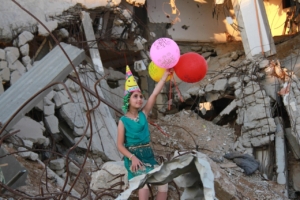 What will I do? What will I do without exile and a long night that stares at the water? Mahmoud Darwish asks in his poem “Who Am I, Without Exile?” The poem, published in 2008 in The Butterfly’s Burden, is a sentiment explored by Darwish throughout much of his work.
The master lyrical poet constantly asks for answers to who he is; however, Mahmoud Darwish never stood alone and never failed to call out to the Palestinian people he wrote for. Though Darwish sadly passed away in 2008, his work remains just as influential for the people of Palestine, who have always been the heart of his work.
The Healing Power of Poetry
Reading and writing poetry offers incredible mental benefits, even going so far as to decrease pain in the sick. In a study conducted in 2016, researchers observed how listening to or reading music and poetry could affect pain, depression and hope within adult cancer patients.
The findings were remarkable; the study directly identified “both music and poetry produced a similar improvement in the pain intensity. The two therapies also affected depression scores and only poetry increased hope scores.” The “hope score” mentioned in the study refers to a measurement of a patient’s optimism, which was solely increased by listening to poetry.
Writing for Palestinians
Born in 1941, Mahmoud Darwish published his first poetry collection at 22, titled “Leaves of Olives.” At this point, he had been put on house arrest and imprisoned by the Israeli government; Darwish’s back-and-forth with the Israeli government began when he was 14. Darwish’s influence on Palestinian voices has been an incredibly valuable tool and continues to be so today.
Being Palestinian himself, Darwish wrote to the people of Palestine, sharing their anxieties, suffering and love for their home. Darwish witnessed the beginning of it when he was a young boy. Born in al-Birwa before it became a part of Israel, Darwish watched the expansion of the Israeli army firsthand. Al Jazeera, an independent news organization operating out of Qatar, explains the unique significance of Darwish’s writing to his Palestinian audience: “For Palestinians, words are often the only weapon available to fight back, finding the power to shape perception.” Poetry’s power is not only one of healing, but one of hope. Darwish’s influence on Palestine reveals that.
Exile, Famine and Tragedy in Gaza
Since Darwish’s sad passing in Houston, Texas, his beloved homeland has become more dangerous as conditions worsen. The Israel-Gaza ceasefire expired in March 2025 and it remains unclear if any new progress has been made in peace talks between Hamas, Israel and the U.S.
Right now, starvation has become an incredibly pressing issue, with the BBC reporting that “almost one in three people in Gaza are going days without eating.” Malnutrition and famine are adding to an already immense body count. However, active humanitarian efforts are taking place across the globe.
Gaza’s Poets Today
This past July, a young Palestinian named Mohammed Moussa had his work posted on the Instagram account gazapoets, in which he writes, “How do you capture starvation in words? Hollow bowls, hollow promises, bellies aching like silent bombs…” Moussa mentions Darwish in another piece of writing, an article, telling the story of Moussa’s literary beginnings. In the same article, the other emerging poets Moussa interviewed named Darwish as one of their favorite poets. Darwish’s influence remains impressive, even among younger Palestinians.
It cannot be downplayed how much of an inspiration Darwish was during his life, even now as conditions continue worsening in Gaza. His name still holds significant power and hope. Darwish’s words remain as pertinent in 2025, still speaking to those struggling beneath war, famine and displacement. Currently, the #mahmouddarwish tag on TikTok contains 20,000 videos. The videos range from celebrating the work and language of the late poet to using his art to bring attention to the humanitarian crisis in Gaza.
– Peyton Worsham
Peyton is based in Jacksonville, FL, USA and focuses on Politics for The Borgen Project.
Photo: Pixabay
