A New Perspective: Exploring Poverty in Russia Through Literature
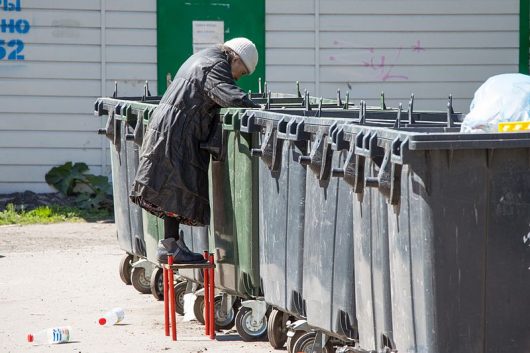
From extravagant ballrooms to bloody battlefields, the world of Russian literature tells a tale about one of the greatest nations on earth. But away from the elegance and high life looms another world full of poverty, not ignored by the great artists who witnessed it. In fact, many of the great Russian authors chose to write about poverty in Russia.
Fyodor Dostoevsky
The great novelist Fyodor Dostoevsky, one of the few Russian authors to be born into a middle-class family and who lived in poverty himself for a number of years, highlighted poverty in Russia throughout his career. In his book, “Crime and Punishment,” Dostoevsky tells a story about an impoverished student who murders a pawnbroker for money. The reader soon learns, however, that money was not his whole motivation, nor did it benefit the main character.
In the tome, Dostoevsky writes, “In poverty, you may still retain your innate nobility of soul, but in beggary — never — no one. For beggary, a man is not chased out of human society with a stick, he is swept out with a broom, so as to make it as humiliating as possible; and quite right, too, forasmuch as in beggary as I am ready to be the first to humiliate myself.”
As the story goes on, Dostoevsky fills the reader in with details about the main character’s impoverished life. Dostoevsky’s solution to poverty in Russia boils down to his religious beliefs. He thought that one should be charitable, in a Christian manner, to help out those in need.
Nikolai Chernyshevsky
Dostoevsky’s contemporary and rival, Nikolai Chernyshevsky, had a much different view of the situation in Russia. Chernyshevsky, a radical communist and revolutionary, believed that instating a communist system of government would free the Russian people from the grasp of impoverishment. Chernyshevsky’s magnum opus, “What Is to Be Done?,” went on to influence a number of communist revolutionaries, including Vladimir Lenin.
Dostoevsky would battle communist ideals throughout his life, but most notably in his book, “Notes From Underground,” which was a response to, “What Is to Be Done?”. In rebuttal to Chernyshevsky’s proposals, Dostoevsky writes, “But man has such a predilection for systems and abstract deductions that he is ready to distort the truth intentionally, he is ready to deny the evidence of his senses only to justify his logic.”
“Notes From Underground” was largely an argument against Chernyshevsky’s ideas, but this argument is a great example of the ideas that battled each other in nineteenth-century Russia. Many saw communism as a way of repairing the broken state of the Russian people, particularly the ones living in poverty. Others thought reform in farming would bring prosperity to the Russian lower-class.
From Turgenev to Tolstoy, Russian authors in the nineteenth century all battled with the economic problems of the lower-class. Some ignored them, some wrote about them, but it was clear that literature had an impact on poverty in Russian. In events leading up to the communist revolution in 1917, revolutionaries would praise or criticize certain authors for their views on the economic situation in Russian; undoubtedly, writers had a great impact on the problem of poverty in Russia.
– Tristan Gaebler
Photo: Wikimedia Commons
