Indigenous Education in Brazil
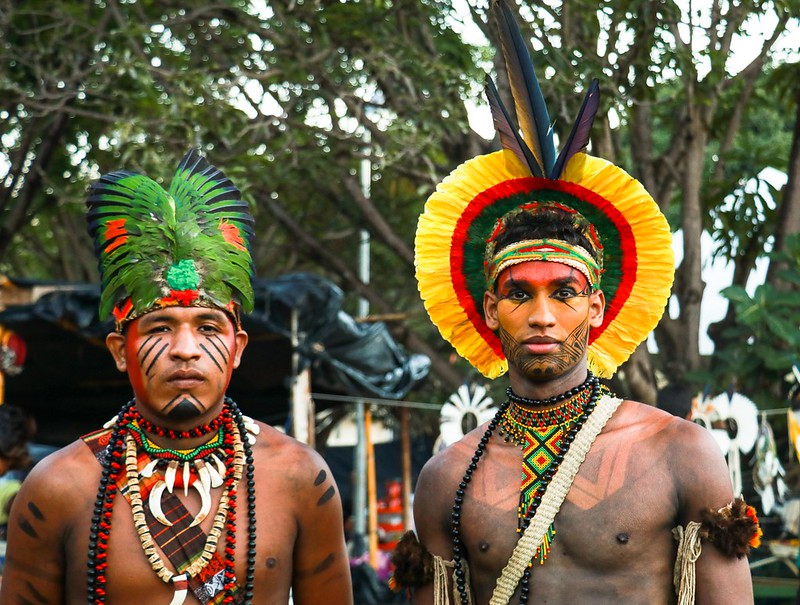 Indigenous people make up just 8% of the population in Latin America, but make up 14% of the poor and more than 17% of those living on less than $2.50 a day in the region. Education is an important tool to address this problem, but indigenous people across the region have a lower school attendance rate than their non-indigenous counterparts. They have a lower attendance rate in both primary school and in college/university. In 2019, Indigenous people’s enrollment in college/university was 32 points lower than that of non-indigenous people in the region.
This difference is bigger in countries such as Brazil, which have small, diverse, and scattered indigenous populations. As of 2010, 83% of indigenous children ages 6 to 11 attended school compared to 97% of non-indigenous children in that age range. For children between the ages of 12 to 18, 74% of indigenous children attended school compared to 84% of non-indigenous children, according to the World Bank. Indigenous children living in urban areas are more likely to be attending school than indigenous children living in rural areas. Further, indigenous women tend to have attended fewer years of school than indigenous men.
Indigenous Education in Brazil
Indigenous education in Brazil has gone through several phases. The first phase was pre-colonial. The second phase started in the 16th century when the Portuguese colonized the land and people. The goal of the phase was to assimilate indigenous people and impose on them Western values and Christianity. Phase three started in the late 18th century. Its main goal was to integrate indigenous people into society as laborers. Phase four started in the 1970s as indigenous people mobilized for their rights.
Brazil approved a new constitution in 1988 that recognized indigenous identities and the right they have to maintain them, and that the Brazilian State must protect the cultural manifestations of indigenous communities. It also gave indigenous people the right to intercultural, specific, differentiated, and bilingual school education.
Today, there are about 305 different Indigenous peoples living in Brazil, making up around 1.7 million people, or 0.8% of Brazil’s population. About half of them live outside of the Amazon rainforest. There are more than 150 languages in Brazil, and almost all Brazilians speak Portuguese. White people have completed two and a half years more of education than indigenous Brazilians. The language of instruction in primary public schools is usually Brazilian Portuguese, although schools in some regions also use indigenous languages. Although indigenous people have a constitutional right to use their own languages and learning methods in schools, only a few states and cities have incorporated native languages.
This is important not only because it is a right but also because in the region as a whole, the more years of education an indigenous person has, the less likely they are to speak their native language, the World Bank reports.
Indigenous Schools in Brazil
Indigenous schools are educational institutions located in indigenous villages and territories, run by indigenous people and guided by their customs and traditions. The Federal Ministry of Education offers indigenous school education, which differs as it is basic education that teaches both non-indigenous and indigenous knowledge. Indigenous schools have four main principles, according to a University of Florence article. They exclusively serve indigenous communities, teaching is in their native language, it is located on indigenous land, and they organize themselves and what they teach.
As of 2020, there are 3,359 indigenous schools in Brazil, with most students (166,546) being in the elementary level, according to a University of Florence article. Indigenous schools provide a type of education that mixes formal education standards with indigenous culture and knowledge, allowing indigenous children to both navigate Brazilian society and stay close to their history and community.
Affirmative Action in Brazil
In 2003, a university in Brazil implemented affirmative action for the first time. By 2011, 115 different public universities had enacted some kind of affirmative action policies. In 2012, the Supreme Court of Brazil ruled that affirmative action policies were constitutional. That same year, the Brazilian Congress passed a law requiring all federal higher education institutions in the country to implement affirmative action policies. The law requires public universities to reserve half of their places for students from public schools, ensuring an equal proportion for mixed-race, Black, and indigenous students. This had a large effect on indigenous education in Brazil.
Affirmative action has been crucial for indigenous students. It has helped increase the number of indigenous people going to university. Something especially important given that historically, universities in Brazil have underrepresented indigenous people. Students who enter university through affirmative action have educational results very similar to students who do not, according to Federal University of Rio de Janeiro (UFRJ) article. A case study of one university found that as of 2018, the dropout rate among students who entered through affirmative action was 38.1% compared to 31.8% of students who entered through general admission.
The Future of Indigenous Education in Brazil
Brazil made significant progress in indigenous education, but further improvements are still necessary. Many indigenous schools lack quality teaching equipment and underfunded infrastructure. There is also a lack of quality training for indigenous teachers. Especially for indigenous women, as they are disproportionately unrepresented among the number of indigenous teachers.
As for higher education, affirmative action has helped indigenous people get into university. Once universities admit indigenous students, they often underserve them. There is a need for specialized mental health services, more awareness about indigenous students among administrators, and a diversification of what is taught to include indigenous perspectives, according to a UFRJ article. There is also a need for more indigenous professors. Further, because many indigenous students come from lower-income families, there is a need for financial aid, especially given that lack of sufficient finances is one of the main reasons students drop out.
– Axtin Bullock
Axtin is based in Georgetown MA, USA and focuses on Technology and Global Health for The Borgen Project.
Photo: Flickr
