Human Rights in North Korea: 4 Pressing Problems
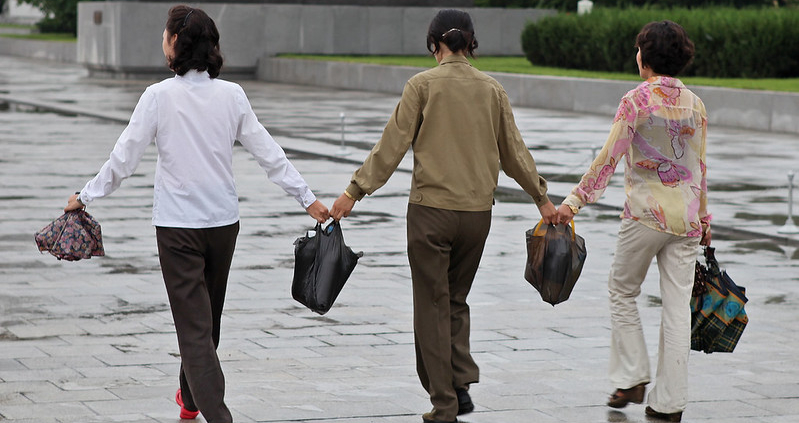 North Korea is one of the most surveilled countries in the world and has carried out human rights abuses and imposed severe punishments with limited freedoms. According to Freedom House, North Korea scored 3 out of 100 on the Global Freedom Score, meaning the country is categorized as “not free.” Among the indicators, except for Personal Autonomy and Individual Rights, all other indicators scored 0 out of 4. In addition, Reporters Without Borders (RSF) indicates that North Korea ranks second to last out of 180 countries in 2025. In other words, the Democratic People’s Republic of Korea (DPRK) strictly prohibits independent journalism and controls information, including its production and distribution.
4 Pressing Problems
- Collapsed Economic System: The Informal Market. A researcher who completed a doctoral degree at the University of North Korean Studies told The Borgen Project in an interview that after the Arduous March, marketization emerged illegally, although the government consistently denied its existence. However, marketization has become an undeniable reality. According to the researcher, Kim Jong Un appears to be attempting to bring markets under state control by reinforcing trade through the public market system rather than the informal markets known as Jangmadang. In the early stages, the government introduced the concept of “8.3-earners” and initially turned a blind eye to private income generation. Recently, it has sought to increase wages in state-owned enterprises to narrow the gap between official wages and market prices, the researcher added. However, he also noted that the government used the market as a tool to control the population and stabilize the regime, which has contributed to wage inequality and distorted market conditions.
- Problems Caused by the Lack of Medical Systems and Services. North Koreans commonly sought treatment from private doctors rather than public doctors. Many patients waited outside the homes of doctors who were known for their ability to treat diseases. Public hospitals and clinics often failed to provide proper treatment unless patients offered bribes. Although private doctors lacked modern medical facilities, they often had sufficient skills to provide treatment and direct access to medications. As a result, many people chose to see private doctors in order to receive proper treatment and medications. In addition, the use of drugs such as opium and methamphetamine became widespread. Many residents reportedly died as a result of opium abuse. Despite serious side effects, some continued using it. It was sometimes regarded as a panacea. According to Daily NK, some North Koreans believed that regular opium injections could prevent heart attacks and strokes and used them as a substitute for medicine. Methamphetamine and opium were illegal, but officials often overlooked their use because the DPRK could not provide adequate medical care and medicine to people living in poverty. Beyond this, North Koreans who lacked sufficient medicine relied on folk remedies during COVID-19 due to shortages of vaccines and antiviral pills. North Korean state media reported that patients drank boiled honeysuckle water and used herbal medicines to address COVID-19 symptoms. Some folk remedies, such as willow bark, known for aspirin-like properties to treat inflammation and fever, were used. However, these methods were not a substitute for modern treatment for COVID-19. Furthermore, liver cancer treatment was limited due to the lack of modern surgical facilities. Reports indicate that some relied on brown rice tea and herbal tea made from burdock roots. These alternative treatments became widespread due to chronic deficiencies in the medical system and prolonged border closures following the pandemic.
- Human Rights Concerns. The North Korean government enacted three laws: the Youth Education Guarantee Act, the Pyongyang Cultural Language Protection Act and the Reactionary Ideology and Culture Rejection Act. These laws aim to restrict cultural influence from South Korea. Authorities have reportedly imposed severe penalties, including death sentences, for distributing South Korean media content. For example, according to El País, authorities publicly executed a 22-year-old man after charging him with watching and distributing 70 songs and three South Korean television series. Freedom of expression and access to information have regressed due to punishments imposed for sharing foreign media. In response, the United Nations (UN) adopted resolutions in 2024 condemning the human rights situation in North Korea. The resolutions addressed severe and pervasive restrictions on fundamental freedoms. During the 80th session of the United Nations General Assembly (UNGA) Third Committee, UNGA adopted a resolution on the situation of human rights in the DPRK, co-sponsored by 61 countries.
- Controlled Information and Misinformation. The government has used misinformation campaigns for decades as part of its propaganda strategy. Reports suggest these efforts aim to create hostility toward adversaries and influence public opinion. North Korean misinformation has also affected international relations, contributing to tension and confusion. During COVID-19, the government claimed that South Korea spread the virus by sending infected objects across the border, according to Voice of America (VOA). Although COVID-19 caused deaths and suffering beginning in 2020, the government reported zero cases to the World Health Organization (WHO). It officially acknowledged an outbreak in May 2022. Many humanitarian groups attempted to deliver assistance in North Korea but faced significant challenges due to restrictions on international humanitarian aid. According to VOA, the DPRK did not allow humanitarian aid workers into the country, and Kim Jong Un referred to humanitarian aid as a “poison pill.” Although many organizations attempted to provide assistance, government control and lack of transparency limited the distribution of aid. Continued monitoring of humanitarian and human rights conditions remains important.
Looking Ahead
While significant challenges remain, continued international monitoring, humanitarian engagement and diplomatic dialogue offer potential pathways toward improved human rights in North Korea. Sustained attention to human rights, health care access and transparency can help lay the groundwork for gradual progress and greater protection of fundamental freedoms.
– Yunjaelee
Yunjaelee is based in Vancouver, Canada and focuses on Global Health and Politics for The Borgen Project.
Photo: Flickr
