Helena Ndume: How a Namibian Doctor Helped Blind People See
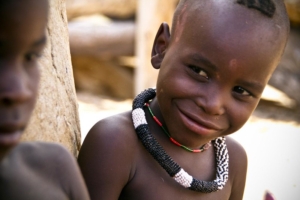 For thousands of impoverished Namibians, Helena Ndume is a miracle worker. In her 30 years as an ophthalmologist, she has performed more than 35,000 eye surgeries, giving people back their sight and livelihoods. But despite her worldwide acclaim, Helena Ndume was once living in a situation not unlike those of her patients: poverty-stricken, disadvantaged and rife with inequalities. However, instead of giving up, she persevered and changed the lives of thousands across the globe.
Early Life
Helena Ndume was born in Namibia in 1960. During this time, Namibia, like many other South African countries, was divided by apartheid, a system of racial segregation that resulted in mass discrimination toward citizens of color. Even from a young age, Ndume could not stay quiet about the injustices committed against her people. She participated in anti-colonial rallies in junior high. Eventually, she decided to leave the country when she was 15 years old.
The journey before her was not for the faint of heart. To make it to the refugee camp in Zambia, she had to first cross Angola on foot, which was in the midst of a violent civil war. Her determination and grit shone through as she successfully made the voyage. She then took advantage of her Zambian education to earn a prestigious scholarship to the University of Leipzig in Germany. With such a prestigious education, Helena Ndume could have gone anywhere in the world. However, she chose to return to her home country of Namibia to fight the economic and social turmoil there.
The Namibian Struggle
By the time Ndume returned home in 1989, the nation was undergoing rapid social and political change. Namibia had finally gained independence after its 50-year stint as a territory of South Africa and this move allowed it to break free of apartheid rule. Despite this big win, Namibians were in no position to celebrate.
The country had recently suffered a large drought, which weakened the already-lacking agricultural sector. Furthermore, even though apartheid was over, Black citizens still struggled to take their place in the workforce, which heavily advantaged the wealthy White upper class by excluding people of color from taking high-paying jobs.
As a result of a lack of opportunities and continued inequality, more than half of the Namibian population experienced extreme poverty, which manifested itself as starvation and disease outbreaks. HIV/AIDS and polio cases hit a record high during the mid-’90s, as per the Centers for Disease Control and Prevention. Both illnesses can weaken the immune system and pave the way for sight-stealing diseases, such as cytomegalovirus (CMV) Retinitis and trachoma. Without adequate health care or a cure, thousands of Namibians were left blind.
A Global Hero
This is why, Ndume says, she decided to work with Surgical Eye Expeditions (SEE) International. SEE International is a nonprofit organization that sends experienced doctors and life-changing vision technology to underserved communities. Since starting in 1995, Ndume has served at hundreds of free eye clinics to treat preventable blindness.
Blindness is often seen as a crippling affliction in many parts of the world. However, its impact is especially severe in developing countries like Namibia because of the widespread lack of health care, which affects as much as 70% of the population in some areas.
Ndume believes that blindness is closely associated with severe poverty due to its far-reaching consequences on one’s lifestyle. From causing a parent to lose their job to forcing a child to drop out of school, blindness has severe repercussions for entire families and communities.
Envisioning a Brighter Future
One of the most inspiring things about Ndume’s work is her undeniable passion for the people she serves. Ndume has stated that her patients’ joyful expressions “fuel and recharge” her to “continue serving not only the Namibian people but all of humanity.” Such sentiments demonstrate Ndume’s undeniable passion for helping others and becoming a positive change source in her community.
Her dedication to serving humanity has not gone unnoticed. In 2015, she was awarded the Nelson Rolihlahla Mandela Prize by the United Nations (U.N.), recognizing her unwavering commitment and transformative work in global health. Receiving the award was a full-circle moment for Ndume, who undoubtedly looked up to Mandela’s anti-apartheid activism as a young teen. In addition to this prize, Ndume was presented with the Lions Clubs International Humanitarian Award and the Forbes Women Africa Social Impact Award in 2022.
Looking Ahead
Although blindness is still prevalent in Namibia, Ndume’s work has given citizens a reason to hope for a brighter future. Since 1993, the poverty rate has been halved and the GDP has grown substantially, according to the World Bank. The Gini Index, which measures the income equality in a nation, is still disproportionately high at 59.1% as of 2015, but shows a promising downward trend from the previous decade.
These statistics prove that economic growth is on the horizon for Namibia, as well as greater equality and health care. Ndume’s selflessness and devotion to the betterment of her country define her as a role model and inspiration for future generations of doctors, innovators and leaders worldwide. Most importantly, her incredible story shows that anyone can make a difference in their community, no matter where they come from.
– Grace Gonzalez
Grace is based in Oakton, VA, USA and focuses on Global Health for The Borgen Project.
Photo: Flickr
