Global Telehealth Network: Increasing Health Care Access
 Africa is home to more than 1.5 billion individuals, with approximately 1.29 billion residing in sub-Saharan Africa. While Africa’s population is gradually moving toward more urbanized regions, 56% of those in sub-Saharan Africa live in rural communities. In general, Africans face many struggles with health care, including a lack of infrastructure, facilities, personnel and support.
Health Care Challenges
More than 600 million individuals in Africa lack access to health care services. While Africa contains 16% of the world’s population and 23% of the global disease burden, it only receives 1% of global health expenditures. Africa has the highest disease burden compared to the other continents. Yet, it also has the lowest ratio of health workers to the population.
It carries nearly a quarter of the disease burden on a global scale, yet only holds around 3% of health care workers. According to the World Health Organization (WHO), Africa has a mere 2.6 doctors per 10,000 people, compared to 37.6 doctors per 10,000 in Europe. In addition, an estimated deficit of 11.1 million health care employees is projected by 2030, with most of the disparity affecting Africa.
Combined with the excessive burden of disease outbreaks and largely understaffed health care facilities, Africa’s health care systems are overwhelmed and unable to serve its population equitably. Those living in sub-Saharan Africa are notably disadvantaged, with the region having the lowest ratings in well-being and satisfaction with health care services.
With most of Africa’s population residing in rural areas, their access to health care services is even more limited. In response, health organizations have partnered with local governments and introduced telemedicine services.
Telemedicine Services in Africa
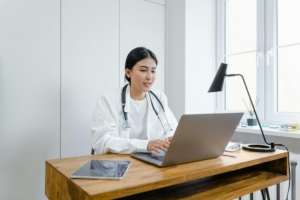
Telemedicine involves using apps designed for personal communication devices like tablets and phones to deliver various health care services. Some telemedicine services offer telephonic or face-to-face communication with health care workers, SMS for treatment support or questions and online platforms to view medical records or schedule health consultations. Many companies throughout Africa and beyond are investing and creating these online platforms to better serve their communities, especially those in rural areas with limited access to health care resources.
While telemedicine does support underserved populations, this alone is insufficient to address health care concerns to the fullest extent. A key component of improving the health of underserved populations is prevention. Preventive measures are linked to lower rates of illness and mortality in cancer, chronic disease, mental health, vision, oral health and immunizations. With the combination of telemedicine and effective preventative initiatives, there is hope for improving the health of vulnerable communities.
The Global Telehealth Network
One organization that emphasizes support through telemedicine and prevention is the nonprofit organization, Global Telehealth Network (GTN). GTN was established to improve health care disparities in rural and underserved communities by assisting in health promotion and disease prevention. Volunteer doctors and psychologists for GTN help health care workers in rural areas who face complicated health issues.
The Borgen Project spoke to the President and Chief Medical Officer at GTN, Jack Higgins, about the organization’s telemedicine pilot programs and other initiatives for helping those in rural areas with a lack of access to health care resources.
Higgins said, “Somebody’s health depends as much on where they live, their family history or their cholesterol levels. Basically, by zip code, you can almost predict the average life span for people, because of the inequalities in our society and in Africa, it’s more so because the poverty is even worse. The problems with clean water are even worse and other environmental concerns and sometimes political concerns.”
Access to Medical Professionals
Considering the shortage of medical professionals, especially in rural areas, GTN has specifically focused on those regions. Higgins said, “Uganda and Kenya both have decent health systems in the cities; it’s out in the rural areas where they have almost nothing. And that’s our biggest concentration, connecting them to the people in the cities whenever possible, because they can get consultations without having to go for 10 hours or whatever to see a doctor.” Physicians can treat more patients effectively and efficiently by allowing faster health care services.
Higgins also discussed GTN’s prevention efforts in combination with telemedicine. Higgins said, “It turned out we could do this online in a way that is totally feasible, in that the cost could be much less than it would be if you had to hire a person who’s going to sit there somewhere all the time, whether their patients come in or not. So the hope is that by making preventive care really available to people, it’ll make it easier for them.”
Building Community Resources for Sustainable Health
Despite its efforts in prevention via telemedicine services, Higgins explained that these efforts will grow more effective by providing community resources: “If the kids are drinking dirty water and they’re starving, they’re malnourished, then you’re not going to go very far in terms of really helping that community. So we started partnering with other organizations that have other skills and now we’re developing these community resource centers that can offer a lot of different things.”
GTN has begun building coalitions with rotary clubs and nonprofit organizations to provide services and resources to underserved populations. These include WASH stations, libraries, Climate-smart agriculture training, solar power projects and increased internet access. However, these efforts cannot be fully implemented without proper funding.
Higgins said, “There won’t be enough money coming from the governments to do the job. A combination of philanthropy and NGOs, nonprofits like us can hopefully give them the assistance they need to create sustainable and high-quality health care systems and that’s what we’re about.”
Conclusion
The work of Global Telehealth Network shows that expanding telemedicine alongside community resources can bridge rural health care gaps. However, a lasting impact will depend on strong partnerships and sustainable funding.
– Grace Johnson
Grace is based in Chicago, IL, USA and focuses on Technology and Global Health for The Borgen Project.
Photo: Pexels
