Foreign Aid to Georgia Pre New Bill
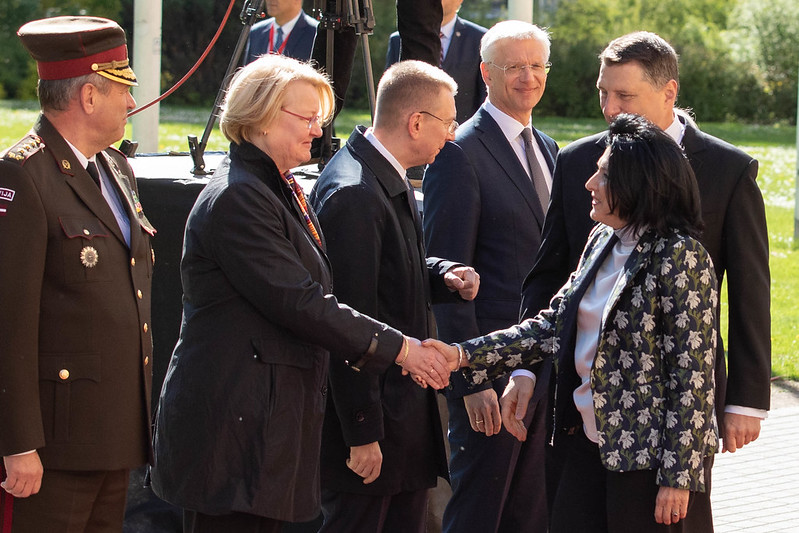 Georgia has received a total of $5.3 billion in ongoing foreign aid which includes investment projects, grants, budget support and technical assistance. Its major donors include the European Investment Bank (EIB), Asian Development Bank (ADB), World Bank, EU, International Finance Corporation (IFC) and European Bank for Reconstruction and Development (EBRD). Germany and the United States of America remain the top two foreign countries to provide financial assistance to Georgia.
Georgia’s International Relations
The United States (U.S.) supports Georgia due to its strategic significance as a young democracy striving for deeper integration into the Euro-Atlantic community. Georgia’s location at a crucial international crossroads and its commitment to mutual security objectives further underscore the importance of this partnership. The U.S. aims to help Georgia enhance its resilience and prosperity, fostering a stronger and more resilient democracy in the region. The U.S. President Joe Biden’s Administration’s fiscal year 2025 budget proposal for the Department of State and USAID aims to disburse $80 million in foreign aid to Georgia under Assistance to Europe, Eurasia and Central Asia.
The World Bank remains committed to Georgia’s progress and endeavours to continue supporting its journey towards a more competitive, environmentally sustainable, digitally advanced and business-friendly economy that creates opportunities for its citizens. The World Bank has extended substantial foreign aid to Georgia totalling $3.88 billion. This support, including funds from the International Development Association (IDA), has been aiming to support 86 projects covering various sectors of the economy.
EU and Georgia
The EU and Georgia have maintained ties for more than 25 years, and currently, their relationship is more robust than ever before. Surveys indicate that as much as 90% of Georgia’s 3.7 million people favour EU accession; and, in return, the EU aids Georgia in unlocking its economic potential through international collaboration. This involves providing assistance to align with EU legislative standards and facilitating integration into broader economic frameworks.
EU is Georgia’s major trading partner. Its exports to Georgia amounted to €3.23 billion and it imported goods worth €1.026 billion in 2022. In the coming years, the EU hopes to invest in several flagship projects in Georgia to foster economic development and improve quality of life. These projects include establishing reliable internet through a Black Sea data cable and electricity cable, enhancing connectivity with ferry connections in the Black Sea and supporting 80,000 small and medium-sized enterprises (SMEs). These initiatives collectively aim to boost economic growth, enhance connectivity, support local businesses and improve living standards across the country.
Georgia’s Poverty Rate
According to the World Bank, Georgia’s poverty rate declined from 70.6% in 2010 to 47.7% in 2022. Furthermore, the job market showed robust improvement, with unemployment dropping from 20.6% in 2021 to a historic low of 16.4% in 2023. In fact, in 2022, the Government of Georgia officially joined the World Bank Group’s International Development Association (IDA) as a donor. And finally, with the West granting Georgia candidate status, the EU accession process could offer opportunities to accelerate reforms and foster prosperity.
European Foreign Aid to Georgia
USAID’s ongoing initiatives in Georgia prioritize several key areas, including job creation and enhancing educational and professional training to equip Georgians with the skills needed for a modern economy. These initiatives focus on education and professional training, increasing employability and income potential, ultimately lifting individuals out of poverty.
In recent years, foreign aid to Georgia has included significant contributions such as Germany’s €310 million COVID-19 relief funding in 2020 and a combined investment of €641 million from AFD (France) and KfW (Germany) in 2023, with E.U. grants amounting to €8.5 million for the “Green Transition for Georgia” project.
Additionally, a substantial investment of €6.5 million from the European Union and €1 million from the German Federal Ministry for Economic Cooperation and Development has been allocated to explore untapped social and economic potentials in regions such as Guria, Imereti, Kakheti and Racha-Lechkhumi/Kvemo Svaneti. This support for green energy projects not only reduces dependency on costly energy imports but also creates new job opportunities in renewable energy sectors, mitigating environmental degradation and contributing to sustainable poverty reduction.
The Council of the European Union has announced the adoption of a €30 million assistance measure for Georgia under the European Peace Facility (EPF). This measure aims to support “the Georgian Defence Forces in enhancing national security, stability and resilience within the defence sector.” Enhanced national security could create a stable environment crucial for economic growth, attracting foreign investment and fostering local business development, which generates employment.
Georgia’s Recent “Foreign Agents” Bill
A major recent development by the Georgian government has questioned the continuation of foreign aid. On Tuesday, May 14, 2024, Georgian lawmakers approved the legislation, with 84 members of the country’s 150-member law-making body voting in favor. This new bill requires non-governmental organizations, receiving more than 20% of their funding from abroad, to register as “organizations serving the interests of a foreign power” or face fines. Supporters argue that the new bill aims to maintain foreign investment transparency and avoid foreign influence on Georgian politics. They also say the new bill is based on a similar U.S. law — the Foreign Agents Registration Act — which dates back to 1938.
The people of Georgia understand this to be a “Kremlin-style” law as similar legislation passed by Moscow in 2012 has been used to crack down on dissenters in the country. Due to Georgia’s history with Russia, there are multiple protests in the streets of Georgia’s capital, Tbilisi, against the new bill implementation.
Georgia was recently given official candidate status for the EU membership in 2023 and the new bill does not align with European values of free speech. With the passing of this bill, the Georgian government is getting further away from accessing the EU which can be a “turning point” for its relations with the two countries including funding to be possibly pulled off by the U.S.
According to The Guardian, the Georgian government is hinting at the possibility of dropping the bill in return for revised support from the States or “a package of economic and security support from Washington.”
– Sakshi Pillai
Sakshi is based in Ontario, Canada and focuses on Politics and World News for The Borgen Project.
Photo: Flickr
