Financial Inclusion Through Technology
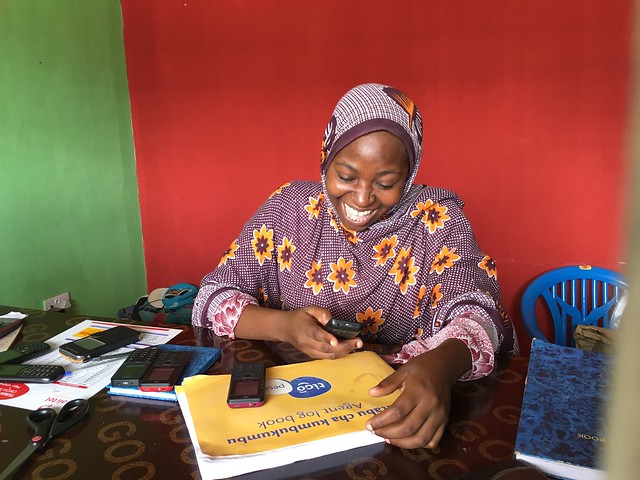 In 2018, 1.7 billion adults worldwide, nearly 1 adult out of 3, still live without basic financial transaction accounts.
For the 1.2 billion people who did open financial accounts between 2011 and 2018, the problem is that many do not actively use their account. For example, in India’s initiative of financial inclusion in the early 2010s, nearly 90percent of the 100 million accounts opened are dormant, unused, or closed.
These are some of the daunting statistics that pose key challenges for universal financial inclusion by 2020 set by the World Bank. The goal is clear: getting people to open and maintain financial accounts.
Why Financial Inclusion?
Before discussing the mechanics of reaching universal financial inclusion, particularly for impoverished people in developing countries, why the push for financial inclusion at all?
The World Bank has released several studies that closely link poverty reduction, economic growth, and access to digital or physical financial services. In particular, for developing countries, empowering small farmers, merchants, and villages through financial stability and services can significantly improve their livelihood and economic security.
Additionally, financial inclusion, particularly through less formal means such as through microfinance or rotating savings and credit associations, has a key role in reducing social inequality for rural, poorer populations and women in developing countries.
What Are The Solutions?
Particularly in Southeast Asian countries, such as Indonesia and the Philippines, digital solutions to financial inclusion prove most successful. For example, a financial company in the Philippines, PayMaya, has opened doors to people across the country to allow new, emerging payment methods using QR codes. WeChat pay have partnered with a variety of businesses and mom-and-pop styled stores.
This strategy has worked, in part, due to the prevalence of smartphones in Philippines. The number of mobile phone users in the Philippines reached 74.2 million (out of a population 108.2 million), around 70 percent of the country’s population. PayMaya has also utilized the network of local vendors and merchants in the Philippines, which makes their service convenient and credible to impoverished populations who trust local merchants they have been going to for years.
Success in Indonesia
Indonesia is another success story of digital financial inclusion. For example, by making their G2P programs digital, welfare recipients receive payments directly to their digital accounts, which demonstrates the power that technology can have in reducing transaction costs and increasing convenience for those in need. Indonesia also has the regulatory framework to house a thriving banking industry and network of mobile operators. Indonesia has identified that 119 million adults are still excluded from financial services, but that, 100 million out of the 119 are smartphone users. So, the continued path forward for financial inclusion in Indonesia will be increased digitization of financial services.
What Is The Future of Financial Inclusion?
The examples of Indonesia and the Philippines shed light on broader discussions about financial inclusion from governmental organizations like the World Bank and companies like the International Finance Corporation. The success of Indonesia’s and the Philippines’ financial inclusion depends on lowering regulatory barriers, making financial options attractive and convenient, especially to poorer populations, and establishing strong social networks throughout the country.
Significant Barriers
These are exactly the barriers to reaching the last 1.7 billion excluded people, who are predominantly in developing countries. These populations often do not have enough money to open a bank account, lack the financial literacy to maintain a bank account, or simply do not trust brick and mortar institutions that do not have particular incentives to penetrate rural markets. Less formal means, such as microfinance or rotating savings and credit associations (ROSCAs), are more attractive because these systems pool money between trusted individuals, often friends or family, and allow people to save and borrow smaller amounts of funds that would not be enough to open a bank account.
World Bank Efforts
The World Bank has targeted several categories to develop over the coming years, such as creating a regulatory environment to enable access to transaction accounts, drive government-based solutions and programs for transaction accounts, focus on the disadvantaged, such as rural families and women, and digitize payments. The World Bank has identified 25 priority countries where nearly 70 percent of all financially excluded people live worldwide and are on track to reach 1 billion opened accounts by 2020.
From a corporate standpoint, PayMaya shows that financial inclusion offers a new, emerging market for financial and fintech companies, who have an economic incentive and profit motive for tapping into developing countries and helping to improve access to financial services. Digital finance has the potential to reach over 1.6 billion new retail customers in developing countries, with potential profits from the aggregate market estimated to be an astounding $4.2 trillion.
With both political will and economic incentive, the way forward seems clear: invest in digital solutions that partner with local networks and that work to tailor to the preferences of poorer populations, who may have low financial literacy and may mistrust large, corporate institutions.
– Luke Kwong
Photo: Flickr
