IIW-BEK Program: Empowering Women in Kenya
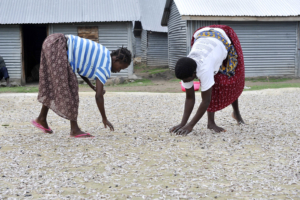 Jackline Auma makes her living fishing on Shakababo Lake in Kenya’s Tana River Delta. Most women who work in the Kenyan fisheries sector sell fish, fill cans or process fish. Auma owns her own boat. She employs several people to process fish and occasionally goes out to fish herself. Even so, Auma struggled to find her footing in this male-dominated “blue economy.” She was told numerous times, “The waters are no place for a woman,” and had trouble finding enough money to buy her boat. Auma was determined to be part of the movement to transform Kenya’s blue economy.
IIW-BEK Program: Empowering Women in Kenya
Female entrepreneurs like Auma are benefiting from the Investing in Women in the Blue Economy in Kenya (IIW-BEK) program. The Africa Enterprise Challenge Fund (AECF) implemented the initiative in 2022 and Global Affairs Canada is funding it to empower female entrepreneurs in Kenya’s blue economy. IIW-BEK aims to eliminate systemic financial and policy barriers that have long discouraged women from gaining a foothold in the blue economy.
The project’s goals include creating about 1,490 direct jobs and benefiting roughly 1,560 women entrepreneurs and value-chain actors across the Lake Victoria Basin and coastal counties. The ongoing funding of this project shows that governments and nongovernmental organizations (NGOs) recognize the importance of empowering female entrepreneurs beyond mere equity. It is also about sustaining the environment.
Kenya’s blue economy may contribute to many livelihoods. However, it is still male-dominated and its ecosystems continue to be challenged. Canada hopes that by increasing women’s access to money, decision-making processes and sustainable development practices, its funding of this project will address both Kenya’s economic and environmental problems.
Project Goals
Three main goals guide this project. The first is to expand access to finance, which involves providing funding to women-owned businesses and reducing gender-based barriers. In the first funding rounds of this project, more than 1,600 female business owners submitted applications.
The second goal is to create a more supportive business environment for female entrepreneurs. This involves addressing discriminatory policies and community-level barriers, including child care demands. Many women struggle to balance caregiving responsibilities with running their businesses. Providing child care support aligns with Canada’s Feminist International Assistance Policy and helps women manage these competing demands.
The third goal is to support biodiversity and sustainable practices in the blue economy, aiming to reduce pressure on fragile ecosystems such as Lake Victoria and coastal marine zones.
Impact and Success Story
So far, this program has yielded positive results. The AECF 2022-2023 report stated that it financed up to 100 women’s groups, impacting 1,200 women who aim to transform Kenya’s blue economy. Formalizing these businesses has helped many women become more financially literate and independent. On top of that, it has expanded aquaculture production and diversified incomes away from overfished stocks.
Angela Odero is co-founder and CEO of Rio Fish Limited, based near Lake Victoria. She and her company received a grant from the program, which helped them expand and formalize their operations. This meant they could provide an affordable supply of fish to female merchants, lessening their reliance on men.
“The grant not only inspired Rio Fish but also sent a powerful message to the industry: it is time to invest in women’s empowerment and gender equality,” she said.
Final Thoughts
From the Tana River Delta to Lake Victoria, women are increasingly stepping into leadership roles in Kenya’s blue economy. They are expanding aquaculture businesses, formalizing operations and challenging long-standing gender barriers. Support from Global Affairs Canada, delivered through the AECF, is helping this initiative improve access to finance and promote sustainable practices.
Early results suggest empowering women in Kenya is strengthening livelihoods and encouraging a more inclusive, environmentally sustainable blue economy. Other East African countries may use it as a model for diversifying their own blue economy initiatives.
– Caleb Dueck
Caleb is based in Winnipeg, Manitoba, Canada and focuses on Good News and Technology for The Borgen Project.
Photo: Flickr
