Leading the Way: Bilingual Education in Senegal
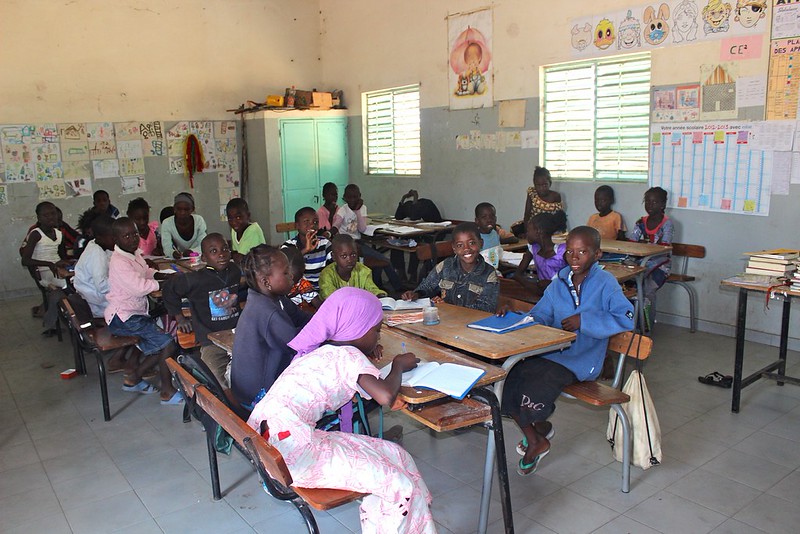 Senegal has long relied on French as the sole language of instruction. However, this approach failed to reflect the linguistic reality of its population.
According to the Gates Foundation, students in Senegal have traditionally been taught in French even though less than 1% of the country’s population speaks it at home. Around 80% of Senegalese speak Wolof. This disconnect meant that most children were learning to read and write in a language they did not fully understand.
This challenge is not unique to Senegal. According to the United Nations Educational, Scientific and Cultural Organization (UNESCO), 40% of the global population does not have access to education in a language they speak or understand, with around 250 million learners in low- and middle-income countries struggling with language barriers. The result is often lower literacy rates, reduced engagement and higher dropout rates, barriers that disproportionately affect disadvantaged communities.
A Shift Toward Bilingual Education
In response, Senegal introduced a reform in 2015. The Ministry of Education, in partnership with Associates in Research and Education for Development (ARED), launched a bilingual education model combining Wolof and French.
This initiative addressed inequality in education. Rather than abandoning French, the system integrates it alongside national languages, allowing students to build foundational literacy in a familiar linguistic environment before transitioning to broader communication skills.
UNESCO research indicates that children develop cognitive skills and master content material most easily when taught in a familiar language. These early gains are critical, as foundational literacy strongly influences long-term academic success.
Measurable Improvements in Learning Outcomes
Evidence from program evaluations shows significant improvements in literacy and comprehension. One assessment found a 29 percentage point increase in the number of students meeting oral reading and comprehension benchmarks compared to those taught exclusively in French. The bilingual model is also linked to stronger classroom participation, improved retention and long-term prospects for higher earnings.
The reform has also shifted classroom dynamics. Teachers who were previously constrained by rigid language policies now have the flexibility to communicate in languages their students understand, fostering more interactive and inclusive classrooms.
When students understand the language of instruction, they are more likely to ask questions, collaborate with peers and develop critical thinking skills.
Preserving Culture While Expanding Opportunity
Beyond academic performance, bilingual education in Senegal plays a role in preserving cultural identity. Languages like Wolof are deeply tied to heritage, community and tradition.
The Ministry of National Education is committed to the Harmonized Model of Bilingual Education in Senegal (MOHEBS), an educational reform that recognizes bilingual learning as a means of improving access to learning and strengthening students’ cultural identity.
By incorporating these languages into formal education, Senegal is promoting inclusivity while maintaining cultural continuity. Proficiency in French also provides access to opportunities in higher education, employment and international communication.
Looking Ahead
Senegal’s bilingual education model offers a broader lesson for global education systems: effective learning begins with understanding. By aligning language policy with students’ lived experiences, Senegal is reducing inequality and expanding opportunity. Its progress demonstrates that meaningful reform requires investment in teacher training, curriculum development and community engagement, and that bilingual learning can serve as a pathway to more equitable education outcomes.
– Lucy Kerr
Lucy is based in Coventry, UK and focuses on Good News and Politics for The Borgen Project.
Photo: Flickr
