• Link to X
  • Link to Facebook
  • Link to Instagram
  • Link to TikTok
  • Link to Youtube
  • About
    • About Us
      • President
      • Board of Directors
      • Board of Advisors
      • Financials
      • Our Methodology
      • Success Tracker
      • Contact
  • Act Now
    • 30 Ways to Help
      • Email Congress
      • Call Congress
      • Volunteer
      • Courses & Certificates
      • Be a Donor
    • Internships
      • In-Office Internships
      • Remote Internships
    • Legislation
      • Politics 101
  • The Blog
  • The Podcast
  • Magazine
  • Donate
  • Click to open the search input field Click to open the search input field Search
  • Menu Menu
Blog - Latest News
Children, Education, Global Poverty

What Does Education in Iceland Look Like?
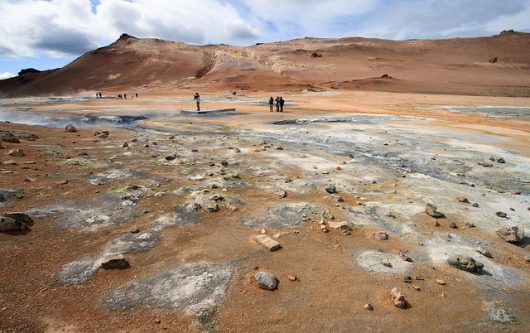

Education in Iceland is incredibly important. In a 2016 study, Iceland was ranked the third most literate nation in the world, trailing behind Finland and Norway. The small island country is home to a population of around 332,000 people.

Iceland is well known for being progressive. Its equality endeavors are evident in the structure of its education system. According to the nation’s website, “A fundamental principle of the Icelandic educational system is that everyone should have equal opportunities to acquire an education, irrespective of sex, economic status, residential location, religion, possible handicap and cultural or social background.”

Education in Iceland is a four-level system.

  1. Preschool is the first level of education, which children attend between one and six years of age. There are fees for preschool, but they are largely subsidized.
  2. Compulsory education follows preschool education. Compulsory education is free and mandatory for children between the ages of six and 16. Unlike in the United States, homeschooling is not an option.
  3. Upper secondary education is the third level. It is available to anyone who has completed compulsory education, and is mostly compromised of students 16 to 20 years of age. The upper secondary level is essentially the equivalent of high school in the United States and is free with the exception of one private school.
  4. The fourth tier is education at a university, otherwise known as higher education. To apply for university, a student must first have completed upper secondary education. For the most part, universities in Iceland are required to accept all students with an upper secondary degree. Public universities in Iceland are tuition-free; the only costs associated with higher education are registration fees.

With a literacy rate of 99 percent and an unemployment rate at around 2.7 percent, perhaps the rest of the world can learn from the system of education in Iceland.

– Shannon Elder

Photo: Flickr

May 17, 2017
Share this entry
  • Share on Facebook
  • Share on X
  • Share on WhatsApp
  • Share on Pinterest
  • Share on LinkedIn
  • Share on Tumblr
  • Share on Vk
  • Share on Reddit
  • Share by Mail
https://borgenproject.org/wp-content/uploads/borgen-project-logo.svg 0 0 Borgen Project https://borgenproject.org/wp-content/uploads/borgen-project-logo.svg Borgen Project2017-05-17 01:30:112024-05-28 00:00:00What Does Education in Iceland Look Like?

Get Smarter

  • Global Poverty 101
  • Global Poverty… The Good News
  • Global Poverty & U.S. Jobs
  • Global Poverty and National Security
  • Innovative Solutions to Poverty
  • Global Poverty & Aid FAQ’s
Search Search

Take Action

  • Call Congress
  • Email Congress
  • Donate
  • 30 Ways to Help
  • Volunteer Ops
  • Internships
  • Courses & Certificates
  • The Podcast
Borgen Project

“The Borgen Project is an incredible nonprofit organization that is addressing poverty and hunger and working towards ending them.”

-The Huffington Post

Inside The Borgen Project

  • Contact
  • About
  • Financials
  • President
  • Board of Directors
  • Board of Advisors

International Links

  • UK Email Parliament
  • UK Donate
  • Canada Email Parliament

Get Smarter

  • Global Poverty 101
  • Global Poverty… The Good News
  • Global Poverty & U.S. Jobs
  • Global Poverty and National Security
  • Innovative Solutions to Poverty
  • Global Poverty & Aid FAQ’s

Ways to Help

  • Call Congress
  • Email Congress
  • Donate
  • 30 Ways to Help
  • Volunteer Ops
  • Internships
  • Courses & Certificates
  • The Podcast
Link to: Poverty in Malaysia: A Quick Look at Progress Approaches Link to: Poverty in Malaysia: A Quick Look at Progress Approaches Poverty in Malaysia: A Quick Look at Progress Approaches Link to: What Are the Top Diseases in Bolivia? Link to: What Are the Top Diseases in Bolivia? What Are the Top Diseases in Bolivia?
Scroll to top Scroll to top Scroll to top