Digital Education in Developing Countries
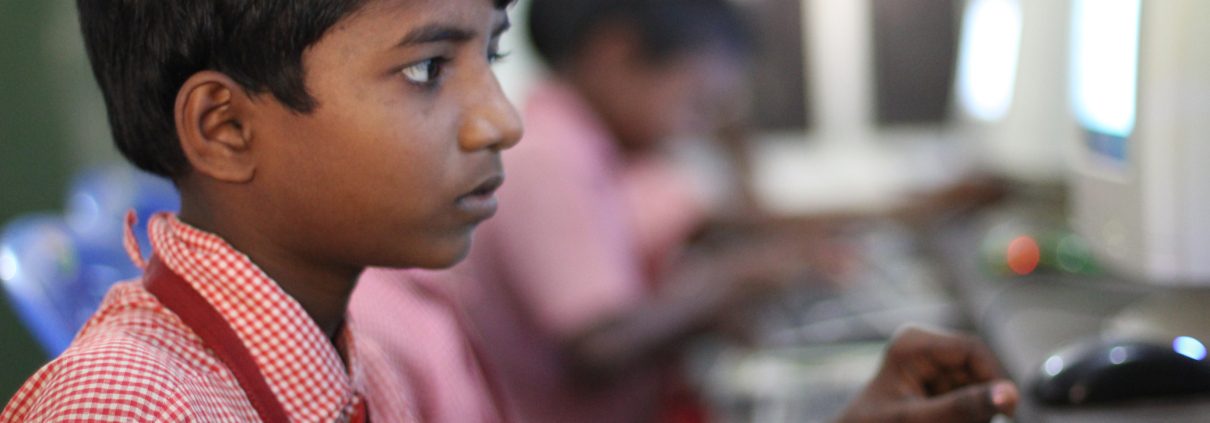 According to the Global Education Monitoring Report, developing countries are home to some 200 million young people ages 15 to 24 who have not completed primary school and need alternative pathways to gain basic skills for employment and prosperity. Low levels of education leave one in eight living below the poverty line, creating a need for digital education in developing countries.
Developing countries often have less diversified economies that rely on agriculture or raw materials such as timber, coal and oil. A country’s level of development is not determined by one singular test, but does look at the total value of goods and services a country provides. Underdeveloped and developing countries have lower Gross National Income (GNI), lower life expectancy and higher unemployment.
Digital Education in Developing Countries
Education develops skills at both intellectual and social levels. It promotes progress in health, climate resilience, sustainability and gender equality. Without these skills, people are less able to avoid poverty and pursue ecological development.
In lower- and middle-income countries, more than half of all 10-year-olds are unable to read and understand text. In 2024, there were 251 million children out of school, limiting the skills needed for labor markets. By increasing funds and resources, digital education in developing countries can help promote learning and provide children with greater chances of acquiring the skills they need.
South Africa has seen similar trends, with children under age 17, who make up 43.1% of the country’s population, among the groups most affected by poverty. According to Statistics South Africa, children remained the most vulnerable group in the country, with nearly half still living below the poverty line in 2023. Children living in rural areas face even greater challenges, as they often lack internet access and other essential educational resources.
Education remains one of the strongest investments a country can make. Research shows that in developing countries, every dollar invested in education generates $10 to $15 in economic growth. Investing in education can drive a country’s growth, increasing earning potential and decreasing poverty. Protecting children’s right to education aids local communities, creating more opportunities to thrive while promoting an equal chance at success.
Digital education supports teaching and learning through online courses, virtual classrooms and applications. Not only does this provide basic education, but it also helps improve digital skills that have become necessary amid the world’s digitalization. Online learning platforms create flexibility, making education more accessible around the world.
Current Developing Countries’ Initiatives
In 2020, Malaysia introduced its Digital Educational Learning Initiative (DELIMa), an online platform students can use to access applications, communication tools and learning resources. Malaysia’s Ministry of Education created the initiative to make learning more accessible while supporting the country’s move toward a more technology-influenced society.
DELIMa provides two programs: Future Skills For All (FS4A) and Global Citizenship Education (GCED). FS4A promotes digital development and reduces education inequalities by engaging learners through social media. GCED strengthens and grows a 21st-century mindset, encouraging learners to engage with communities on a local and global level.
South Africa has also embraced online education, increasing enrollment by more than 50% from 2020 to 2022. One of the country’s leading online learning platforms, CambriLearn, is now an Independent Examinations Board (IEB)-registered online school whose accredited courses meet benchmarks accepted by other schools worldwide.
Koa Academy has also contributed to the rise in South African education enrollment. The Koa Foundation’s initiative aims to expand high-quality education for communities facing education inequality. The foundation works to close the gap in educational opportunity by providing personalized learning that supports each student’s individual needs, easing challenges in performance and future opportunities. Current programs have supported 932 learners in strengthening their skills in mathematics and science.
In the Philippines, education is widely seen as a foundation for improving socioeconomic status, with many families believing that finishing school widens future opportunities. However, challenges include rising tuition costs and declining performance. According to the Organization for Economic Co-operation and Development (OECD), more than a third of Filipino students fall into the bottom international quintile of the socioeconomic scale, the largest such share among the groups measured.
Online schooling in the Philippines has become one of the most convenient and accessible forms of education, tailoring learning to individual students. Another challenge facing education in the country is low student retention. There is a dramatic decrease from 56.7% of children ages 10 to 14 finishing primary school to only 42.5% reaching junior high school and just 31.5% completing senior high school.
The Rise of Education Enrollment
As digital education in developing countries becomes more widely embraced, population growth and demand for education have both increased. By improving accessibility and affordability, online education now plays a crucial role in students’ schooling. Countries such as India, Iran and Pakistan have seen 7 million students enroll in online learning programs.
India alone has approximately 35% of its population enrolled in Massive Open Online Courses (MOOCs), ranking behind only the United States in enrollment. E-schools provide greater opportunities for those seeking education and employment, expanding access and improving employment prospects for millions.
With 32% of the global population lacking internet connection, expanding digital access will allow more citizens to receive quality education. Regardless of country, online education can serve as a tool for giving students an equal chance at learning and success.
– Jacquelyn Orr
Jacquelyn is based in Philadelphia, PA, USA and focuses on Good News and Technology for The Borgen Project.
Photo: Flickr
