Yoga Alleviates Child Poverty in India
 Despite India’s rich culture, food and traditions, stark gaps in wealth and education persist. Moni Basu of CNN reports that approximately 35% of Indians are illiterate, meaning they cannot read or write. Of the country’s nearly 1.3 billion people, about 60% live on less than $3.10 a day and 21% (more than 250 million people) survive on less than $2 a day.
The caste system reinforces these inequalities. Jill Lawson of HuffPost writes that many Indians are “rich in spirituality yet struggling to survive.” At the same time, wealth at the top continues to grow. According to BBC reporter Meryl Sebastian, the number of billionaires in India rose to 166 from 102 in 2020 alone, reflecting a system shaped by inherited wealth and social status.
Sebastian also reports that taxing the country’s top 100 billionaires at 2.5% could nearly fund the cost of returning an estimated 150 million children to school.
Child Poverty in India
For those not living in luxury, daily life is marked by limited access to education, unemployment or underemployment, inadequate health care infrastructure and persistent social inequalities. Discrimination based on caste, gender and ethnicity often creates cycles of poverty that are difficult for future generations to escape. UNICEF India Representative, Cynthia McCaffrey, notes that improving children’s well-being requires a “collective will” and is not solely dependent on resources.
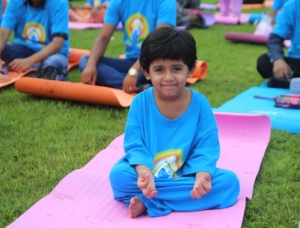
Some organizations argue that yoga can help address child poverty by fostering mental well-being and community. Accessible to both the affluent and the less fortunate, yoga promotes calmness and a shared purpose, creating a more supportive environment for learning and personal growth. According to Yogift, the benefits of yoga are wide-ranging, with regular practitioners reporting improvements in daily life, self-awareness and relationships with others.
How Does Yoga Alleviate Child Poverty in India?
Yoga classes can offer several benefits, particularly for children living in poverty. They:
- Provide mindfulness and resilience. These sessions provide a break from daily life, where minds are taken off of hardship outside. Students gradually develop inner strength and willpower that they can take home with them.
- Build a community. Children feel safe making friends and coming out of their shells. They will feel less alone and it makes the day-to-day that little bit easier.
- Improve physical health. By building physical strength, students are less likely to contract illnesses and injuries, thereby increasing attendance at school and reducing stress on health care systems.
Organizations Using Yoga To Address Child Poverty
YoGift, founded in 2020, works to combat child poverty by highlighting the health and economic challenges faced by children in India. The organization notes that about one-third of Indian children suffer from lung problems caused by pollution and unsafe living conditions. At the same time, limited access to job training perpetuates generational poverty.
YoGift raises funds in the United Kingdom (U.K.) through workshops, events, donations and partnerships. Proceeds support Harmony House, a children’s day center in Delhi founded in 2010. The center serves more than 1,000 children daily, providing support in areas such as well-being, education, nutrition and career preparation.
Since its inception, the group has raised more than $8,000 for Harmony House. Another organization, Yoga Gives Back, founded in 2006, also emphasizes community through yoga-based fundraising. Its Sister Aid program provides primary education to about 600 girls and abandoned children and offers microloans to nearly 600 mothers.
The organization’s Scholarship for Higher Education program supports approximately 440 disadvantaged youths who are pursuing college degrees. According to Yoga Gives Back, these efforts have helped approximately 600 girls avoid child labor or early marriage and provided additional educational support to around 800 rural children following the COVID-19 school closures.
Balancing Bodies and Economies
McCaffrey shed light on India’s vast progress on poverty reduction and how “India’s flagship programs have supported investments in children, putting India on track for SDG 1.2 ahead of the 2030 endline.” Evidence of this progression is presented in the World Bank Group’s 2025 Report. It states that rural poverty has decreased from 64.9% to 27.7% and urban poverty decreased from 39.7% to 14.3%.
Despite this progression, there is still further to go. The top 1% of the country’s population still holds 73% of the wealth. Empowering and educating India’s next generation means investing in not only its economy but its people.
The Bhagavad Gita itself invites us to “participate actively in the world, [we are] encouraged to fight for justice and righteousness.” Through practices such as yoga and its mass funding opportunities, we can all use this soft power to make life that little bit more equal, one balance at a time.
– Gemma Nailer
Gemma is based in Manchester, UK and focuses on Good News for The Borgen Project.
Photo: Flickr
