CEDO and Challenges Faced by Rural Students in Cambodia
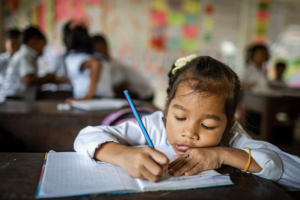 In Cambodia, a country with a population of more than 17 million, young people face significant educational barriers, particularly in rural areas. The poor quality of teaching, lack of basic infrastructure such as facilities providing water, sanitation and hygiene and school expenses are all cited as reasons for inadequate learning and high dropout rates.
Education in Cambodia
According to the United Nations Children’s Fund (UNICEF), almost a quarter of children aged 8 to 9 in Cambodia cannot write down words they hear in a dictation test and more than half of students have dropped out of school by the time they are 17 years old.
However, in 2019, the Ministry of Education, Youth and Sport devised a five-pillar framework to increase attendance levels and improve the quality of education across Cambodia. These pillars include:
- Implementation of the Teacher Policy Action Plan to support teachers’ professional development.
- Review of curricula, textbooks and learning environments to standardize syllabi and improve school facilities.
- Enforcement of school inspections to ensure high educational standards are met.
- Improvement of learning evaluations to strengthen the overall educational framework.
- Higher education reform to expand resources and funding for institutions while promoting broader access to higher education.
The last pillar is something Youchheng Uch, Director of Cambodian Education and Development Organization (CEDO), feels particularly strongly about. Believing that “every student, regardless of their background, has the potential to succeed,” CEDO aims to break the cycle of poverty. It’s dedicated to helping young people in rural areas access higher education institutions, primarily by providing scholarships to students going to university.
Expanding Educational Opportunities in Rural Cambodia
Funded entirely by a partner organization in Australia called Opportunity Cambodia, CEDO has been helping students from the countryside surrounding Siem Reap, Cambodia’s second most populous city, for the last 10 years. Its main program is the University Scholarship Program, which, in addition to paying for students’ university fees, gives them access to health care, a living allowance and accommodation.
The organization has also developed the Learning Center Program, which provides training in soft skills such as public speaking, computer skills and English classes taught by overseas volunteers.
Barriers Facing Rural Families
In a recent interview, Uch explained that the biggest issue families in rural Cambodia face is that they cannot afford to send their children to university. “The family needs to pay for tuition fees, for accommodation, for food, so if you compare the average income that the rural family gets per day [to the urban family], it’s not possible for most families in the countryside [to send their children to university].”
While primary and secondary education is free, education is poor, meaning those with more money, who often live in urban areas, pay for private tutors. However, for most families, this option is too expensive. Other challenges for young people in the countryside, outlined by Uch, include living too far from a school, being unable to access food and not being safe at home because of domestic violence, for example.
Education as an Alternative to Migration
Improving rural students’ access to higher education also reduces the number of Cambodians who migrate to neighboring countries to find low-skilled work. According to the Ministry of Labor and Vocational Training, more than 1.3 million Cambodians work abroad, the vast majority in Thailand.
In a separate study, the International Organization for Migration (IOM) found that most migrants in Thailand left Cambodia in search of “better job opportunities and higher wages,” now working in sectors like agriculture, construction and fishing. However, the reality is that a third of those migrants claim to be paid less than minimum wage and still find themselves in poverty.
Uch explains that because many young people cannot afford to go to university, these people often migrate for work. Hence, CEDO aims to combat this issue directly, increasing the number of those attending higher education institutions and contributing to the Cambodian economy.
Breaking the Cycle of Poverty
Since its beginning, CEDO has helped 65 students living in rural areas gain access to higher education institutions, half of whom have left university and found work. By meeting every month to see what’s going on, what experience they’re getting, what their challenges are, those at CEDO can offer direct support, both emotional and financial. As a result, around 80% of its students work in the field they studied at university, helping to break the cycle of poverty in Cambodia.
– Elsa Tarring
Elsa is based in London, UK and focuses on Good News and Global Health for The Borgen Project.
Photo: Flickr
