After semi-authoritarian rule for 27 years and the end of the Compaoré regime by a popular insurrection, the people of Burkina Faso had the chance to open the door to a political transition and the creation of a competitive democracy. As a result, Burkina Faso held peaceful elections in November 2015. Since then, the new government and the local communities have been working on addressing the challenges of more inclusive development, transitional justice and a new governance model of security. Here are some updates on SDG 16 in Burkina Faso.
The Sustainable Development Goals (SDGs)
In that same year, all the United Nations’ Member States adopted the 17 Sustainable Development Goals (SDGs), which emerged as an urgent call for all countries to achieve peace and prosperity for humanity and the planet. The SDGs tackle issues as diverse and relevant for today’s world as to end hunger, eliminate poverty and achieve gender equality. Despite this, the Millenium Development Goals (MDGs), the antecessors to the SDGs, demonstrated that to achieve progress in the realms of poverty and development, there must be a greater focus on its root causes. Now, violence, insecurity and conflict play a key role in constraining development.
The SDG 16: “Peace, justice and strong institutions” aims to promote peaceful and inclusive societies for sustainable development, provide access to justice for all and build effective, accountable and inclusive institutions at all levels. In many ways, the SDG 16 is one of the most ambitious goals, since it faces many challenges for its implementation, especially in countries with weak institutions and armed conflicts.
Burkina Faso and the SDGs
Since the two events, both the democratization of Burkina Faso and the creation of the Sustainable Development Goals, occurred at almost at the same time, the country quickly decided to include the SDGs in its political agenda. First, the country implemented a five-year National Plan for Economic and Social Development (PNDES) that was almost 90% SDG compliant. Moreover, numerous reforms are underway to promote human rights, improve the efficiency of the justice system and other public institutions, address corruption and guarantee legal inclusion, all of these to achieve the SDG 16 in Burkina Faso.
Human Rights
In 2016, Burkina Faso established the National Human Rights Commission, as the United Nations’ Office of the High Commissioner of Human Rights (UNOHCHR) recommended and in compliance with the Paris Principles. The members of this commission are administrative and financially independent by law.
Later, in the 2018 Universal Periodic Review, which involved the participation of the government together with the civil society, development partners and U.N. entities (such as UNDP, UNICEF and UNOHCHR), the international community commended the country’s efforts to improve political, social, economic, civic and cultural rights. After the adoption of this report, the Human Rights Council set 184 recommendations that the Ministry of Justice and Human Rights of Burkina Faso quickly implemented.
That same year, the country’s parliament abolished the death penalty and increased the protection of victims and witnesses by law.
Finally, freedom of the press and plurality of media has played a crucial role in making the country’s leaders accountable. The country ranked 38 in the 2020 Press Freedom Index with a value of 24.53 and, although it is lower than the previous year, it is still considered as a positive trend to achieve this indicator of the SDG 16 in Burkina Faso.
Justice and Legal Inclusion
The advocacy efforts of a women-led civil society organization, Association des Femmes Juristes, sprung into a law that ensures vulnerable populations’ access to justice. The establishment of a legal aid fund to support women in need of judicial assistance and cover their legal costs soon followed the adoption of this law. As a result, between 2016 and 2018, the fund has helped close to 600 people.
Additionally, great progress has occurred in modernizing civil registration, mainly ensuring registration of children under 5, displaced populations, migrants and refugees. This prevented the classification of many people at risk as stateless. Later in 2018, Burkina Faso ratified the Convention on the Reduction of Statelessness and adopted a National Action Plan against Statelessness, in which the government collaborated with religious institutions and the U.N. to organize hearings in several regions and allocate citizenship to approximately 40,000 people.
Civic Participation
The government of Burkina Faso created platforms for citizen engagement through annual, two-way dialogues with the civil society to openly discuss numerous policy issues. Some citizen platforms such as Dialogue Citoyen and Presimetre encourage the government’s accountability and the civilian’s interest in public affairs. Since its launch, many political leaders have made appearances on media platforms to respond to civil queries and many surveys have occurred.
The Future is Bright
Overall, there have been significant improvements for sustainable development in Burkina Faso. Specifically, the country has a spillover score (which results from the actions by countries to achieve the SDGs under four dimensions: environment, economy & finance, society and security) of 99.3 out of 100, showcasing that there is Burkina Faso is undergoing a great number of positive actions to achieve the Sustainable Development Goals.
Unfortunately, recent security threats are negatively affecting the country’s political transition and development, such as terrorism and organized crime. Despite this, the new context of insecurity has raised the redesign of security measures at two levels: first, at a central state-level, and second, at the local state-level with non-state security initiatives (LSIs). These new challenges have highlighted the importance of social cohesion and the promotion of peaceful societies to achieve the SDG 16 in Burkina Faso.
Finally, the developments on the SDG 16 in Burkina Faso showcase how new democracies can address their structural and social issues in short periods when the actors involved are willing to do so. Today, these efforts combined with international assistance are imperative to support the country’s sustainable development and prevent these achievements from disappearing due to new threats.
– Helen Souki
Photo: Flickr
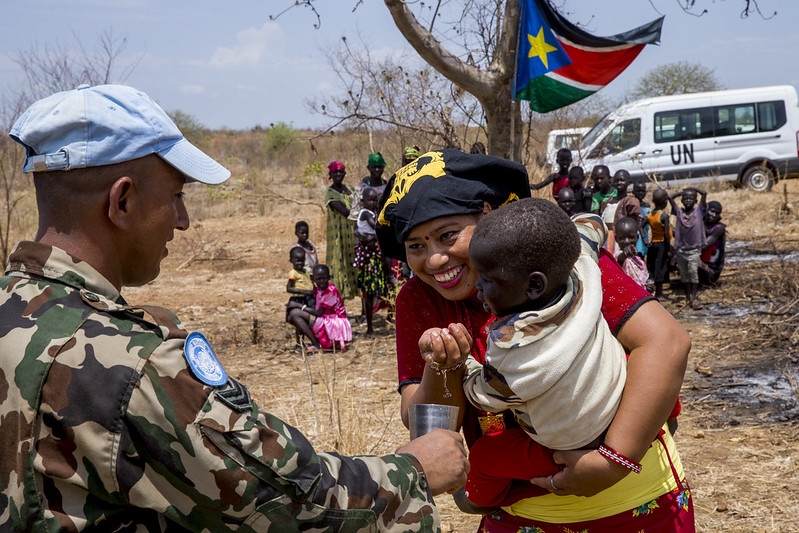 Prosperous health and well being are the backbone of a progressive society. Unfortunately, countless people in the developing world struggle to access affordable and effective healthcare. South Sudan is an Eastern African country riddled in an ongoing ethnic conflict. In addition, it is one of the hardest-hit nations on the issue of healthcare.
 In the next 30 years, the world population
  In November 2020, the world’s 450 Public Development Banks (PDBs) gathered at the first-ever global summit, the
  The
The 
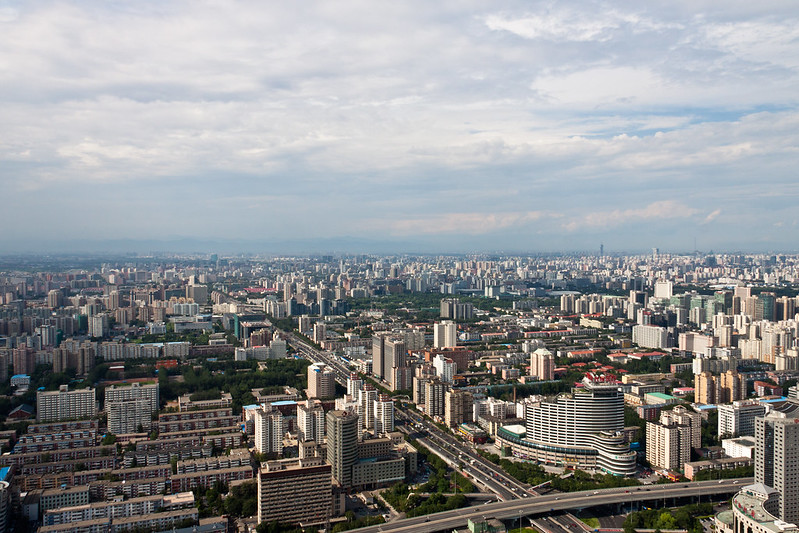
 Estonia is a northeastern European country of about 1.2 million people. It is bordered by Russia to the east, Latvia to the south and is a short distance across the Baltic sea from Finland, to the north. Formerly part of the Soviet Union, Estonia is now a member of NATO and the EU. Also a part of the United Nations, Estonia is subject to the U.N.’s annual Sustainable Development Goals (SDGs). There are 17 goals, such as no poverty and zero hunger. SDG Goal 11 is Sustainable Cities and Communities. It calls on countries to “make cities and human settlements inclusive, safe, resilient and sustainable.” The country is currently making commendable progress in creating and maintaining sustainable cities and communities, such as providing free public transportation in Estonia. However, challenges do remain.