• Link to X
  • Link to Facebook
  • Link to Instagram
  • Link to TikTok
  • Link to Youtube
  • About
    • About Us
      • President
      • Board of Directors
      • Board of Advisors
      • Financials
      • Our Methodology
      • Success Tracker
      • Contact
  • Act Now
    • 30 Ways to Help
      • Email Congress
      • Call Congress
      • Volunteer
      • Courses & Certificates
      • Be a Donor
    • Internships
      • In-Office Internships
      • Remote Internships
    • Legislation
      • Politics 101
  • The Blog
  • The Podcast
  • Magazine
  • Donate
  • Click to open the search input field Click to open the search input field Search
  • Menu Menu

Archive for category: Social Movements

Global Poverty, Social Movements

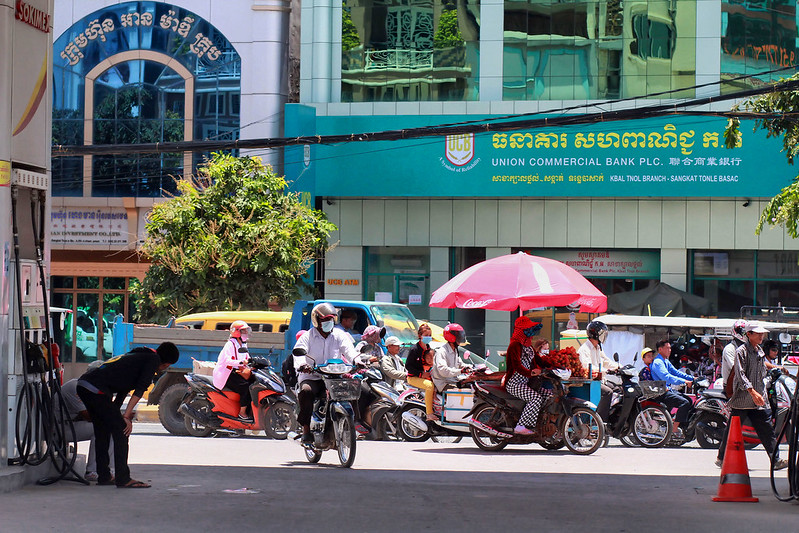
Uniting People Against Poverty in Cambodia

Poverty in CambodiaCambodia, home to more than 17 million people, has a poverty rate of 16.6% as of 2022. Noticeably, the Cambodian government has reduced the entire country’s poverty rate by half over the last decade, simply due to the efforts in implementing effective initiatives, such as the National Social Protection Policy Framework (NSPPF) 2024‑2035, to ensure that the Cambodian people have access to greater income and safer living conditions.

Poverty reduction in Cambodia has been particularly impactful through the NSPPF, which aims to ensure that the Cambodian people have a comprehensive and resilient social protection system that is capable of supporting them through different life stages and during times of crisis.

The Government’s Success in Eradicating Poverty

Cambodia is uniting its people against poverty and the potential of the NSPPF is impressive. Obeying a “no person left behind” principle, the inclusion of such a strong government initiative has impacted more than 7.5 million people in 2024.

Placing particular emphazis on poor and vulnerable households: pregnant women, toddlers under 2, people with disabilities and the elderly in low-income households, the broad coverage has helped ensure poverty reduction in Cambodia and has allowed inclusion, fairness and has reduced the risk of certain people/ communities being left behind in the poverty battle.

Key Initiatives Under the NSPPF

National Social Assistance Fund (NSAF): Manages non-contributory social assistance programs, such as the Family Package and cash transfers for poor and vulnerable households. National Social Security Fund (NSSF): Manages contributory schemes, including a mandatory pension system which was introduced in 2022.

Health Equity Fund (HEF): Allows increased access to health services for the poorest people, such as free outpatient visits, hospital admissions, waivers, and transport help.

Cash Transfer Programs: Include cash transfers for poor and vulnerable households and programs that link cash transfers with vocational training

The Cambodian Government’s NSPPF Objective

The long-term goal of the NSPPF remains to build social solidarity and political legitimacy. The focus to reduce poverty in early life also aims to ensure long-term life effects, however, tackling poverty for all people, regardless of their life stage is to create a lasting and deep-rooted sense of societal cohesion.

The purpose of building an initiative focuses on shared risk and shared responsibility is to treat the Cambodian people as having certain lifecycle risks; this is to elucidate that everyone in society is vulnerable in some form, therefore, social protection is a shared priority and expectation.

Likewise, the versatile approach of the NSPPF in extending poverty reduction in Cambodia is to provide a more personal impact on the Cambodian people as the investments in human capital extends far beyond simply providing the people with financial contributions, but improves the capabilities and potential of all members of society. The government of Cambodia’s commitment to lower barriers and provide health, education, and training for all has shown that Cambodia is uniting its people against poverty and is offering many opportunities to become a successful nation.

The government of Cambodia’s efforts to reduce poverty have been overwhelming, particularly in the last decade, and it is evident that the reach of the NSPPF has moved beyond purely economic poverty and has made powerful strides in both multidimensional and generational poverty, highlighting the initiative to be a successful strategy of combining poverty and equality.

– Reece Robertshaw

Reece is based in Doncaster, UK and focuses on Politics for The Borgen Project.

Photo: Flickr

October 26, 2025
https://borgenproject.org/wp-content/uploads/borgen-project-logo.svg 0 0 Naida Jahic https://borgenproject.org/wp-content/uploads/borgen-project-logo.svg Naida Jahic2025-10-26 03:00:352025-10-26 01:27:07Uniting People Against Poverty in Cambodia
Activism, Global Poverty, Social Movements

INSP: Street Papers Tackle Homelessness and Poverty

INSPThe notion of a street paper was first established by the International Network of Street Papers (INSP), a nonprofit organisation dedicated to tackling homelessness and poverty based in Glasgow, Scotland. According to the INSP, street papers are‘magazines or newspapers sold by people experiencing poverty, homelessness or other forms of marginalisation. Together with investigative journalists, people living on the streets report on the challenges they face, detail their own personal experiences of homelessness and write poetry to express themselves. Not only do homeless people contribute to the written content of the papers, but they also sell them on the street and keep the proceeds.

Shifting Public Perception Through Street Journalism

Vendor Programme Director of Street Roots, the street paper based in Portland, Oregon, DeVon Pouncey, outlines how the introduction of street papers has allowed readers to see how systems have failed people, rather than people on the streets have failed themselves. This helps redefine the general negative public perception of people experiencing homelessness, supporting efforts to address homelessness and poverty. The INSP has helped to found street papers in 35 countries across North America, South America, Europe, Africa, Asia and Australasia. Since the first street paper was published in New York in 1989, the INSP has supported almost 400,000 people in poverty.

Employment, Voice and Empowerment

Street papers not only help address homelessness and poverty by providing people on the streets with work, but also give them a platform to express themselves and share their stories, allowing them to represent and speak for themselves. By featuring content written by homeless people, street papers raise the profile of social justice issues, such as the rise in the number of people who work but still live in poverty, or the criminalisation of rough sleeping in Australia. This challenges global preconceptions of people living in poverty. In selling the papers on the street, vendors also gain social skills and a renewed sense of confidence. In addition to the income and skills earned from selling the papers, the INSP is also committed to creating lasting change for homeless people, which is why it partners with local services to help find housing, provide employability training and supply food and clothing.

Boca de Rua: A Model in Brazil

Boca de Rua (Mouth of the Street), published in Porto Alegre, Brazil, is one example of a street paper. Founded in 2000, it features text, photos and drawings by 30 homeless people who then sell the papers and keep the profits. Boca de Rua also has a supplement, Boquinha (Little Mouth), which presents the work and activities of a group of 15 children and teenagers at risk of homelessness. Coming together in leisure spaces such as parks and theatres, the young people participate in games and create crafts and music, which is then documented in Boquinha. Boca de Rua has also partnered with Casa Alice (Alice’s House), a space for its vendors to take part in festivals, markets and classes and to access a library and lessons in reading.

The Global Impact of Street Papers

The INSP has a global readership of 3.2 million people supported by more than 900 volunteers. In 2021 alone, vendors sold 13 million street papers in 1350 towns and cities, allowing them to earn more than  £17.9 million. This model helps address homelessness and poverty in communities around the world.

– Elsa Tarring

Elsa is based in London, UK and focuses on Good News and Global Health for The Borgen Project.

Photo: Pexels

August 2, 2025
https://borgenproject.org/wp-content/uploads/borgen-project-logo.svg 0 0 Precious Sheidu https://borgenproject.org/wp-content/uploads/borgen-project-logo.svg Precious Sheidu2025-08-02 01:30:112025-08-01 13:55:17INSP: Street Papers Tackle Homelessness and Poverty

Get Smarter

  • Global Poverty 101
  • Global Poverty… The Good News
  • Global Poverty & U.S. Jobs
  • Global Poverty and National Security
  • Innovative Solutions to Poverty
  • Global Poverty & Aid FAQ’s
Search Search

Take Action

  • Call Congress
  • Email Congress
  • Donate
  • 30 Ways to Help
  • Volunteer Ops
  • Internships
  • Courses & Certificates
  • The Podcast
Borgen Project

“The Borgen Project is an incredible nonprofit organization that is addressing poverty and hunger and working towards ending them.”

-The Huffington Post

Inside The Borgen Project

  • Contact
  • About
  • Financials
  • President
  • Board of Directors
  • Board of Advisors

International Links

  • UK Email Parliament
  • UK Donate
  • Canada Email Parliament

Get Smarter

  • Global Poverty 101
  • Global Poverty… The Good News
  • Global Poverty & U.S. Jobs
  • Global Poverty and National Security
  • Innovative Solutions to Poverty
  • Global Poverty & Aid FAQ’s

Ways to Help

  • Call Congress
  • Email Congress
  • Donate
  • 30 Ways to Help
  • Volunteer Ops
  • Internships
  • Courses & Certificates
  • The Podcast
Scroll to top Scroll to top Scroll to top