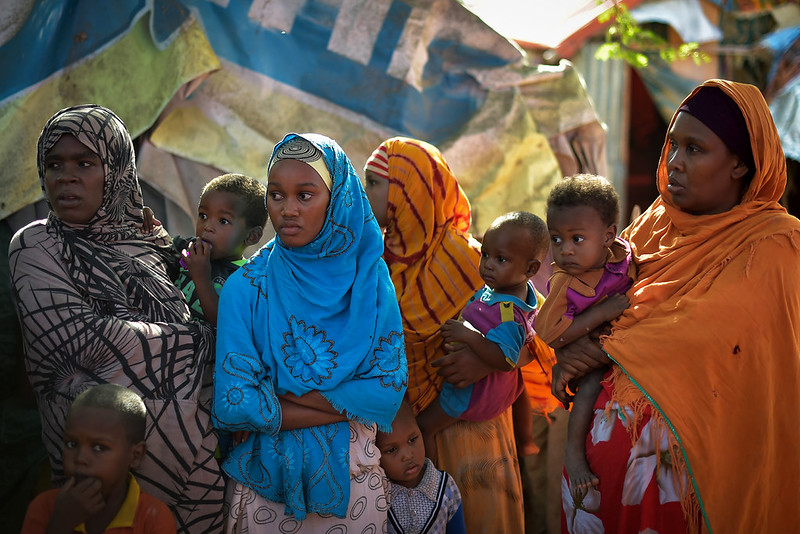
 Government and humanitarian organizations aid pastoralists and farmers negatively impacted by increasingly severe droughts in Somalia. Traditionally, they provided aid following drought-induced humanitarian crises, but in recent years, organizations have explored a new option called anticipatory action.
Drought in Somalia
Somalia is ranked the seventh most climate-vulnerable country in the world. A drought lasting from 2020 to 2023 in Somalia resulted in thousands of Somalis relocating to camps for internally displaced persons (IDPs). Many IDP camps in southern Somalia are located in climate-vulnerable areas, forcing IDPs to relocate more than once after drought or floods deplete the camps’ resources.
Dried-up water sources forced people to drink contaminated water, causing outbreaks of waterborne diseases such as cholera. Outbreaks led to further displacement, as sick people without access to local health facilities traveled up to 1,000 km for treatment.
Depleted food stores and arid farmlands caused food prices to increase by 160% since 2020. Simultaneously reducing incomes and job security resulted in rising levels of malnutrition and food insecurity. More than 4.4 million Somalis faced acute food insecurity in December 2025, and 1.85 million children under five years old are projected to be afflicted with acute malnutrition through mid-2026.
Between 2022 and 2024, approximately 71,100 Somali deaths occurred due to drought. An estimated 40% of these excess deaths were children under five years old.
Anticipatory Action: What Is It?
Anticipatory action in Somalia uses weather forecasting to predict droughts and their projected humanitarian impact in the indicated regions. This system allows forecasters to identify and warn at-risk regions early. Pre-planning and allocating appropriate resources before humanitarian needs reach severe levels mitigates the effects of drought and prevents potential crises and mass displacement.
Activities for drought preparation occur between the trigger activation and the forecasted peak of humanitarian need during the drought. The interventions proceed in phases over a two- to nine-month period, so activities may be adapted to the trajectory of the drought’s predicted timeline and impact.
- Education: Establish access to clean water in schools, implement school feeding programs, disburse cash incentives to teachers and provide child protective services to reduce the risk of school dropouts.
- Food security: Provide cash to susceptible households to reduce the risk of malnutrition and loss of livelihood. Distribute drought-smart farming packages, control crop pests and prevent and control desert locust outbreaks to sustain food production. Conduct an animal health treatment campaign and provide livestock supplementary feed to sustain livestock productivity.
- Health: Promote early warning and preparedness for potential diseases, inform communities on infection prevention, control and treatment and provide essential medications and supplies to detect, prevent and control the health impacts of drought.
- Nutrition: Implement a blanket feeding program and provide food supplements to reduce the risk of malnutrition.
- Risk communication: Conduct a media campaign to advise communities to make risk-informed decisions during preparation for drought.
- WASH: Restore malfunctioning water schemes and establish strategically located water supplies to ensure access to clean and safe water for consumption. Distribute household water treatment and safe storage products and treat unprotected water sources to reduce the risk of disease outbreaks.
Benefits of Anticipatory Action
The International Rescue Committee (IRC) uses anticipatory action in Somalia to mitigate the effects of droughts. After weather forecasters predict a drought, the IRC provides families in the specified areas with several rounds of cash assistance to prepare.
Anticipatory action proves advantageous compared to traditional aid delivered after a crisis for multiple reasons. Farmers and pastoralists can purchase supplementary water and feed beforehand to reduce the death of livestock and crops. Proactive cash assistance is cost-effective by preventing the need for costly humanitarian aid following a crisis. It also prevents families from selling their animals or land and removing children from school.
A recipient of cash assistance from the IRC in Somalia named Mohamud said, “The droughts used to kill many of my animals. This time around, the money came when our livestock were still alive, and that’s how the animals ended up being saved. It has really helped us and preserved our dignity.”
Challenges of Anticipatory Action
Anticipatory action programs exist in challenging, climate-vulnerable environments. Many Somalis living in at-risk regions experience multiple and overlapping crises, including conflict, increasingly frequent droughts, floods and desert locust swarms, reducing affected communities’ ability to prepare for an anticipated drought.
Early warning systems face challenges in effectively and efficiently communicating directly with farmers and pastoralists living in rural areas. The information must reach them early enough to provide time to prepare, but not so early that the forecast is unreliable. Additionally, the warning information must include actionable advice and explain what supplies will be available.
Looking Ahead
Anticipatory action in Somalia is a preventive warning system designed to reduce the humanitarian impacts of droughts. This proactive approach provides a multitude of advantages compared to the traditional humanitarian response following a crisis. Climate-vulnerable communities benefit from early preparation, comprehensive interventions included in Somalia’s Anticipatory Action Framework and early cash assistance from the IRC. These programmes continue to expand and adapt to challenges to reduce human suffering from droughts and build long-term community resilience.
– Sarah Merrill
Sarah is based in Matthews, NC, USA and focuses on Good News and Global Health for The Borgen Project.
Photo: Flickr
