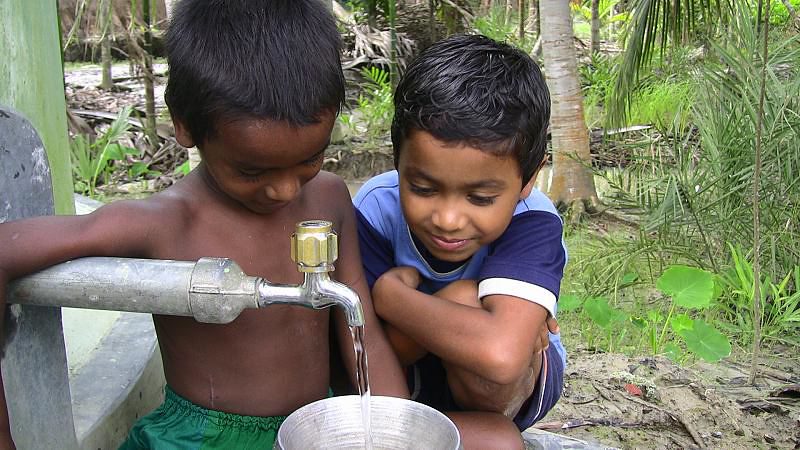
 According to the United Nations (UN), more than 2 billion people lack access to safe drinking water and nearly half of the world’s population (3.5 billion) do not have access to safe sanitation. Therefore, striving for universal access to safe drinking water and sanitation practices will not only reduce the number of deaths due to waterborne illness, but it will also help to reduce the global disease burden by 10%. Several unconventional and innovative solutions are currently underway to address global water and sanitation crises.
1. Lifestraw
This product enables the conversion of any contaminated water source into clean, safe drinking water. The small, portable filtration device removes about 99% of contaminants, such as bacteria, parasites, chemicals, microplastics and pesticides.
For every 500 LifeStraw products that consumers buy, LifeStraw donates a LifeStraw Community Purifier to a school in need, ensuring safe drinking water for 100 kids for five years. By the end of 2022, the innovative solution had provided safe water to more than 7 million kids and 2,500 schools.
2. Peepoo Bag
The Peepoo bag is a portable, self-sanitizing and biodegradable toilet. It comprises a thin film for people to use in the absence of clean facilities. The bag includes a layer of urea that helps sanitize and break down human waste into fertilizer that individuals can then use for up to a month.
Previous studies of the Peepoo bag in Bangladesh and Kenya found the product to be especially useful to women and children due to its usefulness in situations when it was difficult to leave the house. Mothers with access to the bag also report their children were sick less often. Almost 90% of users in the study said the bag was better than their normal sanitation practices.
3. Bottle Bright
Bottle Bright, the company, offers all-natural, biodegradable cleaning tablets designed for thorough cleaning of drinking containers. These tablets use effervescent technology, enabling foaming and dissolving in water without the need for chlorine or harsh chemicals.
With each Bottle Bright package sale, the company commits to donating an equal amount of tablets to people in developing countries facing challenges in transporting water and maintaining cleanliness. Bottle Bright has distributed more than 60,000 tablets to developing communities to date.
4. Waterstep Bleachmaker
The BleachMaker utilizes electrolysis to purify large quantities of drinking water quickly, producing chlorine through the combination of salt, water and electricity to effectively eliminate harmful bacteria. The portable device can produce up to five liters of bleach every hour, providing quantities that can be used for water disinfection and medical sanitation.
In 2022, the United Nations Development Programme (UNDP) and the Governments of Japan and Malawi worked together to install BleachMakers in 46 hospitals and health facilities across Malawi, empowering “public institutions to locally produce chlorine bleach more cheaply within the convenience of their facilities’ budgets.”
5. Everly
Through the creation of flavored drink mixes with clean ingredients and crucial electrolytes, Everly demonstrates a commitment to ending dehydration and waterborne diseases. For every pouch of Everly drink mix sold, the company donates a pouch of rehydration salts to ColaLife, a nonprofit committed to improving access to essential medicines and health products in developing countries.
ColaLife gained attention for its innovative approach to utilizing the existing networks of companies like Coca-Cola to distribute health products. Specifically, they focus on oral rehydration salts and zinc supplements, which are vital in treating dehydration caused by diarrhea, a leading cause of child mortality in many developing regions.
Through Everly’s commitment to partnering with ColaLife, more than 1.5 million packets of rehydration salts have been donated to help mothers and their children in countries like Zambia gain access to life-saving nutrients.
The Importance of These Innovative Solutions
These innovative solutions for global water and sanitation crises are advantageous in that they are non-infrastructure solutions, meaning they can be implemented to help people in developing areas without political support or pushback.
While implementing policy and investments that safeguard necessary human health needs is the key to long-lasting progress in developing communities, these technological innovations are evidence of convenient, immediate opportunities for positive change.
– Bella Simokaitis
Photo: Flickr


 Currently, more people are using mobile phones in sub-Saharan Africa than in the United States (U.S.). In December 2016, the region had


 In June 2023, UNICEF reported that militant groups across the world recruited