The Invisible Aid in Colombia’s Pacific Coast
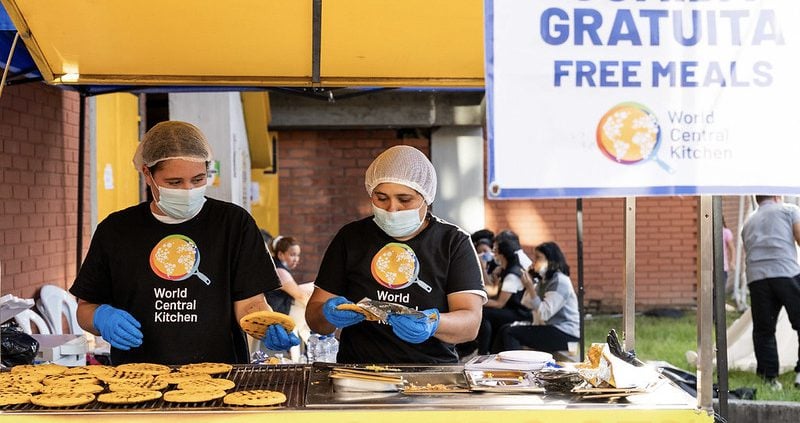 On Aug. 10, a magnitude 7.4 earthquake struck western Colombia, killing hundreds and worsening conditions across some of the country’s poorest regions. Humanitarian aid missions have reached Colombia’s Pacific Coast in the weeks since, but their work has largely gone unnoticed by the public. Telecommunications and information networks were fragile before the earthquake and remain so now across most of Valle del Cauca, Chocó, Caldas and Quindío. Citizen movements have pushed for more visibility and faster aid, but how the government and humanitarian groups are actually working to improve conditions on the ground has remained largely unreported.
This reinforces a familiar narrative: that Chocó and Colombia’s other Pacific cities are like “ghost regions.” It is a rough label for a place rich in culture and diversity, home to significant Afro-Colombian and Indigenous communities, but long isolated by geography and government neglect. That neglect is highlighted in the statistics. Chocó is Colombia’s poorest department: 66.7% of its residents live below the monetary poverty line, the highest rate in the country, according to the National Administrative Department of Statistics (DANE). Multidimensional poverty, which measures deprivation in education, health care and housing rather than income alone, shows a similar situation: 36.8% of Chocó’s population lives in multidimensional poverty, according to DANE. The earthquake exposed this long-existing gap between Colombia’s Pacific Coast and the rest of the country.
After the Disaster
Since the disaster, the death toll has risen to 331, while 240 people remain missing and around 400,000 people have been affected across 16 of the 32 departments in Colombia. The earthquake has created a nationwide humanitarian and infrastructure crisis, shutting down health, education, information and cultural centers, damaging housing and limiting transportation and communication across the country.
Creating Solutions
According to Gloria Miranda of the Institute for Studies on Conflicts and Humanitarian Action, nonprofit and humanitarian organizations have advanced the response to the disaster in western Colombia. However, private donations and social initiatives are not enough on their own. Miranda argues that the priorities of affected communities need to be written into the government’s political agenda, so aid can be coordinated more efficiently and tracked.
On Aug. 21, German outlet DW criticized the response of President Abelardo de la Espriella’s government. It noted that the presidency’s public messaging diverged from other state institutions on the earthquake’s toll, pointed to a limited government presence in the press, and highlighted Colombia’s hesitation over international aid.
Such hesitation was present in the earthquake’s first days, when the United Nations said it had not received a formal request for assistance from Colombian authorities, even as several governments, including Mexico, Brazil and Chile, offered search and rescue teams. Government officials said they were relying on the country’s own capacity and strict technical certification standards for foreign rescuers, but the delay attracted criticism from disaster-response experts questioning whether caution or politics were driving the decision.
Long-Standing Issues
Buenaventura, a port city of more than 430,000 people, had already struggled for decades with limited electricity, unstable internet and scarce to absent drinking water before the earthquake made those problems worse.
Records from the Norwegian Refugee Council (NRC), which has worked in Colombia since 2005 helping refugees, indicate that even before the disaster, more than 9 million Colombians already required humanitarian aid, including those affected by forced displacement, armed conflict, floods and droughts. This reminds people of the tasks of repairing damage from the earthquake and also of reaching communities that were already facing long-standing vulnerabilities.
This organization is currently providing shelter and survival supplies, such as water, hygiene products and mattresses, for those affected in Chocó, along with monetary assistance for shelters and other families in Valle del Cauca. It is also raising funds that will become a substantial form of aid in Colombia’s Pacific Coast.
The United Nations Children’s Fund (UNICEF), present in Chocó for more than two decades, is coordinating with national authorities and United Nations partners to support children and families. Its focus is water, sanitation and hygiene. The goal is to ease public health problems that the earthquake made worse, along with the economic hardship and basic needs many families in these communities already faced.
Building Back
Reconstruction is now underway, and progress is coming from partnerships between companies, foundations and local communities. Grupo Argos and its foundation, working with singer Nicky Jam, are building 1,000 quick-assembly, earthquake-resistant houses nationwide, from which roughly half will go to Chocó, with the first units delivered by the end of September. In Buenaventura, manufacturers Eternit and Corporacero have donated more than 100 houses combined for displaced families, while the construction association Camacol and the Corporación Minuto de Dios are financing 27 homes for families in Chocó.
Some of the new buildings in Buenaventura are being built as stilt houses, adapted to the flood-prone geography that has shaped life along the Pacific coast. These efforts are still small next to the scale of the damage. However, they show what recovery could look like if it reaches the communities the earthquake, and decades of public policy before it, left behind. Making this urgent aid visible is not a matter of publicity, but about keeping Colombia’s Pacific Coast in the national conversation for the future development of the country.
– Juan Guillermo Rueda Castrillón
Juan is based in Barcelona, Spain and focuses on Politics for The Borgen Project.
Photo: Flickr
