An Update on SDG 3 in Italy
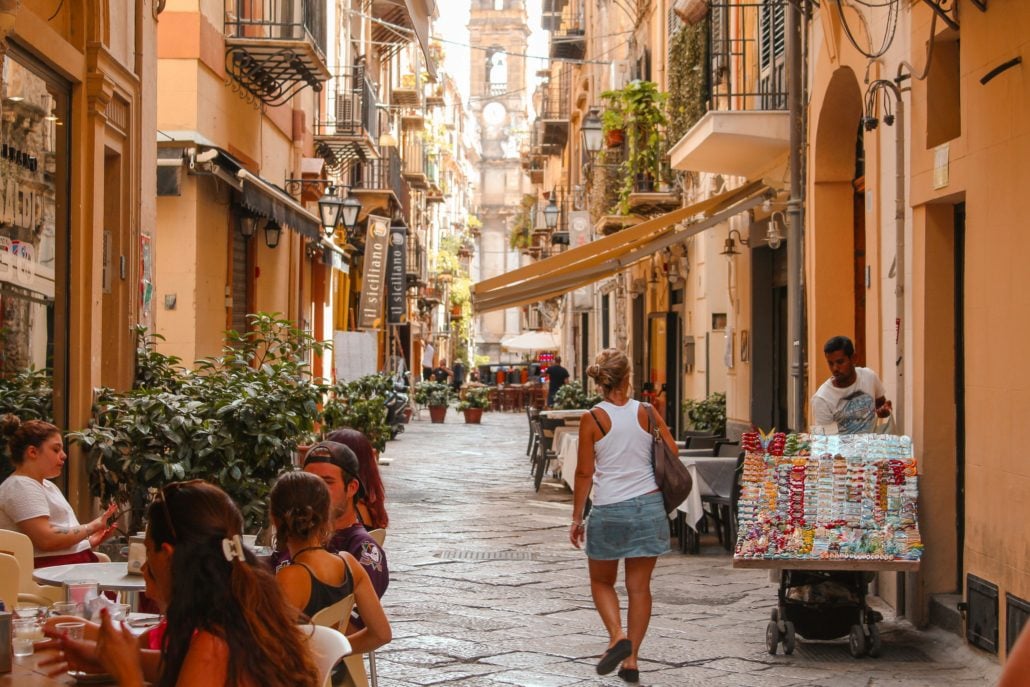 Italy has a population of 59,250,593 people throughout 7,896 municipalities. Italy demonstrates sound performance in health and wellbeing measures, evidenced by a score superior to the Organisation for Economic Co-operation and Development (OECD) average on seven out of 10 key indicators. The OECD is an intergovernmental organization that promotes policies to enhance global economic and social well-being.
Another key indicator of progress in Italy is a global ranking of 26 out of 169 countries in achieving Sustainable Development Goals (SDGs).
Despite Italy’s positive progress, poverty in Italy remains a concern which is important to understand in the context of SDGs. This is particularly so in relation to SDG 3, which aims to promote and improve population health and wellbeing. Here are some updates on SDG 3 in Italy.
Poverty in Italy
Poverty is a social issue in Italy, despite the country being one of Europe’s largest economies. The 2024-2025 report from Italy’s National Institute of Statistics states that more than 5.7 million people and 2.2 million households in Italy were living in poverty. These numbers amount to 9.8% of individuals and 8.4% of households respectively. These numbers remained largely consistent with the previous reporting year.
A rigorous effort to alleviate poverty in Italy is demonstrated through several means, including family allowances and benefits, funded childcare, income support, improved health care access, social services and regional development initiatives. For example, subsidized childcare and school meal assistance are available in some areas in Italy, greatly assisting households. Also, resources to alleviate poverty are dedicated to regions such as Calabria and Campania, where poverty and social exclusion rates are markedly high.
Italy’s National Institute of Statistics highlights the recent improvements from efforts to alleviate poverty. The number of people at risk of poverty or social exclusion fell from 23.1% in 2024 to 22.6% in 2025, household incomes increased and income inequality marginally decreased.
The Sustainable Development Goals (SDGs)
The SDGs comprise 17 global objectives, which the United Nations (UN) developed in 2015. The SDGs represent a crucial call for action by developed and developing countries in a global partnership. The UN developed a 15-year plan to 2030, namely, The UN 2030 Agenda for Sustainable Development. The SDGs were formed as key measurable targets alongside overarching goals to end poverty, protect the environment and ensure prosperity within countries.
As stated above, Italy places at 26 out of 169 countries in the SDG ranking and has an index score of 79.9.
Sustainable Development Goal 3
The overarching aim of SDG 3 is to promote and improve well-being and ensure healthy living for all individuals at every stage of life. SDG 3 comprises 17 sub-groups, all representing important determinants of health. In Italy, 13 out of 17 sub-groups are currently on track or maintaining SDG achievement, while four sub-groups are experiencing challenges, indicated by scores stagnating or tracking at less than 50% of the required rate. Italy’s current progress with SDG 3 is greatest within the sub-group, increased life expectancy at birth.</p><h2>How Italy is Addressing SDG 3
Addressing SDG 3 is crucial as health and wellbeing are cornerstones to attaining a better quality of life. This applies to individuals and the broader population. The National Strategy for Sustainable Development (NSSD) is embedded in Italy’s public health framework as a key mechanism to facilitate Italy’s progress with SDG3. The NSSD is a comprehensive agenda which aligns with the UN 2030 Agenda for Sustainable Development, thereby supporting the achievement of SDGs in the Italian socio-economic and political context.
The NSSD coordinates initiatives at local and national levels, with examples including, yet not limited to: Promoting partnerships between government and non-government organizations to expand health coverage, reforming and making healthcare more accessible via telemedicine services, increasing healthcare staffing and tackling gaps in life-expectancy between the northern and southern regions of Italy. Addressing gaps in life expectancy represents an important action, as this is an SDG 3 component currently tracking at less than 50% of the required rate.
Additionally, Italy works with the World Health Organization (WHO) through the Italian Health Equity Status Report Initiative, to identify and reduce disparities in health outcomes. Examples of dual efforts between Italy and WHO to address SDG 3 include expanding home care services, telemedicine and improved access to childcare and education services, with a particular focus on disadvantaged populations.
Expanding the provision of home care and telemedicine are key public health goals in Italy and central components of Italy’s National Recovery and Resilience Plan (NRRP). As well, applying efforts to improve these areas of health are important to reduce fragmentation between healthcare services, thus improving continuity of care, reducing pressure on the hospital system and improving health care access for the Italian population.
Healthcare Access: Challenges and Progress
The European Environment Agency states that Italy is making significant progress with the SDGs, but continues to experience many challenges. Socioeconomic challenges are notable, including a widening generational economic gap, poor social mobility and enduring poverty which impacts the health and wellbeing of numerous individuals and households.
Poverty is a key factor which can affect progress with SDG 3 in Italy, as individuals affected by poverty are more likely to face barriers that negatively impact their health status. For example, poverty is a barrier to affording health care services, medications and health insurance. Added to this, regions experiencing poverty are more likely to be in areas where healthcare facilities are scarce or hard to access. Considering this, efforts to improve healthcare access, such as telemedicine, are particularly important. Out-of-pocket healthcare spending remains relatively high in Italy and this can place a burden on lower-income households. Considering the above, strengthening access to and affordability of healthcare in Italy are important steps to improving the health of the wider Italian population, regardless of income or location.
Conclusion
In summary, the current update on SDG 3 in Italy is optimistic, as evidenced by 76.5% of SDG 3 subgroups marked as green and on track, a country ranking of 26 out of 169 and an index score of 79.9 in the UN 2030 Agenda for Sustainable Development. SDG 3 encompasses a wide range of health and wellbeing domains and numerous and concurrent initiatives match this, namely, the NSSD, Italian Health Equity Status Report Initiative and Italy’s NRRP. Persistence of initiatives targeted towards strengthening healthcare access and affordability are crucial in enabling further progression with SDG 3. This will ensure that Italy will be able to address the key barriers that people experiencing poverty face and improve healthcare access for the overall population. It is anticipated that continued efforts will ensure a greater proportion of Italian people are able to experience improved health and wellbeing outcomes.
– Alexandra Nash
Alexandra is based in Belfast, UK and focuses on Good News and Global Health for The Borgen Project.
Photo: Unsplash
