Shielding Mothers and Children From Malnutrition in Pakistan
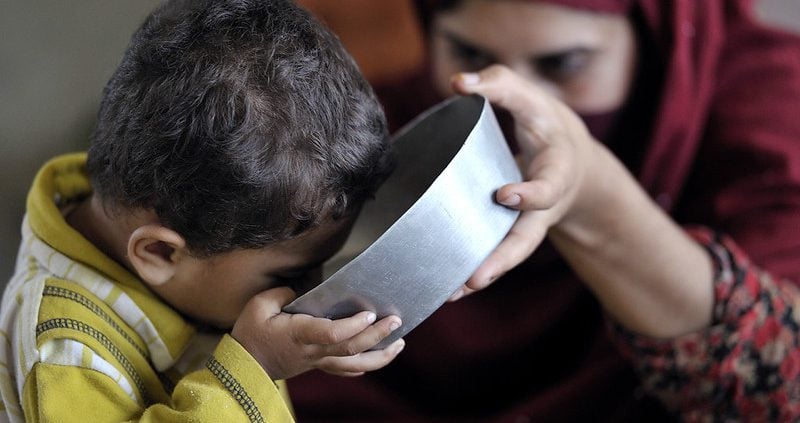 Pakistan’s Benazir Income Support Programme (BISP) announced a three-year extension of the Benazir Nashonuma Programme on July 9, 2026. The extension, backed by the United Nations World Food Programme (WFP), the United Nations Children’s Fund (UNICEF) and the World Health Organization (WHO), will protect an additional 3.3 million children and women from malnutrition. Combined with prior enrollment, the program’s total reach will grow to 8 million people since its 2020 launch.
What the Program Does
The Nashonuma Programme delivers nutrition and health services to pregnant and breastfeeding women and children under 2. It operates through 578 facilitation centers and 224 nutrition stabilization centers across Pakistan. Rather than standing alone, the program is built directly into BISP, Pakistan’s national social protection system.
Pakistan faces a steep malnutrition burden: four in every 10 children under 5 suffer from stunting, amounting to 10 million children nationwide. Wasting affects 17.7% of children under 5, or 5 million children, and contributes to an estimated $17 billion in annual economic losses. The Nashonuma Programme targets these numbers directly by treating nutrition as a core function of the social safety net rather than a separate emergency response.
The Results So Far
Children enrolled in the program were 22% less likely to be stunted by 6 months of age, a result officials describe as among the strongest ever recorded for a nutrition program globally. The program also improved maternal nutrition, increased antenatal care visits and led to healthier pregnancy weight gain and birth outcomes.
The program also carries a track record of sustained government investment. A prior extension agreement, running from September 2024 through June 2026, represented a $194 million contribution from the Government of Pakistan to WFP, bringing total government investment to nearly $500 million since 2020. Officials have described it as the largest government-funded program in WFP’s global history.
In Their Words
“The Government of Pakistan is proud to strengthen this vital partnership,” said Sen. Rubina Khalid, BISP chairperson. She described the program as a foundation for a brighter, more prosperous future for Pakistani children.
WFP Representative and Country Director in Pakistan Anita Hirsch said the program’s results are “extremely promising” for preventing child malnutrition and that the extension will let WFP keep expanding access to nutrition services alongside the government.
UNICEF Representative in Pakistan Pernille Ironside praised the government’s leadership and framed the program as a long-term investment, describing spending on nutrition as ultimately an investment in Pakistan’s future.
Luo Dapeng, WHO Representative in Pakistan, called the whole-of-government model the program’s central strength, spanning sectors including health, nutrition, social protection, water and sanitation, food systems and education. He said WHO remains ready to help Pakistan extend that model to every mother and child, “regardless of economic and social status.”
A Systemic Approach
The program’s design reflects a broader shift in how Pakistan approaches malnutrition. Nashonuma integrates prevention into existing family income support infrastructure, rather than treating hunger and stunting as one-off crises to manage. This allows the program to reach mothers and children early, before malnutrition takes hold.
The three-year extension positions Nashonuma to keep building on its early success. With the program’s reach nearly doubling from 4.7 million to 8 million people, it will protect a larger share of Pakistan’s next generation from the long-term health effects of childhood malnutrition. By pairing UN agencies’ technical resources and funding with government infrastructure already in place, Pakistan has built a program that is easier to implement and faster to scale than either side could manage alone. Other countries facing similar malnutrition burdens may look to replicate that partnership. Above all, the program treats malnutrition as something to prevent, not just something to treat after it takes hold.
– Gonzalo Rodriguez Da Fonte Martins
Gonzalo is based in London, UK and focuses on Global Health and Politics for The Borgen Project.
Photo: Flickr
