How Mangrove Restoration Reduces Poverty in Kenya
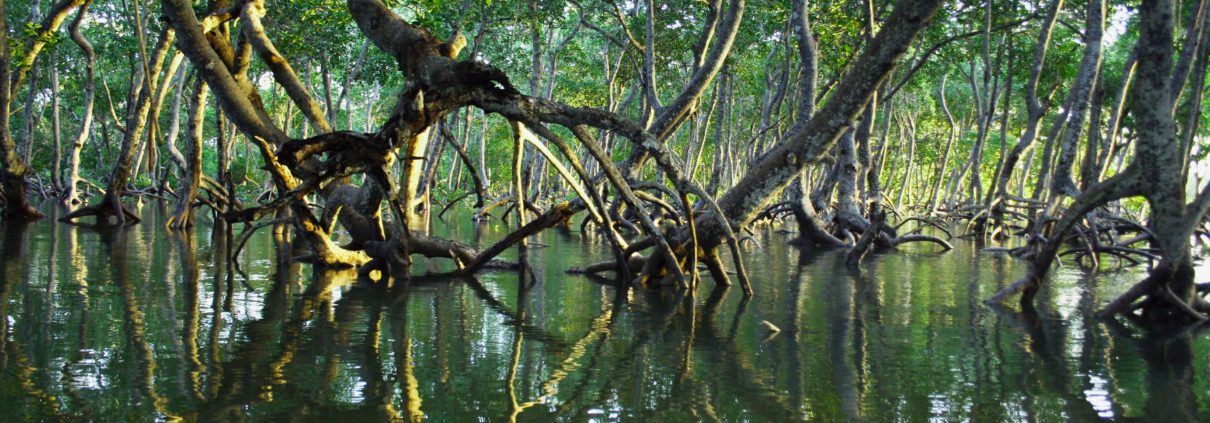 Poverty continues to affect millions of people in Kenya, particularly in rural and coastal communities that depend on natural resources for their livelihoods. According to the World Bank, about one-third of Kenyans live below the national poverty line. Along Kenya’s coastline, many families rely on fishing and small-scale agriculture, making them especially vulnerable to climate change and environmental degradation. Mangrove restoration in Kenya is helping address these challenges by protecting coastal ecosystems while creating new economic opportunities for local communities.
Why Mangroves Matter
For many families living along Kenya’s coast, healthy mangrove forests directly support daily life. Fishermen depend on mangroves because they provide nursery habitats where young fish and shellfish can grow before moving into open waters. When mangrove forests decline due to deforestation or coastal development, fish populations decrease, making it more difficult for families to earn a living. Restoring these forests helps protect both the environment and the livelihoods that depend on it.
Community-Led Restoration Creates New Opportunities
One of Kenya’s best-known restoration efforts is Mikoko Pamoja, a community-led conservation project located in Gazi Bay, a coastal village in southeastern Kenya, that launched in 2010. The initiative protects 117 hectares of mangrove forest while restoring more than 8,000 mangrove trees each year. Instead of relying only on outside funding, the project generates revenue by selling blue carbon credits, which allow organizations and businesses to financially support projects that store carbon while protecting natural ecosystems. The project reinvests this income into community programs that improve daily life for local residents.
The project has produced measurable benefits beyond environmental conservation. Revenue from carbon credits has helped provide clean water to approximately 3,500 people, educational materials for more than 700 schoolchildren and funding for roads and other community infrastructure. According to Mikoko Pamoja, local residents also participate directly in mangrove restoration by collecting seeds, maintaining tree nurseries and monitoring forest health, creating paid employment opportunities while protecting the environment.
Reducing Poverty in Kenya Through Conservation
Mangrove restoration supports local economies in several ways. Community members earn income by collecting mangrove propagules, raising seedlings in nurseries and participating in restoration and monitoring activities. Healthy mangrove forests also improve fish populations, helping sustain the fisheries that thousands of coastal families depend on for food and income.
The project demonstrates that environmental conservation and economic development can work together. By protecting natural resources, communities strengthen their fishing industry while generating additional revenue through blue carbon financing. Although long-term funding and climate change continue to present challenges, community participation has helped keep restoration efforts active for more than a decade.
Looking Ahead
Mangrove restoration in Kenya demonstrates that nature-based solutions can improve both environmental and economic outcomes. Community-led initiatives such as Mikoko Pamoja protect biodiversity, strengthen coastal resilience and generate funding for education, clean water and local development. As the changing climate continues to threaten vulnerable communities, investments in mangrove restoration offer a sustainable way to reduce poverty in Kenya while protecting the coastline for future generations. The project’s success also shows how local communities can lead conservation efforts while improving livelihoods, providing a model that other coastal regions can adapt to meet their own environmental and economic challenges.
– Violette Bardouil
Violette is based in Paris, France and focuses on Good News for The Borgen Project.
Photo: Unsplash
