7 Things To Know About Being Poor in Puerto Rico
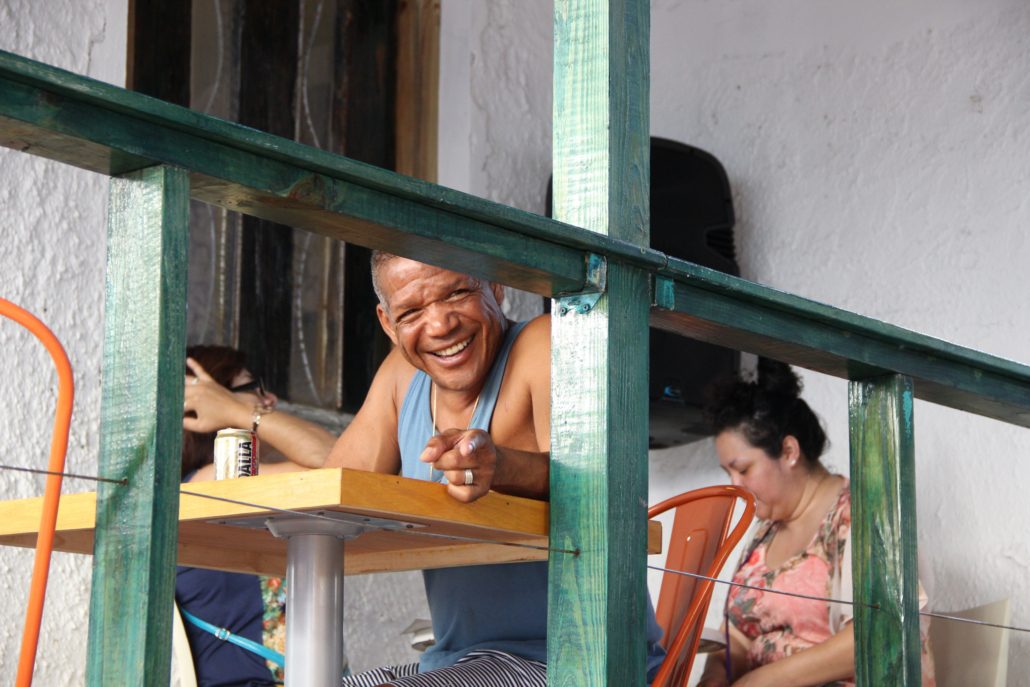 Behind the vibrant culture, Caribbean architecture and the pristine, turquoise waters of the island of Puerto Rico, there lies the truth that more than one-third of its residents live in poverty, making it the poorest U.S. jurisdiction by a wide margin. While the causes are complex, poverty on the island is closely tied to economic, political and historical factors that continue to shape daily life. Here are seven things to know about being poor in Puerto Rico.
1. Poverty’s Roots in US Colonialism
Conditions of poverty have roots in U.S. colonialism. After the United States acquired the territory in the 1898 Spanish-American War, Puerto Rico’s economy transformed into a sugarcane monoculture, primarily through colonial restructuring. U.S. corporations like South Porto Rico Sugar Company and Central Aguirre Sugar Company capitalized on inexpensive Puerto Rican land and labor, consolidating localized, biodiverse farms into massive, industrial sugarcane plantations to satisfy U.S. market demand. This shift led to Puerto Rico’s reliance on mainland U.S. food imports, whose costs were artificially inflated by the Jones Act (officially the Merchant Marine Act of 1920), which required that all goods shipped between U.S. ports be carried on U.S.-built, owned, and operated vessels. Initial colonial exploitation of Puerto Rican resources by the United States set a precedent for ongoing and aggravated conditions of poverty in the territory.
2. Poverty and Unemployment in Puerto Rico
At 43%, Puerto Rico has one of the lowest labor force participation rates in the world, according to The World Bank’s report for 2025. This is significantly lower than the United States, which the World Bank reported at 62%, and the global average of roughly 60%. According to Liberty Street Economics, the decline is “the consequence of an aging population, accelerated by a falling birth rate and outmigration of a relatively young cohort.” These vulnerabilities place considerable strain on the island’s economy, effectively limiting economic growth and increasing the likelihood that families will experience being poor in Puerto Rico.
3. Puerto Rico is the Poorest Jurisdiction of the US
Under the U.S. government’s definition of a persistently poor county as one having maintained poverty rates of 20% or more for at least 30 years, all 78 municipios (county equivalents) of Puerto Rico have experienced persistent poverty, and as The Center for Puerto Rican Studies at Hunter College has stated, have done so “for more than half a century.” Additionally, the poverty rate in Puerto Rico at 37.2% is disproportionately higher than that of even the poorest U.S. states. Mississippi, the poorest U.S. state, has a poverty rate of 14.3%, while Louisiana, the second poorest, has a rate of 14.1%. In contrast, Puerto Rico’s poverty rate is more than twice as high, demonstrating a level of economic hardship unmatched anywhere in the 50 states.
4. Cost of Living Burdens in Puerto Rico
Cost of living burdens in Puerto Rico are higher or as high as they are in U.S. states. The median household income in the United States for 2024 was $83,730, compared to $26,297 in Puerto Rico. It is important to note that this disparity does not reflect lower costs of living in Puerto Rico. The Congressional Research Service reported that, on average in the United States, 49.4% of renter households were housing cost-burdened in 2024, while in Puerto Rico, nearly 72% of renters were housing cost burdened, highlighting the substantial affordability challenges faced by many residents despite significantly lower incomes. Taken together, these figures demonstrate that Puerto Ricans often face both lower earnings and greater housing insecurity, increasing their risk of poverty.
5. Gentrification and the Displacement of Indigenous Puerto Ricans
U.S. citizens relocating to Puerto Rico has led to gentrification and the displacement of indigenous Puerto Ricans. Puerto Rico’s Act 60 (also known as the Incentives Code), which the Puerto Rican government enacted on July 1, 2019, is a comprehensive tax incentive program designed to attract investors, entrepreneurs and businesses to the island. It established a 0% tax on capital gains accrued after becoming a bona fide resident (both for Puerto Rico and U.S. federal taxes), a 100% tax exemption on dividends and interest sourced from Puerto Rico, and 75% exemption on property taxes for a primary residence. Over the combined 2022 and 2023 period, Business Insider reported that 50,577 Americans relocated to the island. This has led to significant and ongoing gentrification in the territory, along with the displacement of local Boricuas due to increasingly unaffordable housing and diminishing purchasing power.
6. Economic Development Policies in PR
The exhausted state of economic development policies in Puerto Rico has critically affected conditions of poverty. Puerto Rico’s persistently high poverty rate has also been exacerbated by the failure of existing economic development policies to generate sufficient employment opportunities. For decades, the territory relied on an export-oriented economic model supported by federal tax incentives that encouraged U.S. corporations to invest and create jobs. However, the expiration of Section 936 of the Internal Revenue Code in 2006 removed many of these incentives, contributing to a prolonged economic decline from which Puerto Rico has yet to fully recover. Subsequent federal interventions, particularly the PROMESA fiscal oversight board established in 2016, imposed austerity measures that reduced public spending and disproportionately affected low-income residents. As economic growth stagnated and job creation lagged, poverty remained deeply entrenched across the island.
7. Federal Funding Parity and Political Self-Determination
Federal funding parity and political self-determination in the focus of active legislative efforts in the 119th Congress could incite positive change. Several initiatives in the 119th Congress seek to address both the structural causes and the urgent realities of being poor in Puerto Rico. The Puerto Rico Nutrition Assistance Fairness Act (H.R. 5168/S. 3958) would extend SNAP benefits to the territory, reducing disparities in federal nutrition assistance and strengthening support for low-income families.
The Puerto Rico Status Act would establish a binding process for Puerto Ricans to determine the island’s future political status, potentially giving residents a stronger voice in federal decision-making and greater influence over policies affecting economic development and public welfare. Additionally, ongoing efforts to reform PROMESA seek to restore greater fiscal authority to Puerto Rico’s elected government and reduce reliance on federally imposed austerity measures. These initiatives aim to provide both immediate economic relief and greater local control over the policies that shape conditions of life in Puerto Rico.
Looking Ahead
Poverty in Puerto Rico is not the result of a single issue, but rather a combination of historical, economic and political factors that have compounded over generations. As Congress considers measures such as the Puerto Rico Nutrition Assistance Fairness Act, reforms to PROMESA and the Puerto Rico Status Act, policymakers have an opportunity to address both the immediate needs of Puerto Rican families and the structural conditions that sustain poverty. Continued advocacy and legislative action will be essential to creating a more equitable future for the island.
– Nilani Mathur
Nilani is based in Longmeadow, MA, USA and focuses on Business and Global Health for The Borgen Project.
Photo: Pixabay
