Ending HIV in the Asia-Pacific
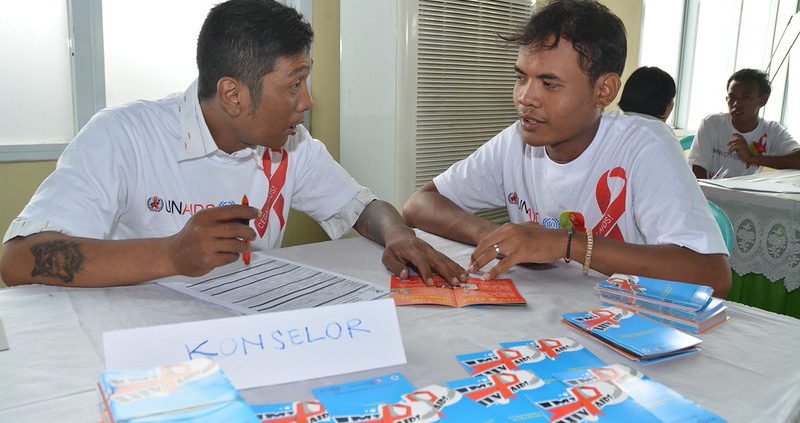 With an estimated 320,000 new HIV infections expected annually by 2030, accelerating HIV programs in the Asia-Pacific is crucial to ending the epidemic before it worsens.
Asia and the Pacific account for 23% of new HIV infections globally each year. In 2024, about 6.9 million people living with HIV resided in the Asia-Pacific alone. Progress remains uneven in many countries, with some even seeing an increase in HIV incidence. Without proper procedures and resources, HIV will continue to rise in the Asia-Pacific.
Barriers to HIV Response
Several barriers have slowed the response to HIV in the Asia-Pacific, impacting prevention efforts.
- Political Attention Decline — A lack of awareness leads to constrained funding, misconceptions that HIV is under control and competition with other health efforts, eventually leading to inadequate funding.
- Unsustainable Funding — Without proper funding, health programs and treatments are not readily available to health care workers. Many economies lack stability, leaving the budget for HIV prevention vulnerable to political shifts and over-reliant on international donors, leading to a fragile structure and an increased risk of funding decline.
- Legal Barriers — Restrictive laws that clash with public health can deter communities from seeking treatment and testing, weakening their trust in health institutions. These laws can also limit accessibility.
- Inaccessibility — A lack of access means many patients cannot reach health clinics for treatment due to lack of documentation, migrant status or residency.
- Gaps and Delays in Treatment — Many patients slip through the cracks, and delays in treatment result in missed opportunities for early diagnosis and care, discouraging individuals and deterring them from returning to clinics for results.
Due to these barriers and challenges, the Asia-Pacific Economic Cooperation (APEC) launched the “Action Plan to End the HIV Epidemic” (2026-2031) in May 2026 to dissolve these barriers and push toward ending HIV in the Asia-Pacific. This initiative begins by helping countries strengthen political commitments, sustain funding and expand accessibility for HIV prevention to eliminate gaps and delays in treatments and testing.
The Action Plan
The plan brings together 21 economies, including China, Japan, Australia, Mexico, Chile and Southeast Asian economies, to promote financing, growth, collaboration and trading for HIV testing, treatment, awareness and protection policies for more vulnerable communities.
Under the action plan, all APEC economies will adopt a strategy to end the HIV epidemic by 2031. Focused on six pillars, the action plan aims to achieve the UNAIDS 95-95-95 target, expand HIV prevention in the Asia-Pacific and reduce new infections by 90% by the end of the plan.
- Domestic Funding — Implementing an HIV/AIDS strategy with an economy that sustains its strategy by using domestic funding within its budgets and eliminating the heavy reliance on external partners.
- Legal and Policy Barriers — Addressing legal policies that restrict access to HIV prevention, testing or services.
- Expanding Accessibility — All economies will have less than 50% of people at risk of HIV infection by providing pre-exposure prophylaxis (PrEP) and other prevention tools as treatment.
- Improving HIV Coverage — Implementing domestic policies that allow for HIV self-testing or community-based testing.
- Providing Swift Treatment of HIV — APEC economies ensure that more than 95% of their population living with HIV receive antiretroviral therapy (ART), access to viral loads and a rapid response after receiving an HIV diagnosis.
- Pathways for Long-Term HIV Prevention, Testing and Treatment — HIV medicines are covered under public insurance and have received market entry approval.
These six pillars aim to provide solutions to past barriers by offering a roadmap for countries to accelerate progress in treating HIV and AIDS. Described as “the beginning of a new phase” of regional cooperation on HIV by Leonardo Chanqueo, project overseer of the APEC HIV Project, the plan represents a significant step toward ending the HIV/AIDS epidemic.
Hopeful Future
With this plan, the barriers slowing the response to HIV in the Asia-Pacific are addressed and resolved. Though the plan is in its early stages, it represents human collaboration and a unified humanitarian effort, promising a hopeful future for the health of affected individuals and communities.
– Kianna Phosouvanh-Sythong
Kianna is based in Upper Darby, PA, USA and focuses on Good News and Global Health for The Borgen Project.
Photo: Flickr
