How the Boda-boda Industry in Kenya Creates Opportunity
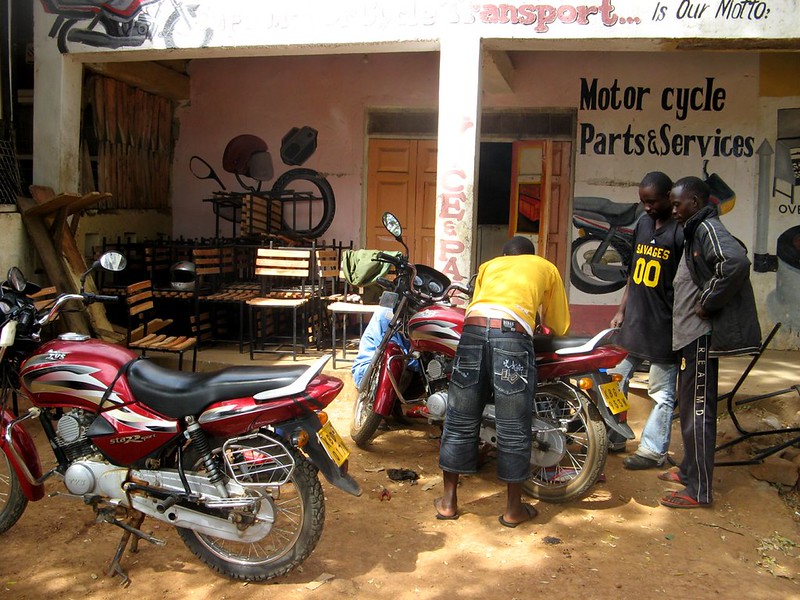 Across many developing economies, poverty is not always transformed by massive infrastructure projects or billion-dollar investments, but instead by simple, accessible solutions that change everyday life. In Kenya, one of those solutions has been the rise of the boda-boda industry. What began as a practical form of transport has evolved into a significant economic force. To explore this transformation, The Borgen Project spoke with Nairobi local Gurkiran Munde about the growing boda-boda industry in Kenya and how it is shaping daily life and economic opportunity.
According to a Viffa Consult report, a Kenyan-based management consultancy that supports micro, small and medium enterprises (MSMEs), boda-bodas now form a critical backbone of Kenya’s transport system, generating KES 660 billion annually.
Munde captured the industry’s everyday importance, telling The Borgen Project that boda-bodas deliver food, drinks, medicine, and almost everything one can think of. Beyond their practical advantages — such as enabling businesspeople to bypass traffic and reach meetings on time — these bikes have also created a series of opportunities for the social fabric of Kenya.
The Transport Shift
According to Munde, the boda-boda industry in Kenya has become essential to daily life because it provides an affordable and practical transportation option in a country where car ownership remains inaccessible for many. A 2023 Statista survey revealed the scale of Kenya’s car ownership gap, with only 7% of respondents reporting they owned a car.
Data from The Global Economy reported Kenya’s average 2021 vehicle price index at 82.99, compared to a global average of 100. While this figure may appear relatively low, vehicle ownership in Kenya remains expensive in the context of average incomes, helping to explain why boda-bodas have become such a popular alternative.
As a result, boda-bodas have emerged as a far more realistic financial option for many citizens. Unlike the small 7% of Kenyans who own cars, the country’s estimated 4 million boda riders ensure that mobility is not restricted to a wealthy minority. By providing cheaper transport, boda-bodas allow more people to reach essential services without being limited by the high costs associated with car ownership. In doing so, the industry has expanded everyday opportunities across many communities in Kenya.
The Employment Shift
Although boda-bodas have increased opportunities for many Kenyans, it is the country’s youth who appear to have benefited the most. Youth unemployment in Kenya has risen sharply in recent years, increasing from 7.3% in 2016 to 15.2% in 2025. This rise has left a significant portion of Kenya’s young labor force without stable employment. Young people make up more than 35% of the country’s population, making youth unemployment a major economic challenge.
Against this backdrop, the gradual expansion of the boda-boda industry in Kenya has created an important new route into employment. Munde told The Borgen Project that the industry’s low barriers to entry make it far more accessible than many forms of formal employment, with the main requirement being obtaining a driver’s license.
Research conducted by Too Zakayo Kibet, a student from the University of Nairobi, further highlights the industry’s economic potential. A study of 206 youth boda-boda drivers found that 94% of those surveyed were able to meet their basic needs through the work, while 88% reported that their financial status had improved as a direct result of employment in the industry. Furthermore, 63% of the youth riders were also able to build savings, demonstrating that the work can generate not only short-term income but also long-term financial security. An additional 67.7% reported an overall increase in their purchasing power after entering the boda-boda sector.
These findings demonstrate the strong relationship between the boda-boda industry and economic opportunity in Kenya. Increased income from motorbike employment can play a significant role in alleviating poverty by allowing individuals to move beyond day-to-day survival. When riders are able to consistently meet their basic needs and generate savings, they and their households gain greater financial stability and resilience.
Looking Ahead
As Munde told The Borgen Project, boda-bodas have created a whole new avenue for employment, especially for young people. By reducing reliance on cars and lowering barriers to entry into work, the boda-boda industry has opened economic doors for Kenyans, demonstrating that accessible, low-cost solutions can drive meaningful poverty reduction at scale.
– Sophia Lupo
Sophia is based in London, UK and focuses on Good News for The Borgen Project.
Photo: Flickr
