Wind Energy Projects in Rural Oman and Economic Stabilization
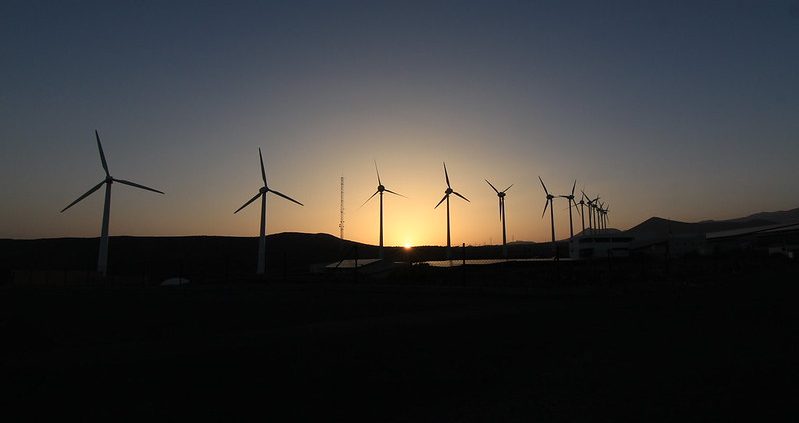 In the governorate of Dhofar in Oman’s fog-filled mountains, the traditional khareef (monsoon) winds have become a new form of currency. By 2026, the initiative to provide clean, low-cost electricity to remote communities will advance with the expansion of Dhofar Wind Farms. Civilians will witness the region’s most remote desert landscape transform into a renewable energy powerhouse, showcasing the power of wind energy projects in rural Oman.
The Power of Two: Dhofar 1 and Dhofar 2
The Dhofar 1 Wind Farm became the first utility-scale wind project in the Gulf. Developed by Abu Dhabi Future Energy Company (Masdar) through an EPC consortium of GE Renewable Energy and Spain’s TSK, the wind farm aimed to generate enough electricity to supply 16,000 homes, meeting 7% of Dhofar Governorate’s total power demand.
By doing so, it offset carbon dioxide emissions annually and reduced reliance on natural gas for domestic power generation. In 2026, 150 km north of Salalah, 13 General Electric wind turbines totaling 50MW of power will operate. While the official estimate for homes powered is 16,000, the project was designed to potentially meet the consumption of up to 60,000 homes in ideal conditions.
The proven reliability of Dhofar 1 established a blueprint for scalable green infrastructure in the desert. Recognizing that clean energy could catalyze broader regional development, Oman accelerated its strategy. Building on the operational success of this initial project, the newly commissioned Dhofar 2 launched through a strategic agreement between Nama Power and Water Procurement and a consortium of leading energy firms.
In the spirit of Oman’s 2040 vision, a $112 million (RO 43 million) investment was accumulated. At double the number and capacity of Dhofar 1, Dhofar 2 adds another 125MW to the grid.
Together, these facilities now provide clean energy to more than 34,000 homes and offset 268,000 tonnes of carbon dioxide annually. For the first time, rural southern Oman is seeing a future where its energy is as limitless as the wind.
The Local Impact: In-Country Value
The CEO of Nama Power, Ahmed bin Salm Al Abri, stated that Dhofar 2 will contribute to freeing an estimated 76 million cubic meters of natural gas annually. Said gas can now be diverted to more valuable industrial uses or exported to stabilize the national economy. The 36 wind turbines required for the completion of the project have arrived, with foundations completed and in-country value targets exceeded through these vital wind energy projects in rural Oman.
Oman utilizes a targeted procurement method called “Ring-Fencing.” By legally isolating specific components of the project’s supply chain, such as road construction, electrical wiring and long-term maintenance services, the government ensures that international conglomerates cannot bring in foreign subcontractors. Instead, these contracts are “fenced off” exclusively for Omani National Registered Suppliers (NRS) and local SMEs. This mechanism guarantees that a massive portion of the project’s capital remains within the governorate, transforming a standard construction site into a self-sustaining regional economic hub.
Not only is the government pushing the 2040 vision for an environmentally friendly economy, but it is also nurturing local businesses, shifting the Dhofar project into a regional economic hub. A “Mandatory List” of contractors was created, including more than 312 products that must be “Made in Oman.” For the Dhofar 2 expansion, reaching the 25% In-Country Value target allows at least $28 million of the $112 million investment to be paid directly to Omani companies for engineering, logistics and civil works.
Major energy players run “Vendor Development Programs” that provide technical training to small local businesses so they can meet international quality standards.
The Human Impact: “Omanization” and Training
For remote southern communities, this shift fundamentally alters daily life. Previously, local schools and health care clinics in the Dhofar highlands faced frequent power rationing due to the erratic nature of diesel transport. The integration of stabilized wind power means these vital facilities now operate with uninterrupted, 24-hour electricity.
According to the Nama Group’s sustainability frameworks, the Dhofar wind initiatives are serving as an active classroom for the next generation of Omani engineers. Specialized training modules have been deployed to equip local youth with highly technical competencies in wind turbine diagnostics, AI-driven grid management and automated robotics. This targeted capacity building has generated approximately 150 direct and indirect jobs within the region.
By shifting local expertise toward advanced green technologies, the project ensures that these newly skilled professionals secure sustainable careers designed to last throughout the 25-year operational lifespan of the wind farms, keeping the financial and intellectual rewards of the energy transition entirely within the local community.
Rural Stability
For generations, economic necessity forced rural Omani youth to abandon their home provinces, migrating en masse to the heavily centralized capital city of Muscat in search of employment. This traditional “urban drift” hollowed out rural communities and placed immense infrastructure strain on the capital. However, the specialized localized training mandated by the Dhofar wind farm initiatives is successfully turning the tide. Guided by the Oman National Spatial Strategy (ONSS) managed by the Ministry of Housing and Urban Planning, these projects serve as a key place-based delivery model to decentralize public investment and economic development across all 11 governorates.
By equipping local technical college graduates directly with elite skills in wind turbine diagnostics, AI-driven grid management and automated engineering, these projects provide lucrative, high-tech career trajectories without forcing families apart. Instead of fleeing the countryside, young Omani professionals are choosing to stay in the Dhofar governorate to anchor a newly emergent local green economy. This structural shift achieves a core priority of the ONSS framework: ensuring a balanced, resilient distribution of growth that keeps rural communities both demographically stable and economically vibrant.
Looking Ahead
In 2026, the Dhofar wind projects proved a transition of dual victory. In addition to creating sustainable energy, they have created investments in local companies and expanded the job market for the Omani youth. The Sultanate is ensuring an often difficult goal: driving long-term economic development through wind energy projects in rural Oman. The desert winds, once only regarded as a geographical consequence, have become the heart of Oman’s rural future.
– Celine Dib
Celine is based in London, UK and focuses on Good News and Technology for The Borgen Project.
Photo: Flickr
