Disaster Relief in Jamaica Acts Fast Following Hurricane Melissa
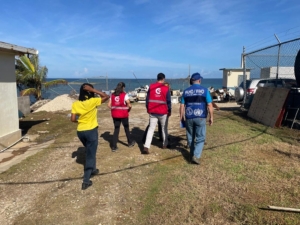 Hurricane Melissa impacted several countries across the Caribbean, including Jamaica. Melissa first made contact with New Hope, Jamaica, off its west coast on October 28, 2025, and caused mass devastation and destruction across the island. By that time, Melissa had become a Category 5 storm, which is the most severe and dangerous designation for hurricanes on the Saffir-Simpson Hurricane Wind Scale. The National Hurricane Center (NHC( approximates the winds of Category 5 storms to reach 157 mph or higher and cause the following catastrophic damage:
“A high percentage of framed homes will be destroyed, with total roof failure and wall collapse. Fallen trees and power poles will isolate residential areas. Power outages will last for weeks to possibly months. Most of the area will be uninhabitable for weeks or months,” NHC stated.
Response
The U.S. promptly responded to the devastation caused by Hurricane Melissa; President Trump authorized the Department of State to send immediate disaster relief in Jamaica to support the country’s most impacted communities. Secretary Rubio deployed urban search-and-rescue squads from a regional Disaster Assistance Response Team within hours of Melissa’s ending.
Other foreign-aid relief efforts include the State Department and U.N. joint deliveries of essential supplies, including food and water, medical and hygiene supplies and temporary shelters. The Government of Jamaica has also established a dedicated relief fund for the devastation.
Economy
In 2024, Jamaica’s economy had made significant strides towards improvement; the rate of public debt decreased from 140% in 2012 to 64.9% in 2024. However, the impacts of Hurricane Melissa in 2025 and those of Hurricane Beryl in 2024 destabilized this progress. In anticipation of Hurricane Melissa making contact with the island, Jamaica put several measures in place to soften the economic disruption it would bring about. These pre-crisis measures include widespread macroeconomic management, disciplined fiscal policy ratification, and multi-layer disaster risk financing.
Relief Efforts
In the fall of 2025, disaster relief in Jamaica following Hurricane Melissa became a focus of many non-profits. Red Lightning, a disaster aid NGO, delivered generators and Starlink units to reinstate communication across the island and internationally.
Groups like All Hands & Hearts, the International Federation of Red Cross and Red Crescent Societies (IFRC) and the Salvation Army mobilized to conduct evacuations, prepared for cleanup and recovery efforts, and supported local readiness through providing supplies to about 60,000 impacted households across Jamaica.
In addition, the U.N. World Food Program (WFP) and the World Central Kitchen (WCK) donated thousands of meals to Jamaican evacuees, first responders, and other impacted communities across the Caribbean.
The Future
Jamaica’s economy is still at risk of suffering long-term effects from Hurricane Melissa. The country’s main industries are tourism and agriculture. The widespread catastrophic damage that Melissa caused put these industries at risk; Jamaica is reliant on the steady stream of tourists and its ability to farm and export produce.
The aftermath of Melissa severely threatened both of these industries. More specifically, the storm killed 32 people and negatively impacted an estimated 1.5 million of the country’s 2.8 million total population. Despite the degree of destruction caused by the storm and the economic precarity left in its wake, the rapid disaster relief in Jamaica is a testament to the networks of support that came together following the strongest Atlantic hurricane to ever strike the island. These relief efforts bode well for Jamaica’s ability to swiftly recover and heal following Melissa’s devastating impact.
– Natalie Naylor
Natalie is based in New York, NY, USA and focuses on Good News and Global Health for The Borgen Project.
Photo: Flickr
