Rwanda’s F1 Ambitions: A Race To Transform Africa
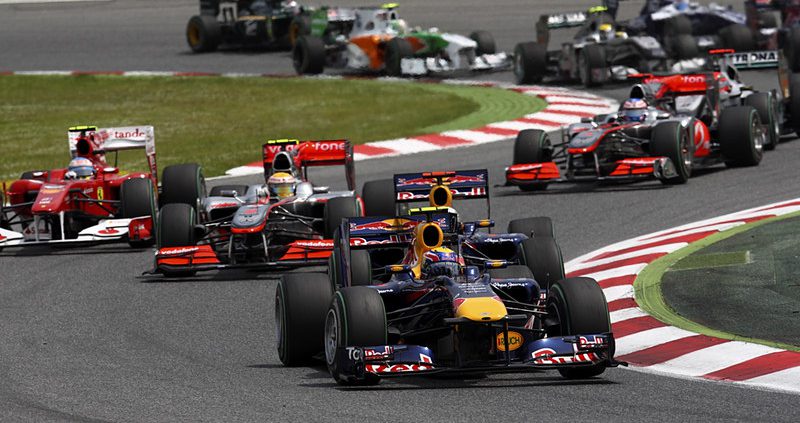 Rwanda, a landlocked nation in East Africa, is making a high-speed push onto the global stage and Formula 1 (F1) may be its most powerful vehicle yet. Rwanda’s F1 ambitions and economic growth have become central talking points in development circles as the sport turns its attention back to Africa for the first time in more than three decades. Rwanda positions itself not only as a host of the race but also as a model for how developing nations can use global sporting events to accelerate economic transformation.
Rwanda’s $1.2 Billion F1 Bid
The Rwandan government has officially bid to host Africa’s first F1 Grand Prix since the 1993 South African Grand Prix at Kyalami. The centerpiece of the initiative is a $1.2 billion state-of-the-art circuit planned near the new Bugesera International Airport, about 40 kilometers from the capital, Kigali. Construction is expected to begin in 2026, with the inaugural race targeted for 2027 or 2028.
Rwanda’s Foreign Minister, Olivier Nduhungirehe, confirmed that the country remains in active talks with F1 leadership, pointing to the nation’s growing track record of hosting major international events. “We have demonstrated the capacity to host major sporting events,” Nduhungirehe told Semafor Africa.
The Economic Case for a Grand Prix
The link between F1 and Rwanda’s economic growth and long-term poverty reduction is grounded in concrete data. According to Further Africa, each F1 Grand Prix injects more than $100 million into a host country’s economy. Television broadcasts reach more than 400 million viewers worldwide and generate significant sponsorship and hospitality revenue.
Rwanda’s broader economy is already on a strong upward trajectory. The World Bank reported that Rwanda’s real GDP grew by 8.9% in 2024, surpassing the previous year’s rate of 8.2%, driven by robust private consumption, significant investment and strong performance in the services and industry sectors. That growth also produced tangible results for workers, with more than half a million new jobs created year over year.
Sports Tourism Already Delivering Results
Rwanda has not waited for F1 to begin building its sports economy. The country signed sponsorship deals with Arsenal, Paris Saint-Germain, Bayern Munich and Atlético de Madrid as part of its “Visit Rwanda” tourism campaign. This strategy helped drive a 36% increase in tourism revenue to $636 million in 2023.
In 2025, the Rwanda Development Board (RDB) reported tourism revenues rising to $685 million, supported by 1.49 million visitor arrivals, a 9% year-over-year increase. That year also saw Rwanda host the UCI Road World Championships, a historic first for Africa, alongside Season 5 of the Basketball Africa League at the BK Arena in Kigali and the 73rd FIFA Congress. Rwanda’s travel and tourism sector contributed a record $1.5 billion to the national economy in 2024, representing 9.8% of GDP.
Building the Infrastructure of Growth
Rwanda’s sports ambitions are matched by targeted infrastructure investment. The Ministry of Sports has set a target of generating approximately $20.4 million (Rwf 30 billion) from sports tourism by 2029, a dramatic increase from the roughly $681,000 (Rwf 1 billion) projected for the 2024/25 fiscal year. Plans also include the construction of 540 sports facilities nationwide by 2028/29, with priority given to schools and public spaces to broaden access to athletics and associated economic opportunities.
Job creation is a direct priority. Experts forecast steady growth in sports tourism jobs, with positions increasing from 2,625 in 2024/25 to 3,190 by 2028/29. This growth across hotels, event planning and sports support services will create clear employment opportunities for young Rwandans.
A Blueprint Beyond the Track
Rwanda’s sports-led growth model aligns with its broader Vision 2050 agenda, which prioritizes economic diversification, job creation and sustainable development. The RDB reported $2.62 billion in registered investments across 799 projects in 2025, which are expected to generate more than 38,000 jobs in real estate, manufacturing and tourism. Analysts tracking the relationship between F1 and Rwanda’s economic growth say the motorsport bid reflects a broader pattern of using high-visibility events to attract foreign investment and build lasting infrastructure.
Local drivers Eric Gakwaya and Queen Kalimpinya have expressed optimism that Rwanda’s motorsport ambitions will also catalyze the development of local talent. It will inspire a new generation to pursue careers in competitive racing and the industries that support it.
If Rwanda secures the Grand Prix, it will restore Africa’s presence on the F1 calendar. It will also demonstrate how strategic investment in major sporting events can drive poverty reduction, infrastructure development and long-term economic growth across the continent.
– Nay Mohamad
Nay is based in Milan, Italy and focuses on Business and Technology for The Borgen Project.
Photo: Flickr
