Project AI Evidence: 3 Ways This Initiative Tackles Poverty
 People often consider AI a groundbreaking technology that is set to reshape lives in the future, both near and far. In recent times, the technology has drawn increased scrutiny due to its harmful effects, such as its water consumption, disruption of the job market and myriad other issues.
One initiative seeking to reap the benefits of AI is Project AI Evidence (PAIE), which the Abdul Latif Jameel Poverty Action Lab (J-PAL) at MIT launched in February 2026. The initiative connects governments, NGOs and tech companies with experts in fields such as economics at MIT. This article outlines three ways Project AI Evidence is working to lift people out of poverty.
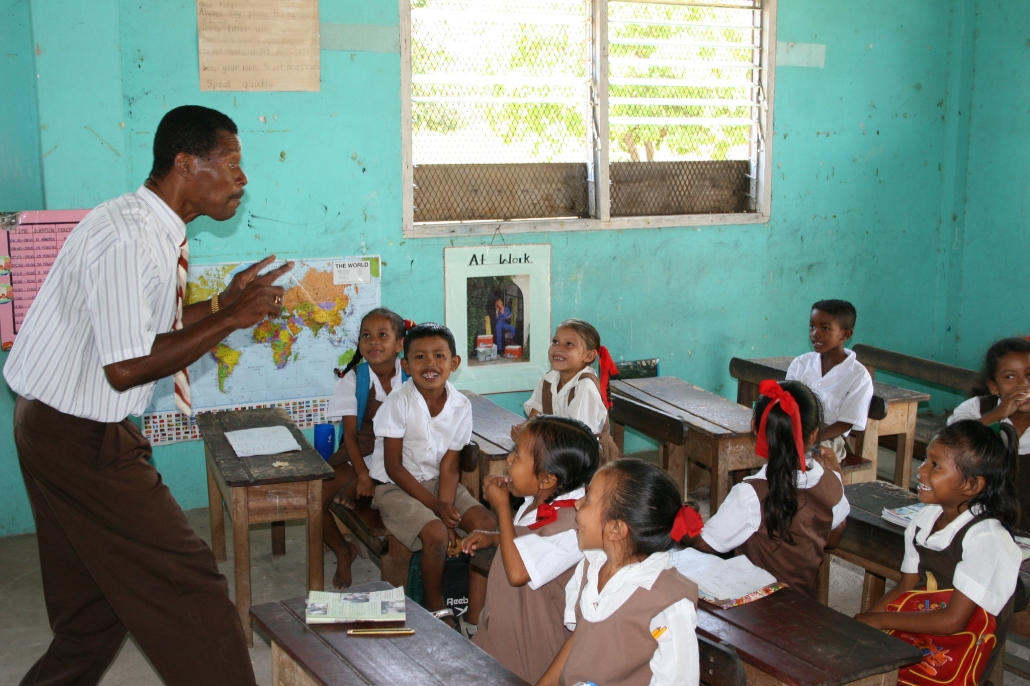
1. Closing Gaps in the Classroom
Kenya’s education system faces deep challenges that make personalized learning especially valuable. According to UNICEF, the pupil-to-teacher ratio reaches 77 to one in counties such as Turkana, and roughly nine in 10 children from poor households fail to complete eighth grade. The country also contends with a teacher deficit of more than 90,000, overcrowded classrooms and stark regional inequalities in learning outcomes. Against this backdrop, tools that help teachers tailor instruction to individual students could reshape how millions of children learn.
The education social enterprise EIDU has developed an AI tool in Kenya that caters classroom teaching to the individual needs of students. The tool identifies gaps in student learning and flags areas that require more attention. EIDU’s platform combines structured pedagogy with digital personalized learning content, and the organization has agreements with 46 out of 47 Kenyan counties to provide the platform to all pre-primary schools, with a goal of reaching two million learners by 2026. In India, the NGO Pratham has incorporated AI into its evidence-informed “Teaching at the Right Level” approach to expand personalized learning. J-PAL researchers Daron Acemoglu, Iqbal Dhaliwal and Francisco Gallego will lead studies evaluating both cases, measuring key outcomes such as teacher productivity and student learning.
2. Classroom Gender Bias Reduction
In Italy, researchers are collaborating with the Ministry of Education to test whether AI tools can address classroom gender bias. The research targets gaps in student performance and the subconscious bias educators may hold toward their students based on gender. Project AI Evidence is studying two tools. One helps teachers predict student performance, while the other provides real-time feedback on the diversity of teachers’ classroom decisions.
3. Use of AI in Finding Job Opportunities
Returning to Kenya, the stakes for youth employment are considerable. The Federation of Kenya Employers reports that young people aged 15 to 34 make up roughly 35% of the population but face an unemployment rate of nearly 67%, about five times the national average. More than 1 million young Kenyans enter the labor market each year, many without the skills employers seek. The World Bank places the narrower youth unemployment rate for those aged 15 to 24 at 15.25% in 2025.
Jasmin Baier and J-PAL researcher Christian Meyer, in collaboration with NGOs Swahilipot and Tabiya, are evaluating a career guidance AI tool called Compass. Tabiya has launched Compass as an open-source chatbot that helps job seekers explore and articulate their skills, including those gained through informal work. The tool is designed to recognize capabilities from both formal and informal work experiences and to match job seekers with opportunities suited to their actual skill sets. Pilot programs are running in Kenya, South Africa and Ethiopia, and more than 600 youth on Kenya’s coast have already received training in soft skills and AI through Swahilipot’s programs to boost job prospects. The J-PAL evaluation will measure how the tool changes job search strategies and employment outcomes. The research aims to aid career counsellors rather than replace them.
Why Poverty Is at the Heart of the Initiative
The three projects share a common thread. Each targets a country where poverty, education and employment reinforce one another. In Italy, absolute poverty reached 5.7 million people in 2024, according to the national statistics agency ISTAT. The divide is sharply regional. Households in absolute poverty reached 10.5% in the South compared with 6.5% in the Center, and ISTAT’s data show that the incidence falls significantly as the educational qualification of the household reference person rises. Italian children and young people have borne much of the burden, with more than 1.28 million minors in absolute poverty.
In Kenya, the picture is even starker. According to UNICEF, approximately 1.13 million children of primary school age are not enrolled in school, and hidden costs such as uniforms push many families out of the system entirely. A 2024 peer-reviewed study published in Compare: A Journal of Comparative and International Education found that the financial burden of school uniforms was among the largest contributors to dropout decisions in Kenya. Access to higher education remains deeply constrained: the World Bank puts Kenya’s tertiary enrollment ratio at around 10% of the relevant age group, and many graduates still find their skills misaligned with labor market needs. Education and employment form a tight loop. Without schooling, young people struggle to find dignified work, and without work, families cannot break cycles of poverty that keep the next generation out of school.
By targeting both ends of this loop, personalizing classroom instruction and connecting job seekers to overlooked opportunities, Project AI Evidence attempts to address poverty at the points where AI tools can realistically intervene.
Conclusion
As AI expands its reach into most facets of modern society, research such as that conducted at Project AI Evidence aims to highlight the positive effects the technology can have on issues such as poverty alleviation through better education, reducing gender-based bias and surfacing job opportunities. Funders, including Google.org, Community Jameel, Canada’s International Development Research Centre, U.K. International Development and Amazon Web Services, provide strong financial backing to expand the research and potentially implement further tools.
J-PAL plans to expand its reach and connect with governments across the globe. The organization aims to achieve its goals responsibly through data-driven scientific measures. With tools such as these, policymakers can draw on new evaluations to address the myriad issues that pertain to global poverty in the years ahead.
– Jamie Noone
Jamie is based in Dublin, Ireland and focuses on Good News and Technology for The Borgen Project.
Photo: Flickr
