Gender Wage Gap in Kyrgyzstan
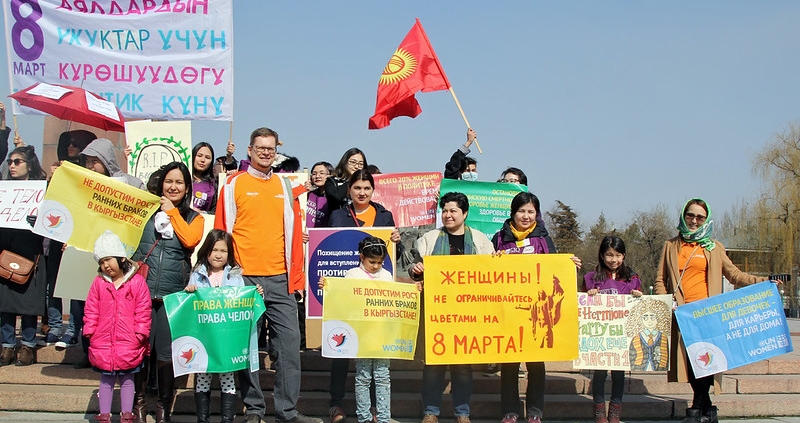 Located in the east of Central Asia, Kyrgyzstan is a small country with a notable governance history. After several years of rule under the Union of Soviet Socialist Republics (USSR), Kyrgyzstan regained its independence and began governing as its own nation. However, conflicts remain. The country faces various instances of corruption, political instability and high poverty rates. Alongside these systemic issues lies a more personal struggle: the gender wage gap.
Statistics
According to the United Nations (U.N.) Women, the average female employee’s salary equates to roughly 75% of the average male worker’s earnings. Even when working similar jobs, men tend to receive higher pay. Some reasons for this gap include the fact that women often occupy lower-paying sectors such as education and health care. On top of working paid jobs, women on average take on approximately 4.5 times more domestic tasks than men, including household chores, food preparation and child care. These tasks go unpaid and limit career opportunities. Traditional gender norms in Kyrgyzstan have also caused the women’s employment rate to drop from 49.3% to 43.8% over the past 15 years.
Community Impact
The gender wage gap has caused hardship within communities. Some argue that the gap is deliberately unfair and discriminatory toward female employees, limiting their opportunities for career growth. In some cases, it has caused households to go without food. The Borgen Project recently spoke to a resident who has lived in Kyrgyzstan his entire life and agreed to share his story. The interviewee requested to remain anonymous and will be referred to as T.
T was born and raised in a close-knit community and grew up with a mother and a sister. Household finances were limited, which motivated his mother to work as a barista for several years to keep the family income afloat. T recalled that the family was sometimes unable to afford basic necessities, meaning he and his sister would spend some nights going hungry and having to fend for themselves when their mother was not home.
Discrimination against women in the workplace is not a series of isolated incidents. It can affect entire communities at once. T said the divide in pay between male and female workers was significant enough that local families relied on the generosity of others to make ends meet. He described communities of hard-working families in similar situations, where trust and mutual support became essential for survival. Despite his mother’s extra work hours, the family barely cleared the threshold for many nights.
T said his mother worked long days and nights and received very little in return. He noted that he knew many other hardworking women who faced harassment or mistreatment simply because of their gender.
Outside of traditional gender roles limiting work opportunities, Kyrgyzstan also faces an increased number of domestic violence cases targeting women and girls. According to the Kyrgyz Interior Ministry, police reported 10,164 cases of domestic violence and assault in early to mid 2025, with numbers continuing to rise. Many instances go unreported due to coercion, isolation or financial reliance on the perpetrator.
Solutions
Several solutions are being implemented to address the gender wage gap in Kyrgyzstan. These include the Kyrgyzstan Gender Equality Strategy of 2030, which aims to strengthen protections for women, and the Convention on the Elimination of All Forms of Discrimination Against Women (CEDAW), which oversees and monitors workplace harassment and discrimination. The National Federation of Female Communities of Kyrgyzstan (NFFCK) is a nongovernmental organization working to eliminate harmful practices such as domestic abuse and bride kidnapping. Activist Urkuya Salieva, who fought for social justice and women’s rights, continues to serve as a symbol of advocacy in Kyrgyzstan.
Looking Ahead
Traditional gender norms in Kyrgyzstan have contributed to the gender wage gap, causing a loss of jobs and career opportunities for women and making it more difficult for them to provide for themselves and their families. As shown by T’s account and the rising number of domestic violence cases, the gender wage gap has had direct effects on local communities and households. These incidents are not isolated but are systematically affecting many residents of Kyrgyzstan, meaning cooperation between government, civil society and international organizations remains essential to closing the gap.
– Will Mancuso
Will is based in Lake Mary, FL, USA and focuses on Good News and Technology for The Borgen Project.
Photo: Flickr
