Community Support for Migrants in Mexico
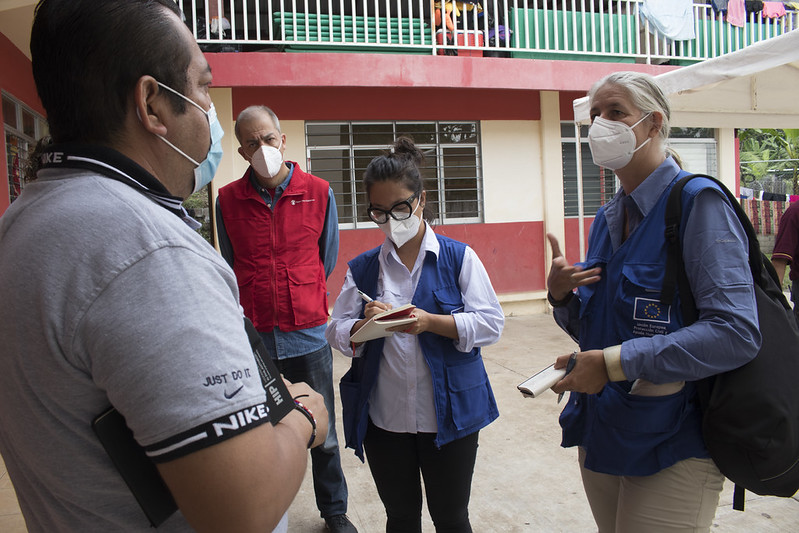 Community support for migrants in Mexico continues to play a critical role amid financial and policy challenges that have strained humanitarian assistance services. As Mexico hosts hundreds of thousands of displaced people seeking asylum or protection, coordinated action by international nonprofits, local shelters and grassroots partners helps sustain essential services. These services include food distribution, temporary housing, legal aid and economic support.
Funding Reductions and Service Gaps
Mexico’s 2025 federal budget projects about $460 billion in revenue and modest economic growth. However, cuts to foreign aid, particularly programs affected by the expanded Mexico City Policy, have reduced funding for health, food assistance and legal support that nonprofits rely on to assist migrant populations. These reductions have increased pressure on humanitarian networks already managing high service demand.
In 2025, the U.N. refugee agency (UNHCR) in Mexico lost approximately 60% of its operating budget due to cuts in foreign assistance. This led to the closure of four offices and slower asylum processing, resulting in longer wait times for individuals awaiting decisions. These delays have contributed to overcrowding in shelters and increased vulnerability among migrants in cities such as Tapachula and Tijuana.
Nonprofits at the Frontline
Despite these challenges, community support for migrants in Mexico persists through coordinated efforts by both international and local organizations. The International Rescue Committee (IRC) has operated in Mexico since 2019, providing emergency assistance, including food distribution, cash support, hygiene kits and legal guidance, to displaced individuals in cities such as Tijuana and Ciudad Juárez. By partnering with community groups and local shelters, the IRC helps extend reach and facilitate access to asylum procedures.
In many cases, these organizations act as primary connectors between migrants and essential services. For example, shelters supported by international and local nonprofits continue to offer temporary housing, daily meals and referral services for medical and legal needs, often operating beyond capacity. Volunteers and community donations remain integral to sustaining these operations amid funding uncertainty.
Food Assistance and Local Partnerships
Nutrition support is a critical component of humanitarian care. World Central Kitchen has provided regular meal distributions at shelters and mobile feeding sites, helping ensure that displaced families receive adequate nourishment even amid limited resources. These efforts often collaborate with local kitchens and community centers to reach larger populations.
Food redistribution networks like food banks play a complementary role. They collect surplus food from donors and redistribute it to shelters, community kitchens and vulnerable migrant households. These partnerships strengthen food security and reduce waste, reinforcing community engagement in humanitarian response.
Faith‑based organizations and local civic groups also contribute, offering space, supplies and volunteer support. Many churches, community centers and educational facilities open additional shelter space during peak demand periods. This highlights the essential role of local partnerships in sustaining community support for migrants in Mexico.
Economic Barriers and Long-Term Stability
Access to stable employment remains challenging for many migrants in Mexico due to restrictive work authorization policies and lengthy asylum processing. Without legal employment opportunities, many remain dependent on humanitarian services. They are forced into informal labor markets with lower wages and fewer protections.
These conditions increase the risk of poverty, exploitation and housing instability. In addition, limited access to health care, education and financial services compounds challenges faced by displaced families. This creates a cycle of economic vulnerability that requires sustained intervention from humanitarian organizations and policy frameworks supporting legally authorized employment pathways.
Challenges and Continued Resilience
Humanitarian organizations report ongoing challenges, including funding shortfalls, staffing limitations and increasing demand for services. A survey of civil society groups working with asylum seekers found that more than half of legal and psychosocial support providers are at risk of reducing services or closing operations without additional resources. This heightens pressure on frontline shelters and assistance programs.
Despite these obstacles, community support for migrants in Mexico remains adaptive and resilient. Through collaboration among international nonprofits, local shelters, food relief partners and volunteer networks, essential services such as shelter, meals and legal support continue to reach displaced populations. These combined efforts help sustain humanitarian care while promoting long‑term stabilization and economic inclusion for migrants navigating complex displacement challenges.
– Kianna Hines
Kianna is based in Brooklyn, New York, USA and focuses on Global Health for The Borgen Project.
Photo: Flickr
