How Women’s Cooperatives in Morocco Are Boosting the Economy
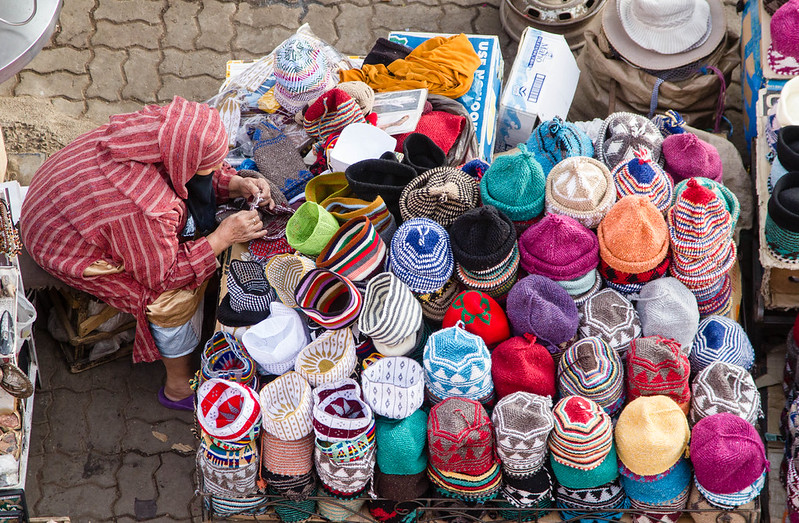 Women’s cooperatives in Morocco are becoming vital in driving development, reducing poverty and advancing female empowerment as the North African nation recovers from the COVID-19 pandemic and seeks to boost economic growth.
Women’s Cooperatives in Morocco: A New Proud Tradition
The cooperative movement in Morocco is a relatively modern phenomenon, becoming prominent only in the late 20th century. Cooperatives were first established as a powerful response to limited employment opportunities for women seeking financial independence and a sense of solidarity and collaboration. They have since transformed into an economic force in both agriculture and artisanal production.
In 2025, there were 7,891 women’s cooperatives in Morocco, comprising more than 73,000 members. They involve 267,000 women who farm, produce and sell products ranging from embroidered textiles and carpets to livestock, agricultural products and cosmetics. This practice not only drives local economies but also unites rural communities, where 61% of women’s cooperatives in Morocco are located.
It also empowers poor women with limited economic opportunities to gain financial agency, real market power and a stake in the nation’s future.
Toudarte, Agadir: Argan Oil
For the last 22 years, Toudarte has been at the center of a growing community of women finding solidarity, purpose and employment in a growing argan oil cooperative. Meaning “life” in Amazigh, Toudarte has, from the start, prioritized developing an operation that delivers sustainable products and practices for both the environment and the now 100 women who make up its ranks.
Not only does Toudarte empower and economically benefit a region and its residents, but its authentic, traditional production methods also protect a historic Amazigh practice from soulless industrialization. Since its founding in 2004, the co-op has seen steady success. The women at Toudarte now plan to expand their independent business and open an inn for guests who want to experience the argan forest and its production process.
Not only does this development signal an ever-improving economic outlook for Toudarte, but it also brings further hope to a rural community transformed by the presence and success of a women’s cooperative.
Al Kawtar, Marrakech: Homeware and Clothing
The majority of women’s cooperatives in Morocco are rurally situated, making the most of tight-knit, sometimes remote, communities with shared knowledge, interests and fortunes. However, the work of the minority that operates in urban centers like Marrakech is just as vital. That can easily be said of Al Kawtar, a homeware and clothing co-op that specifically offers women with disabilities the chance to earn a steady income and build a community.
The cooperative’s goals are to give women with physical disabilities the opportunity to independently earn a living based on their own talents and abilities. In the process, Al Kawtar creates a space for the most vulnerable women in Morocco to stand on their own two feet and receive fair market prices for their craft.
Coopérative Timnay, Sirwa: Textiles and Carpets
Coopérative Timnay takes the idea of community and self-reliance one step further, incorporating the larger local shepherding community and utilizing regional materials whenever possible. Vitally, it also uses a proportion of the cooperative’s profits to support the paid training of young women and to facilitate the benefits of membership, including health care, a group savings fund, child care and career progression.
Rather than merely a source of income, Coopérative Timnay offers the opportunity for a lifelong career. Understanding the extra demands that women in Morocco face, the charity ensures that a meaningful and rewarding future is available to those who might otherwise be forced to migrate for employment. Cooperatives like these protect Amazigh people and practices, allowing a prosperous future for the rural communities that desperately need it.
The Difference Maker in the Fight Against Poverty?
Since the turn of the 21st century, there has been significant progress in reducing poverty in Morocco, with the national poverty rate steadily decreasing. COVID-19, droughts and the international impact of the Russia-Ukraine war interrupted this trend in the early 2020s. However, with an improving economy in 2023–24, the World Bank expects poverty to resume its two-decade-long decline, falling below 3.9%.
Women’s cooperatives like those mentioned above have the potential to further advance this development by providing women and families with the financial resources they need to improve their economic outlook. Regional surveys prove that membership in a co-op can more than double a family’s household income. An improved income of this scale also offers individuals the freedom to hold bank accounts, build savings and access credit, opening the door to long-term increased prosperity.
The empowerment of women in any developing country is essential to its social and economic success. Women gaining personal and financial autonomy means a larger working population, greater and more diverse markets, higher average incomes and smaller, more prosperous families. The cooperative movement, therefore, has become a driving force in reducing poverty in Morocco.
It has offered a future for its women, who are more able than ever to access essential opportunities for personal and economic growth and security.
– Evan Meikle
Evan is based in Kingston upon Hull, UK and focuses on Global Health and Politics for The Borgen Project.
Photo: Flickr
