Does the Belt and Road Initiative Reduce Poverty?
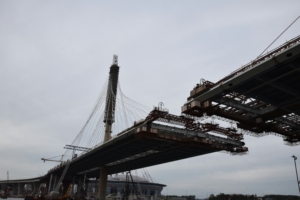 Across the hilly Burera District of northern Rwanda, travel between towns and distant regions is a challenge. For many, including businessman Seth Havugimana, reaching a larger city such as Musanze takes four hours. However, one day, men in bright neon construction vests and the smell of newly laid asphalt began to permeate the countryside.
A new road is slowly taking shape, funded by the China Road and Bridge Corporation and Rwanda’s NPD Ltd. This new road will connect once-distant towns and provide economic opportunities to countless individuals. Havugimana recounts how, after the construction of the Base-Butaro-Kidaho road, “business can move and people can go from here to another place easily,” transforming lives in the district.
The Belt and Road Initiative
The Belt and Road Initiative (BRI), a Chinese program aimed at international cooperation and development, funds projects like these globally. Chinese President Xi Jinping announced the BRI in October 2013 and as of December 2023, the program works with around 146-151 countries. Although lacking a clear governance framework, institutions such as the Asian Infrastructure and Investment Bank, the Commercial Bank of China and the Silk Road Fund have contributed to foreign projects through grants and loans.
In addition to the newly constructed road in Rwanda, other recent BRI plans include road and bridge construction in Lesotho’s Qacha’s Nek District and a 2.2-kilometer coastal road in Tanzania near Zanzibar.
How These Projects Can Reduce Poverty
The creation of infrastructure, such as roads, bridges and energy facilities, plays an undeniably important role in fighting poverty worldwide. According to a 2025 report by the World Bank Group, prevailing evidence points to infrastructural development being a “main driver of poverty reduction” and leading directly to an “impact of growth.” The creation of transportation infrastructure, for example, has decreased poverty in Ethiopia and increased earning opportunities for isolated households in Cameroon.
Back to the construction of the Base-Butaro-Kidaho road in Rwanda, the new ease of transportation allows individuals to more easily access schools, hospitals and markets than ever before. In turn, more people in the Burera District have better access to health care and higher levels of education, displaying how the BRI reduces poverty through its projects. Although the answer is not always straightforward, infrastructure spending usually leads to a “positive multiplier” on a country’s GDP.
However, in some cases, there is no benefit due to factors such as delays or a lack of maintenance.
Does the Belt and Road Initiative Reduce Poverty?
While research on the overall effectiveness of the BRI in combating poverty is limited, many sources point to a positive impact. According to the World Bank Group, the BRI covers about one-third of the world’s impoverished population. To this end, there is already an unbelievable amount of scope that the BRI has identified and invested billions of dollars in.
Critics of the program argue that, contrary to the rapid capital accumulation typically associated with new infrastructure, China’s contributions do not lead to improved industries or increased exports. However, a World Bank Group report estimates that 76 million people could escape poverty by 2030 due to the BRI’s efforts. While it may be true that China has seen a rise in exports and some participating countries have experienced losses in their local economies, the BRI’s overall impact on poverty reduction appears positive.
Final Thoughts
Research indicates that expanded international trade and capital growth significantly promote economic growth. Through its many projects and strengthened economic ties with BRI countries, China is contributing to economic growth and, in turn, poverty reduction for innumerable individuals. Like the ancient Silk Road, which facilitated the flow of goods across Afro-Eurasia, the BRI is opening new markets for global trade today.
Although the program is relatively new, its impacts are already being felt and its continued implementation is expected to significantly transform poverty outcomes in the coming years.
– Benjamin Anderson
Benjamin is based in Madrid, Spain and focuses on Business and Politics for The Borgen Project.
Photo: Unsplash
