Belize Fund for a Sustainable Future
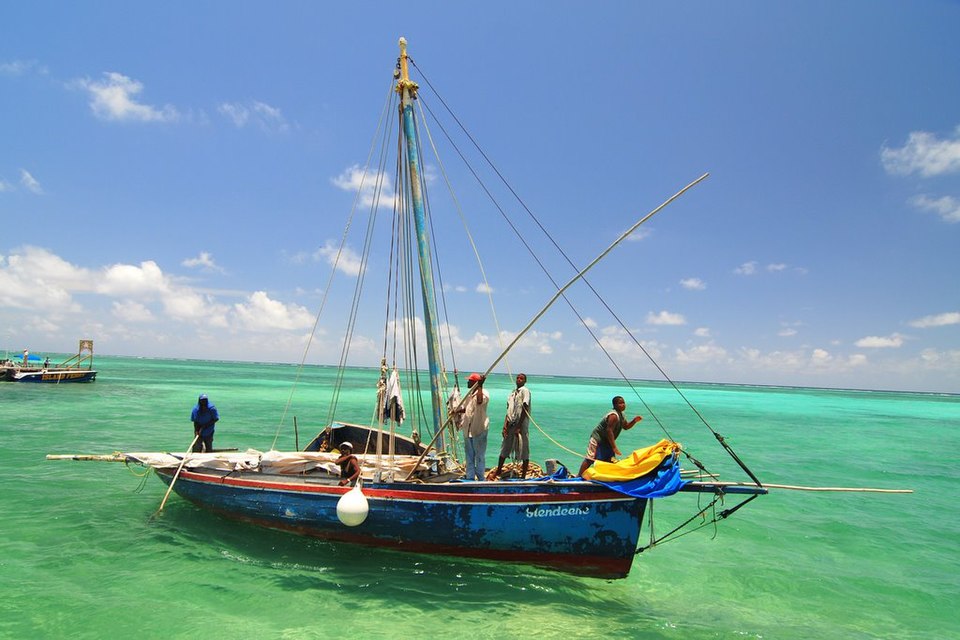 In the coastal community of Chunox, members of the local fishermen’s association are now planning the construction of a new multipurpose building, a hub for training, meetings and budding small businesses. Their project is one of the first “Community Grants” awarded by the Belize Fund for a Sustainable Future (BFSF), designed to build the capacity of grassroots organizations to manage money and create sustainable local livelihoods. This restorative endowment in a fishing village’s economic future is a tangible measure of the Blue Bond’s success, showcasing one of the developing world’s most innovative financial mechanisms.
Belize’s 2021 “Blue Bond” is a landmark debt-for-nature swap that may finally spell freedom from foreign debt entrapment and the revival of a degenerated sovereign economy.
The Problem & The Financial Innovation
For years, Belize’s economy struggled with unsustainable public debt, which reached 127% of GDP in 2020. In an agonizing retelling of a story unfolding in countless nations across the developing world, the cost of servicing this debt drained resources from critical needs, including the stability of Belize’s vital coastal communities. As a result, virtually every major district was plundered deeper into destitution, with an average 10% increase in poverty rates from 2009 to 2018 and increases as high as 22% in the coastal district of Toledo, where poverty rates reached 82%.
The breakthrough came in a deal which The Nature Conservancy (TNC) brokered. It bought back Belize’s old, expensive debt and replaced it with a new, cheaper “Blue Loan.” The terms of the agreement stipulated that Belize was legally obligated to redirect a portion of its debt savings—an estimated BZ$360 million over 20 years—into a dedicated conservation fund. This money went into the newly created, independently managed Belize Fund for a Sustainable Future (BFSF). In effect, the deal not only alleviated a noteworthy portion of Belize’s debt obligation but also contained an internal mechanism that operates to develop Belize’s economic self-sufficiency and by extension, its means of independently repaying its remaining debts, ensuring the Blue Bond’s success.
Belize Fund for a Sustainable Future: The Impact
The BFSF, established as the vessel for this investment stream, is a private conservation trust fund which a board with a non-governmental majority governs. Its mission is to mobilize investment for the responsible development of Belize’s coastal resources. In its first three years, the BFSF has committed BZ$25.8 million for projects, disbursing BZ$7.2 million directly to non-government partners and BZ$8.1 million to government programs. The Fund’s strategy focuses on thematic pillars like Sustainable Fisheries and Blue Business Innovation, making it clear that the Blue Bond’s success is contingent upon poverty alleviation of coastal communities.
From Finance to Livelihoods
The true measure of the Blue Bond’s success is in the projects it enables, which build economic capacity within communities dependent on functioning marine ecosystems
A principle imperative of the agreement is revitalizing the coastal foundation of the “blue economy’s”. Through its Community Grants program, the BFSF provides direct funding to local fisher groups like The Chunox Fishermen Association, which received a grant to construct a community building and train members in entrepreneurship to launch micro-businesses, according to the 2024 report. Similarly, the Shark Fishers Association received funds to train junior fishers in sustainable practices and international compliance.
Beyond fishing, grants also help with seed diversification and sow complexity into the coastal economy. One project trained tour guides in marine ecology to build a skilled workforce for sustainable tourism, while another explores creating a sustainable seaweed farming industry, according to the 2024 report.
For broader impact, the BFSF makes strategic allocations to government agencies. The largest is a BZ$3.04 million grant to the Belize Fisheries Department to strengthen fisheries governance and enforce policies for ecological conservation, according to the 2024 report.
This funding also directly supports national initiatives like the Oceans Economy and Trade Strategies (OETS) project, which aims to improve fishers’ livelihoods by promoting sustainable harvests and adding value to seafood. By resourcing the government’s own poverty-reduction strategies, the Blue Bond mechanism amplifies its reach to raise incomes for thousands.
The Bigger Picture
The Belize Blue Bond’s legacy is unfolding on multiple fronts. The deal has already helped Belize expand its marine biodiversity protection zones to 25% of its ocean space, contributing to a cautiously hopeful improvement in the health of the Mesoamerican Reef.
Financially, analysts hail the deal’s “credible climate conservation commitments” as an important evolution in green finance, creating a binding link between debt relief and on-the-ground investment. Indeed, this robust structure has already served as a blueprint for similar swaps in Barbados, Ecuador, and Gabon
Belize’s model demonstrates that solving a national debt crisis goes hand in hand with investing in local economic livelihoods. By legally mandating that debt savings flow into a community-focused trust fund, it turns a macroeconomic problem into a microeconomic solution. The Blue Bond is now saving the ocean itself while funding a sustainable future for the people who live beside it. For other nations navigating the concatenating perils of a public debt crisis and disaster vulnerability, Belize offers a powerful precedent: with innovative structuring, the tools of global finance can help build resilience from the bottom up, proving that economic stability and poverty reduction can stem from the same source.
– Georgio Moussa
Georgio is based in London, UK and focuses on Good News and Politics for The Borgen Project.
Photo: Wikimedia Commons
