Waste-to-Fuel Microfactories in Lagos
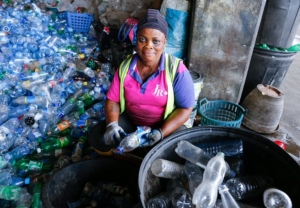 Lagos faces two interconnected challenges that disproportionately affect low-income communities: mounting waste accumulation and unreliable access to affordable energy. The city generates 13,000 metric tons of waste every day, including plastics, organics and other refuse, and waste management systems struggle to keep up with rapid urban growth. This inconsistency contributes to environmental degradation and heightened health risks in densely populated neighborhoods. Waste-to-fuel microfactories in Lagos offer a community-level approach to this dual challenge by proposing systems that convert solid waste into usable fuels and energy products. By turning discarded materials into resources, these systems expand clean energy access while creating income opportunities and reducing landfill pressure.
Lagos’s shift toward circular waste strategies seeks to move beyond disposal toward resource recovery, allowing communities to benefit economically from materials previously considered waste. Waste-to-fuel microfactories in Lagos could function as decentralized hubs where plastic waste, agricultural scraps and organics become fuels like briquettes, biogas or process heat for local use.
Local Waste Processing Reduces Environmental Burden
Lagos is advancing circular waste economy and energy recovery partnerships that aim to harness the inherent value of solid waste rather than burden landfills. For example, the state is actively working to replace its linear waste model with one focusing on energy recovery and material reuse, reflecting a broader strategy to transform waste into resources.
The Lagos State Government has signed a partnership with Harvest Waste Consortium, a Dutch company that will build a waste-to-energy plant at the Epe landfill using advanced technology to convert municipal, commercial and industrial waste into clean energy. This facility could generate usable electrical power and provide a model for how waste-to-fuel microfactories might function at smaller, community scales.
Additionally, collaboration between Lagos State and Lafarge Africa aims to convert non-recyclable combustible waste into alternative fuel for industrial use, an initiative that demonstrates how waste can become fuel for energy and production rather than end up in dumpsites.
Public Health, Jobs and Economic Opportunities
Beyond large waste-to-energy facilities, Lagos is positioning waste as a source of economic value. A recent forum on waste management emphasized that waste should be seen as “wealth we recover,” highlighting the potential for new jobs in waste collection, sorting, processing and energy conversion. This shift toward circular strategies supports livelihoods and provides training and employment for local residents, demonstrating how waste-to-fuel microfactories could create income streams at community level.
Traditional solid fuels like charcoal and kerosene contribute to indoor air pollution and respiratory illness, particularly among low-income households. Waste-derived energy products, including briquettes or biogas, burn more cleanly and could reduce harmful emissions when adopted at household or community levels. Research on waste-to-energy technologies in Nigeria notes the potential public health gains when municipal solid waste is converted to usable energy rather than left to decompose in open dumps.
Circular Economy Models Strengthen Urban Resilience
Lagos officials have acknowledged that waste is an untapped economic opportunity, and strategic circular economy plans aim to build systems that treat waste as a resource. Experts say that sustainable energy recovery strategies — including pyrolysis and other waste conversion technologies, offer a pathway toward economic growth, reduced environmental impact and enhanced energy security in Nigeria’s largest city.
Waste-to-fuel microfactories in Lagos, though still emerging, fit within a larger movement toward circular waste management, energy recovery and community-focused economic opportunity. By transforming waste into usable fuels and energy products, these systems could reduce landfill burdens, create jobs and expand access to cleaner energy for underserved communities. With continued investment, supportive policy frameworks and community engagement, Lagos’s approach to waste-to-fuel technologies can play a meaningful role in addressing both environmental and socioeconomic challenges in the city.
– Shahzeb Khan
Shahzeb is based in San Ramon, CA, USA and focuses on Business and Good News for The Borgen Project.
Photo: Flickr
