Using Social Impact Bonds For Clean Water Projects in East Africa
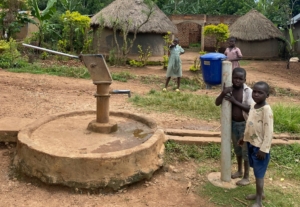 In parts of East Africa, a new borehole or piped connection can change daily life fast. A reliable tap can mean fewer sick days, more time for school and more hours for work. Yet many water utilities and local governments still struggle to raise the upfront capital needed to build and maintain systems at scale.
That gap has opened the door for a financing idea that is starting to reshape development funding conversations: social impact bonds for clean water. Social impact bonds for clean water, also called pay-for-success financing, flip the usual spending order. Instead of paying for inputs first and hoping for results later, the model links repayment to independently verified outcomes.
How Pay-For-Success Financing Works
Results-based financing ties funding to pre-agreed results and pays once those results are achieved and verified. In a typical social impact bond structure, three roles show up again and again:
- Investors provide the upfront money that lets a project start now, not years later.
- Service providers build or deliver solutions, such as new household connections, filtration systems or network upgrades.
- Outcome payers repay investors only if the project hits agreed targets, using independent verification to reduce disputes.
Because payments depend on measured performance, social impact bonds for clean water appeal to funders who want stronger accountability and to investors who are willing to take on risk when the metrics are clear.
What Counts as “Results” in Water Projects
Clean water outcomes are not just about “infrastructure built.” In pay-for-success models, the focus is on what that infrastructure delivers in real life. This includes households gaining first-time access to clean or reliable water. It also covers whether water points remain functional and reliable over time.
Other outcomes include reduced exposure to unsafe water, which lowers the risk of waterborne diseases. Time savings also matter when water is closer, more dependable or available on-site. The “time saved” piece is especially relevant in rural and peri-urban areas where water collection still shapes daily schedules. UNICEF has estimated that women and girls collectively spend 200 million hours every day collecting water.
Health impacts are part of the same equation. WHO tracks the disease burden tied to unsafe water, sanitation and hygiene and links unsafe WASH to major preventable illnesses and deaths.
A Real Example in East Africa: Uganda’s “Social Success Note”
One of the clearest East African examples of outcome-tied water financing comes from Uganda, where a pay-for-success instrument called a “Social Success Note” was designed to expand clean water access in schools. Climate Policy Initiative describes the model as a five-year loan that began in 2018, starting with a $500,000 working-capital loan from UBS Optimus Foundation to support Impact Water’s installation of purification systems. In that structure, schools repay the loan using savings from reduced fuel costs that would otherwise be used to boil water.
At the same time, outcome payments and incentives adjust based on performance targets. The same case study reports that the program installed systems in 600 schools. It also set a goal to determine whether Impact Water could provide an additional 1.4 million children with access to clean, safe water over the term.
This is where social impact bonds for clean water start to look like a “new market” tool. The project’s monitoring and evaluation role is built into the financing and payments are tied to outcomes that a third party can track.
Why Investors Pay Attention
Traditional water infrastructure finance often depends on public budgets, donor grants or concessional loans. Pay-for-success models add a different lever: performance risk can shift toward investors, while public or philanthropic outcome payers commit to pay for verified results. For investors, the pitch is not only social.
It is also about clarity. When metrics are defined and verification is credible, capital can move into areas often described as “hard to finance.” There is also a broader economic case for scaling water access.
The World Bank notes that access to clean water and sanitation improves public health and frees up time, enabling more people, especially women, to participate in the workforce. The same World Bank overview states that every $1 spent on water supply and sanitation in Africa generates a $7 return.
Clean Water Infrastructure Still Matters: Tanzania’s Market Signal
Not every private-capital tool in East Africa is a pay-for-success contract. However, the momentum around “investable” water projects is real. In Tanzania, the U.N. Capital Development Fund (UNCDF) highlighted a subnational green bond issued for Tanga’s water utility, with proceeds aimed at expanding and strengthening water services. UNCDF reports that the bond’s plan included extending the distribution network by 60 kilometers.
It also involved connecting 6,000 new households and rehabilitating 110 kilometers of old piping to reduce water losses. UNCDF also states that around 26,000 people are expected to gain access to clean water for the first time through the upgrades. That is not a social impact bond in itself.
However, it shows how water projects can be structured to attract investors, which is the same direction that social impact bonds for clean water aim to take.
Why This Model Is Becoming a “New Market” Tool
Results-based financing has become a major approach to development spending, in part because it promises greater accountability and clearer incentives. The World Bank describes results-based financing as linking funding to verified results and notes that the approach has grown to a market of more than $25 billion in development spending. For East Africa’s clean water needs, social impact bonds for clean water sit at the intersection of that trend and a basic reality: water systems need long-term money for construction, maintenance and reliability, not just short-term projects.
If outcome-based contracts can consistently show that households gain reliable access, children in schools can drink safely and communities save time while reducing disease risk, pay-for-success financing begins to look less like an experiment. Instead, it becomes an investable pathway for scaling water solutions.
– Aiden Moriarty
Aiden is based in Rowley, MA, USA and focuses on Business and Politics for The Borgen Project.
Photo: Unsplash
