Malnutrition and Poverty in India
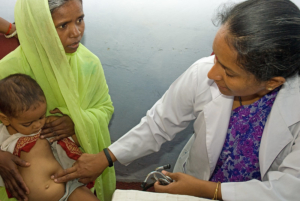 In Delhi’s crowded Seemapuri settlement, 32-year-old Savitri Devi begins each morning wondering whether she can feed her children more than one meal that day. “Sometimes we just eat rice and salt,” she says quietly. “I tell my daughter to drink water so she won’t feel hungry.”
For families like Savitri’s, malnutrition is not just a health crisis; it’s a poverty trap that limits learning, weakens productivity and keeps entire communities from escaping hardship. The issue of malnutrition and poverty in India remains deeply intertwined, particularly in urban slums where wages are low and food prices rise faster than incomes.
The Cycle of Poverty and Malnutrition in India
The world’s highest concentration of undernourished people is found in India. The Global Hunger Index 2025 states that 32.9% of children under 5 in India are stunted and 12% of the country’s population is undernourished. This crisis is made worse in Delhi’s urban slums by overcrowding, contaminated water and inconsistent incomes.
Daily-wage families frequently rely on the least expensive, high-calorie foods that are deficient in vital nutrients to make ends meet. Poor nutrition harms both economic and educational outcomes. Malnourished children are more likely to experience cognitive delays, poorer academic performance and lower adult incomes.
According to the Food and Agriculture Organization, chronic malnutrition can result in decreased productivity and lower a nation’s GDP by 2-4%.
A Mother’s Struggle in Delhi
The connection between food and survival is painfully obvious to Savitri, who sells plastic bottles gathered from trash heaps. “I can’t work if I get sick. We don’t eat if I’m not working,” she says. Similar experiences are shared by many Seemapuri women who juggle taking care of malnourished children while working long hours in informal jobs.
According to the National Family Health Survey (NFHS-5), 24% of children under 5 in South Delhi are underweight and 27% are stunted. These figures underscore the severity of nutritional inequality, even in India’s affluent capital.
Government Efforts: ICDS and PM Garib Kalyan Anna Yojana
Through Anganwadi centers, the Integrated Child Development Services (ICDS) program remains India’s premier nutrition initiative, providing food, health examinations and preschool education. The Delhi government operates more than 10,000 centers serving children and pregnant women. Savitri states, “My daughter receives one hot meal per day from the Anganwadi, but occasionally they close early or run out of supplies.”
Delivery irregularities and infrastructure gaps continue to impact the access of the most impoverished families. More than 800 million people received 5 kg of food grains per person per month through the PM Garib Kalyan Anna Yojana (PMGKAY) during the COVID-19 pandemic. This lifeline helped Savitri’s family and many other urban low-income families avoid hunger.
She remembers: “We got rice from the ration shop during those months.” “At least there was something, even though it wasn’t enough.” Under the National Food Security Act, the government continues to distribute free food grains, even though PMGKAY ended in 2023.
Why Nutrition Is an Economic Investment
Malnutrition and poverty in India deplete public resources as well as human potential. According to the World Bank, increased productivity and lower health care costs can result in up to $16 in economic returns for every $1 invested in nutrition. Women who eat healthily are more likely to keep steady jobs and take better care of their families.
Better nutrition could lower health care costs, increase work participation and improve school attendance in Delhi’s informal settlements. The nutritional status of the city’s most vulnerable communities can be improved by enhancing maternal education, ensuring consistent food supply chains and strengthening local Anganwadi infrastructure. India’s poverty and malnutrition problems demonstrate that investing in nutrition is a prudent financial decision, rather than a charitable endeavor.
Breaking the Cycle
More than just distributing food is needed to end malnutrition; social inclusion and accountability are also necessary. “Perhaps they would understand if officials came and asked us what we really need,” Savitri says. Community participation through local monitoring committees and women’s groups can help ensure that programs respond to lived realities rather than relying solely on statistics.
The cycle of poverty can start to end when individuals, governments and nongovernmental organizations collaborate to make nutrition a key component of development. Appropriate nutrition is not charity for the millions of people living on the margins in Delhi; rather, it is a basis for growth, opportunity and dignity.
– Chhahat Kaur Gandhi
Chhahat is based in New Delhi, India and focuses on Business and New Markets for The Borgen Project.
Photo: Flickr
