All About Higher Education in Chile
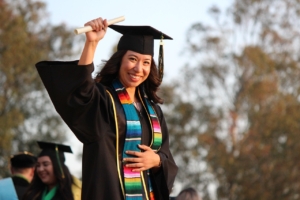 Attaining higher education in Chile is associated with a myriad of positive outcomes, including employment opportunities, higher compensation and even improved health. Individuals with higher education have a lower risk of unemployment and generally earn higher wages. The unemployment rate for those with higher education is 5.5% compared to 8.1% for those with upper secondary education.
Workers with higher education earn 112% more than the average income in Chile. Education level is a widely recognized social determinant of health and the completion of higher education is associated with more positive health outcomes.
Inequality in Higher Educational Attainment
In Chile, disparities in tertiary education attainment are closely linked to social factors, including parental education, socioeconomic status and gender. Children of parents who have completed tertiary education are more likely to pursue higher education than those whose parents have not. In 2023, 68% of adults aged 25-34 with at least one parent who had completed tertiary education also attained tertiary education, compared to 25% for adults whose parents did not complete tertiary education.
However, the rate of young adults pursuing tertiary education whose parents did not complete tertiary education increased by 7% between 2012 and 2023. Higher family socioeconomic status is also associated with an increased likelihood of completing higher education. In 2006, 12.7% of adults aged 25-34 from the lowest income decile enrolled in tertiary education, compared to 53.3% of the top income decile.
Furthermore, women enrolled in tertiary education are less likely to pursue a degree in STEM and other high-earning fields of study. In 2023, only 19.8% of students pursuing degrees in a STEM field were female.
A Largely Privatized System
Chile’s higher education system consists of three main types: universities, professional institutes (Instituto Profesional – IP) and technical training centers (Centro de Formación Técnica – CFT). While overall enrollment in tertiary education has continued to rise, the majority of growth since 2010 has occurred in private institutions. As a result, Chile has one of the most privatized higher education systems in the world.
In 2023, fewer than 20% of students enrolled in a tertiary education institution attended a public institution. Hence, Chilean families pay more than 75% of costs for higher education, compared to 40% for U.S. families and 5% in Scandinavian countries.
Gratuidad
A notable wave of protests demanding more affordable, high-quality higher education in Chile occurred in 2011. In 2016, the Chilean congress passed a tuition-free policy known as gratuidad to provide free university education for families in the bottom 60% of the income range. A lack of studies on the impact and effectiveness of gratuidad makes its success in creating a more equitable tertiary education system unclear.
The reform’s implementation has initiated slow progress toward expanding access to financial aid for low-income students, as approximately 90% of students who qualify have already received financial aid before the reform. However, the idea of free education likely incentivizes people from low-income families to pursue higher education, as 15% of students in the gratuidad program claim they would not have pursued higher education otherwise.
Conclusion
Attaining a higher education in Chile reduces the likelihood of living in poverty. Creating a more equitable and inclusive education system is key to reducing the 6.5% of Chile’s population living below the national poverty line. Expanding access to tertiary education for individuals from lower socioeconomic backgrounds and those whose parents lack tertiary education, as well as increasing the representation of women in STEM fields, are key focal points for reducing poverty.
– Sarah Merrill
Sarah is based in Matthews, NC, USA and focuses on Good News and Global Health for The Borgen Project.
Photo: Pixabay
