UN Meets to Discuss the Doha Program of Action
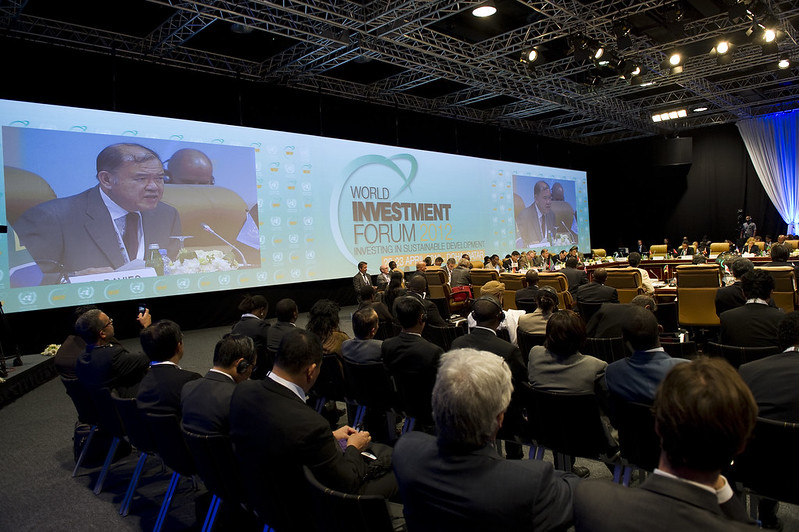 A United Nations (U.N.) meeting on the Doha Program of Action has wrapped up. The Qatar Fund for Development (QFFD) and the United Nations Office of the High Representative for Least Developed Countries, Landlocked Developing Countries and Small Island Developing Countries (UN-OHRLLS) organized the meeting. It spanned three days. Ministers, senior officials, development partners and representatives of international organizations convened to discuss how to help least developed countries (LDCs) graduate successfully.
For a country to graduate, it must reach a threshold of income, education and resilience. The Doha Program of Action aims to help 15 more countries reach graduation by 2031. LDCs face disproportionate risks from climate disruptions, conflict, financial distress and trade disturbances. Rabab Fatima, a U.N. high representative for LDCs, said that participants at the meeting exhibited “a strong collective will to ensure that graduation becomes a gateway to resilience, opportunity and sustainable prosperity.”
Doha Program of Action
The Doha Program of Action functions as a framework and coordination mechanism that sets shared goals and standards for least developed countries and guides how governments, international organizations and development partners provide support. It outlines six main focus areas. The first focuses on supporting people in LDCs by reducing poverty and expanding access to basic services. For the second focus area, it emphasizes science, technology and innovation as tools to address multiple vulnerabilities and advance the Sustainable Development Goals (SDGs). Next is promoting productive transformation as a driver of economic growth. The fourth encourages international trade among LDCs and strengthens regional cooperation. The fifth addresses climate change, environmental degradation and post-pandemic recovery while strengthening resilience to future shocks through risk-informed sustainable development. Finally, the sixth mobilizes international solidarity, renewed global partnerships and innovative mechanisms to support sustainable graduation.
Transition Strategies
Countries that are at or near graduation, such as Bangladesh, the Lao People’s Democratic Republic and Nepal, provided advice on transitioning. The three countries explained that LDCs should prioritize a national transition plan. Representatives emphasized that this step is crucial to reaching the graduation threshold. A coherent strategy will reduce reliance on targeted aid. Representatives said these policies should be pragmatic and centered on supporting the future of LDCs. The conference also examined how developing countries can increase output by implementing digital technology and environmentally sustainable industries. To support developing economies, participants identified expanding trade opportunities as a priority.
The Role of iGRAD
The iGRAD facility plays a key role in implementing the plan. The facility will help guide LDCs through the transition period. Qatar has pledged $10 million to support it. Fahad Hamad Al-Sulaiti, director general of the Qatar Fund for Development, said the conference illustrated the necessity of supplying LDCs with “the tools, resources and partnerships with confidence.”
International Support
In previous years, countries and international partners have provided assistance to LDCs, demonstrating commitment to the Doha Program of Action. Qatar committed to donating $60 million. Qatar allocated $10 million to support implementation of the plan and $50 million to build foundational strength in LDCs. Germany pledged 200 million euros to finance LDCs. Canada pledged $15 million to provide vitamin supplements for 15 LDCs, as well as ecosystem support efforts in Burkina Faso. The United Nations lists 44 countries as LDCs.
Looking Ahead
Overall, the gathering shows the U.N.’s effort to assist least developed countries in their journey toward graduation. Guidance from countries that have graduated, innovative financial mechanisms and a history of international support signal a promising future for the Doha Program of Action. If countries follow through on these commitments, more LDCs will have the means to graduate. Continued coordination and support will play a key role in the plan’s success.
– Sasha Banaei
Sasha is based in San Diego, CA, USA and focuses on Politics for The Borgen Project.
Photo: Flickr
