Emata’s AI-Driven Digital Loans in Uganda
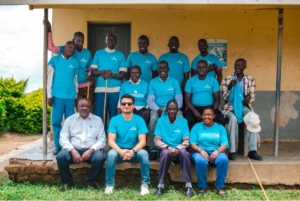 Emata is a fintech founded in 2020 that provides AI-driven digital loans in Uganda for smallholder farmers. This innovative, quick and reliable approach is meant to empower the smaller farmers in the East African region.
Uganda: A Rich Land
The COVID-19 pandemic wreaked havoc on financial stability worldwide. Its impact on low-income countries was devastating for vulnerable communities. According to the Uganda National Household Survey (UNHS), the level of poverty in Uganda had decreased in 2016 and 2017. In 2020, it increased again to 21.9%.
The land, however, is far from poor. The Food and Agriculture Organization of the United Nations (FAO) reports that as much as 80% of Uganda’s 241,038 square kilometers of territory is fertile land that could be used for agriculture. Nonetheless, only 35% of its land is being cultivated. Dairy, maize and beef, among others, are of crucial value for food security and export revenue.
Filling in the Gaps
According to the Consultative Group to Assist the Poor (CGAP), only 10% of smallholder farmers own an account with a bank or financial institution. Because they are seen as risky investments, financial help remains out of reach for most small farmers. AgEcon Search research reports that in the region, 80% of the rural population depends on agriculture; however, the lack of access to credit limits the farmers’ ability to grow.
In an interview with The Borgen Project, Emata founders Bram van den Bosch and Dario Raffaele explain how they have found a way to contribute to smallholder farmers through AI-driven digital loans in Uganda: “They’re hardworking but trapped: they know which inputs would increase yields, but can’t afford them upfront. That’s the gap we fix—and we fix it for the good farmers, the ones already showing the discipline, consistency and grit needed to professionalize.”
Emata’s mission is to fill these gaps through a thoroughly different approach from local financial institutions:
- Using data instead of land titles
- Automation reduces operating costs
- Speed over painstaking banking processes
- Lower interest rates
- Digitizing the value chain to promote traceability
Loans normally range from $25 to $1,200. Beneficiaries can be smallholders, middle farmers or professionals. In addition, Emata can help borrowers meet other unmet or unexpected financial needs, such as school fees, health emergencies, small business support and cash flow between seasons.
The Farmer’s Journey
In practice, a farmer begins by delivering their product to their local agri cooperative. The company registers the transaction in Emata’s system. From their data, Emata uses AI to calculate their risk and capabilities, assigning them an alternative credit score.
This score determines credit limits for the borrower. The agent then assists the farmers in sending a mobile request to Emata, which approves the loan instantly. The money is then sent via mobile or as input-on-credit.
Repayment is made when the borrower sells their harvest to Emata’s local partner. The founders told The Borgen Project about the farmers who come to them: “The vast majority earn low, volatile farm-based income and would be invisible to traditional banks. Emata is often the first formal lender they have ever worked with. Our data shows that 90% earn under $5/day and 60% earn under $2/day. With Emata, farmers on average grow their income by 30%.”
Women’s Representation
Emata’s most common borrowers are smallholders who did not qualify for credit from financial institutions. According to its metrics, 26% are women. “One of the toughest barriers isn’t financial or technological—it’s cultural,” Emata says, “…women are still underrepresented in many value chains simply because they are not recognized as the ‘primary farmer’ in their household or cooperative.”
A study published by FAO confirms that Uganda’s women who are heads of households and live in rural areas are among the most impoverished. While women are involved in up to 68% of the agricultural process, only 7% officially own the land and less than 1% have access to credit.
To Emata, it is important to make a positive change: “These gaps reflect decades of gendered agricultural norms. And this is exactly where we are slowly making a difference: digitizing records, formalizing farmer identity and embedding lending inside organized value chains is already pulling more women into financial visibility and giving them a documented track record for the first time.”
The Right Tool for the Job
AI-driven digital loans in Uganda that are approved and granted instantly have proven to be an efficient method to reach the most vulnerable but determined farmers. The founders admit that without AI, “we wouldn’t be able to build a profitable and sustainable portfolio and we wouldn’t be able to serve tens of thousands of farmers in minutes.”
Notably, LLMs have been accused of showing racial bias due to training data that reflects society’s prejudices. Emata addresses these concerns by excluding demographic data from its scoring process. Its model takes only harvest records into account to determine credit allowances.
At the same time, Emata uses explainable models rather than generative AI. Explainable models allow humans to understand how the system came to a specific conclusion. This makes it possible to track every step of its decision-making process. Human oversight ensures fairness and inclusion.
A Final Look Into the Future
As the need for more efficient and sustainable lending methods continues to affect East Africa, Emata’s plan is to expand to Tanzania, Rwanda and Ethiopia within the next two years, thanks to its cooperation with multinational agri companies. Through these AI-driven digital loans in Uganda, Emata works to advance financial inclusion and progress for low-income farmers, especially women, who were left behind by formal institutions and their unreachable lending requirements.
– Johanna Lorena Arredondo Gonzalez
Johanna is based in Pittsburgh, PA, USA and focuses on Technology and Solutions for The Borgen Project.
Photo: Interviewee
