Setting a Precedent: History of Turkish Humanitarian Aid
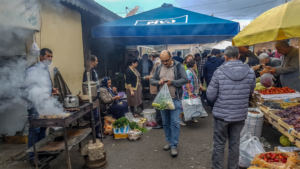 Türkiye is a country primarily located in Western Asia, with a small western part in Southeastern Europe. It is one of several donor countries that were formerly recipients of aid. With increasing economic prosperity and a population of around 85 million, Turkish humanitarian aid is becoming increasingly important on the international stage.
Historical Transformation
In 1947, Türkiye joined the World Bank and only three years later took out its first loan for agricultural infrastructure. Back then, the income per capita was a modest $166. This made the country eligible for funding from the International Development Association (IDA) on attractive terms with low interest rates. For four consecutive years, IDA provided concessional financing, helping the country boost economic growth and achieve stability.
In a rapid turnaround, Türkiye became an IDA donor itself as early as 1973. Turkish people have experienced an impressive journey to prosperity. Nowadays, income per capita is more than $15,000, placing the country in the high-income category. As the country’s economic status progressed, so did the role of international development in its foreign policy.
The country launched its first state aid program in 1985, donating $10 million to help strengthen government institutions in several African countries, including The Gambia, Senegal and Sudan. Four years later, these efforts were centralized with the creation of the Turkish International Cooperation and Development Agency (TIKA). The agency was established in response to the emerging humanitarian needs in Central Asia following the collapse of the Soviet Union and the formation of new independent states.
Since then, Turkish humanitarian aid has rapidly expanded and now reaches a far wider range of regions. As a new donor, Türkiye has been increasingly influential. Between 2006 and 2009, its overseas development assistance (ODA) levels exceeded the global average, reaching $707 million.
In 2010, Turkish humanitarian aid had reached more than 130 countries listed by the OECD as recipients of aid. In the early 2000s, among emerging global donors, Türkiye was second only to South Korea, another excellent example of transformation from recipient to donor.
TIKA
TIKA has worked on 30,000 projects across 170 countries, showcasing Türkiye’s importance on the international humanitarian stage. Its work is multi-sectoral and includes support for accessible and clean energy, agriculture, clean water, education, emergency humanitarian aid and many other areas. At first, the organization focused primarily on countries in the region due to its historical ties with Turkic communities in Central Asia and shared linguistic roots.
These similarities with Kazakhstan, Tajikistan, Uzbekistan, Azerbaijan and Kyrgyzstan made aid efforts easier and helped strengthen international relationships. However, with globalization, TIKA expanded its operations significantly, growing from 12 foreign offices in 2002 to 63 today. Some of the recent projects TIKA has carried out include improving health services in Zambia, renovating health centers in Venezuela and providing solar-powered lamps to Syrian villages.
The projects are also designed to be sustainable, helping recipients achieve financial independence. For instance, TIKA promotes qualified beekeeping in Tunisia to help vulnerable members of society secure a stable income. Besides funding up-to-date equipment, TIKA has also provided training on honey production to ensure efficiency. The focus on the honey business aims to help people take advantage of the potential that the industry holds in Tunisia.
IHH
The IHH Humanitarian Relief Foundation is another Türkiye-based organization with a significant international impact. Since 1992, it has helped people in need regardless of whether they have been victims of war, natural disasters or political repression. Its work in around 123 countries across five continents has resulted in international recognition, as evidenced by multiple honorary memberships in organizations such as the United Nations Economic and Social Council and The Union of NGOs of the Islamic World.
The work IHH does focuses on poverty-stricken countries, including emergency aid, human rights advocacy, humanitarian relief and education campaigns. Its support is transparent and has recently been centered around Palestine. Since October 7, it has delivered more than 37 million hot meals, 200,000 food parcels, 120,000 hygiene kits and clothing to 140,000 people, making a real impact.
A mission carried out by IHH in Kolonda, a small town in Mali, shows the tangible support that international aid provides to people in need. When the Turkish volunteers arrived in town to drill a new water well, residents informed them that their makeshift well was too old and no longer functioning properly. Seriba, one of the villagers, explained: “When the drought arrives, water becomes extremely scarce […] and sometimes it gets so muddy that we can’t use it.”
The newly implemented solution, however, will provide the 800 residents of Kolonda with a new well, making it significantly easier to access clean water.
Conclusion
Overall, the impressive transformation of Turkish humanitarian aid and the country’s status on the international stage is setting a precedent for other emerging donors. The Turkish state and non-state aid organizations are increasingly active in global relief and development efforts. This inspiring example seems to be similar to that of several countries, such as South Korea and Poland, which were once recipients and have recently emerged as donors.
These emphasize the real impact of aid and the importance of global assistance in times of reduced aid activity globally.
– Karol Hejduk
Karol is based in London, UK and focuses on Good News and Politics for The Borgen Project.
Photo: Wikimedia Commons
