Causes and Solutions to Hunger in Kenya
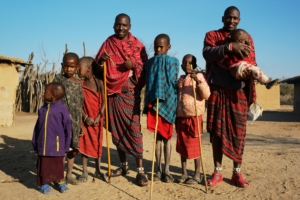 Poverty is on the rise. It is a worldwide problem, but Africa’s hardest hit area is the sub-Saharan region. According to the World Food Program (WFP), about half of those living in extreme poverty live in this region. Kenya is among the nations in that region.
Poverty and Hunger in Kenya
Poverty manifests in many ways, including hunger. Around 30% of Kenya’s population lives in poverty. Households headed by women have a poverty rate of 35.3%. Male-headed households, in comparison, have a poverty rate of 32.6%. According to the Kenya Poverty Report, a third of the children in Kenya are food poor. Poverty rates for youth are higher in rural areas. According to the WFP, 29% of the children in rural Kenya are stunted due to malnutrition.
The causes of poverty in Kenya include natural disasters and economic shocks. Lower-than-average rainfall has affected Kenya’s agricultural and pastoral areas for several years. This drought has affected livestock as well as crop production. On the other end of the pendulum, flooding destroyed whole towns and villages, displacing more than 280,000 people. It killed more than 260 people in 2024. Livestock and other crops were lost.
These climate crises affect adequate food availability, increasing prices and sending more people toward poverty. Another factor affecting Kenya’s ability to feed its people is the conflict in Ukraine. Kenya is dependent on fertilizer imported from Russia. When the conflict began, Russia no longer sent fertilizer to Kenya. COVID-19 also affected Kenya’s economy, as it relies heavily on tourism.
The Kenyan government has committed to addressing the problem through agriculture. It has lifted the ban on open cultivation of genetically modified crops, eased food import restrictions and imported animal feed to reduce hunger in Kenya.
Boosting Kenyan Agriculture and Food Security
The Borgen Project interviewed Sterling Brown, a senior at Southern University majoring in Agricultural Business. He traveled to Kenya to learn about different agricultural methods and share knowledge with local farmers. According to Brown, agriculture is the largest sector of the Kenyan economy. He highlights the following solutions to address food insecurity and hunger in Kenya:
- Integration farming. Using all available resources, including livestock and organic matter. This includes using manure as fertilizer (instead of importing fertilizer).
- Microorganism growth. The inclusion of microorganisms in the soil enhances soil quality. Better soil leads to better crops.
- Intercropping. This farming practice involves growing multiple crops in the same field. Different crops have different strengths, which helps improve soil quality.
- Agroforestry. This is a sustainable agricultural practice and land management system. Farmers plant trees and then grow crops between and beside them. It creates a farming ecosystem. The trees counteract the effects of flooding, soil erosion and biodiversity loss.
In addition to the farming practices highlighted above, he and his team encouraged local farmers in Chuka and East Chuka, Kenya, to export their native crops, including avocados. This could boost their economy and provide another path out of poverty. They also held workshops and provided rootstocks, demonstrating how to plant and maintain them.
Brown is part of a program called the 1890 Center of Excellence, a collaboration between Southern University, the University of Arkansas-Pine Bluff (UAPB), Chuka University and Kenyatta University in Kenya. According to Brown, this collaboration, combined with the Kenyan government’s interventions, new sustainability mandates and significant agricultural investment, is a step in the right direction.
– Danielle Milano
Danielle is based in Pineville, LA, USA and focuses on Good News and Global Health for The Borgen Project.
Photo: Pexels
