Expanding Health Care Access for Myanmar Refugees
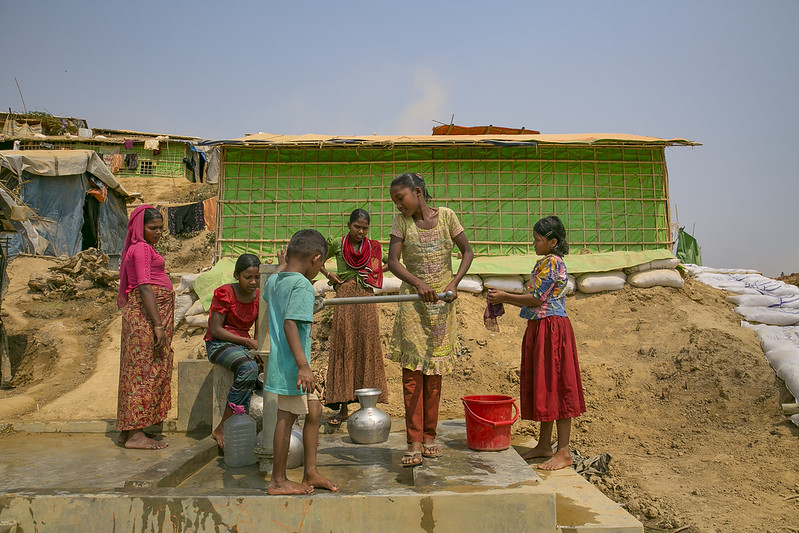 Refugees from Myanmar face staggering levels of trauma, stress, and mental and physical health challenges, made worse by living conditions in refugee camps across Southeast Asia. The toll on health is especially severe, but telehealth offers hope by expanding health care access for Myanmar refugees.
The Crisis in Myanmar
Since 2017, nearly 1.5 million people have fled Myanmar amid the country’s humanitarian crisis, and 3.5 million are considered internally displaced. Most of these refugees are Rohingya Muslims from Rakhine State, who have lived without citizenship and faced persecution since 1962. Following the military coup in 2021, the military forced additional ethnic groups — including the Shan, Karen, and Kachin, among others —to flee their homes. Around 70% of the refugees are women and children. Many now live in overcrowded camps in neighboring Bangladesh.
The twin forces of violence and displacement have stripped Myanmar’s refugees of their homes, livelihoods, social support networks and health care, leaving them deeply impoverished. UNDP reported that as of 2024, nearly half the population in Myanmar lived below the poverty line, while 76% lived at or close to subsistence level, numbers which surged just in the three years since 2021.
As is common in conflict situations, access to health care is a luxury. This is due not only to cost and shortages of trained medical personnel, but also to the challenge of delivering proper care in temporary and scattered refugee camps.
In Cox’s Bazar refugee camp in Bangladesh, where most refugees have relocated, communicable and waterborne diseases run rampant, and mental health is severely impaired.
Telehealth as a Lifeline
Telehealth expands health care access for Myanmar refugees by connecting them with the care they need. The digital delivery of services simplifies the diagnosis, treatment, monitoring and follow-up for many physical and mental health conditions. Patients also do not have to travel as far — Cox’s Bazar is more than an hour by foot from the nearest health center, and clinics within the camp are understaffed and not always open 24 hours a day.
Within a few months of the military coup, the Ministry of Health of the National Unity Government launched its “Telekyanmar” initiative to provide telehealth services to people in Myanmar. The program’s telehealth clinics grew rapidly; by month three, almost all of Myanmar’s 330 townships had a telehealth clinic. As of May 2024, more than 71,000 people have registered with Telekyanmar, with over 178,000 consultations provided by both general practitioners and specialists.
The World Health Initiative, a U.S.-based nonprofit, also runs a program within Cox’s Bazar and at HOPE Field Hospital inside the camp since 2018. It provides a “specialized medical care that would otherwise not be available,” drawing on the expertise of volunteer physicians across a range of clinical disciplines, as well as virtual care devices donated by Teladoc Health.
One such device, the wheeled and collapsible Teladoc Health Lite, includes a touchscreen interface, audio system, port panel and a storage compartment for peripherals like stethoscopes and privacy headsets — all enabling clear and seamless video and communication between doctor and patient. Even with subpar Internet connectivity, doctors from anywhere in the world can beam in from their own remote devices, according to the World Telehealth Initiative.
The Global Case for Telehealth
The benefits of telehealth cannot be overstated. Essential health care services remain out of reach for half of the world’s population because they are “inaccessible, unavailable, unaffordable or of poor quality.” Every year, millions die from conditions that would be entirely preventable in high-income countries.
The poor suffer the most from this lack of access to critical health care, and telehealth offers a way to address this by enhancing and simplifying access to specialty providers.
Telehealth brings numerous other benefits:
- Lower costs for patients and health systems
- Increased flexibility in scheduling and delivery
- Elimination of geographic distance
- Facilitation of mental health support
- Promotion of health equity
- Decreased transmission of infectious diseases
The Future
Despite the advantages, challenges remain. Telehealth requires reliable Internet access, appropriate devices, and training for patients on device use and for providers on how to deliver care effectively. Language differences and cultural barriers can also complicate care delivery, and privacy worries are a reality for displaced persons who have not had the best relationship with authorities.
However, these obstacles are not insurmountable, given the ongoing, demonstrable improvements in the technology. Telehealth represents a promising approach with significant potential to expand health care access, improve health outcomes and help chart a pathway out of poverty for one of the world’s most vulnerable populations.
– Amanda Sablan
Amanda is based in Kensington, MD, USA and focuses on Technology and Global Health for The Borgen Project.
Photo: Flickr
