Expanding Somalia’s Vaccination Program
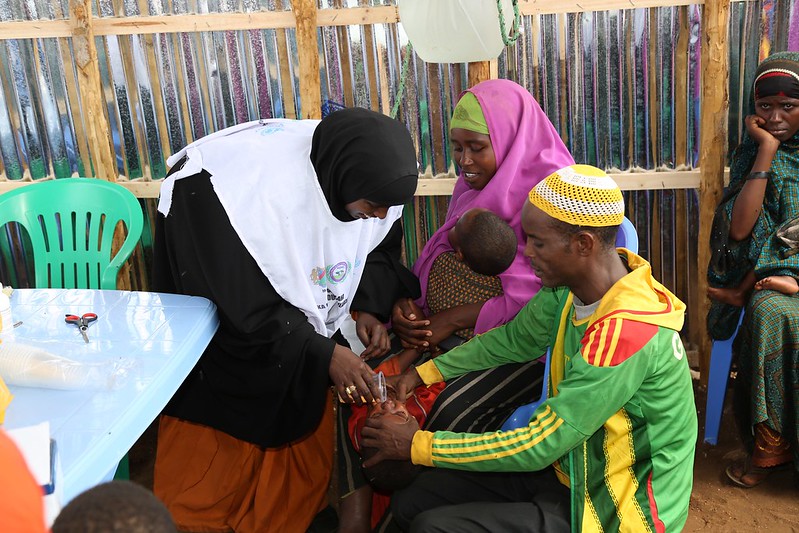 Lack of health care accessibility has left Somalia with extremely low vaccination rates and high levels of child mortality. To combat this, the Somali administration has implemented national programs to amplify the routine vaccination of children against polio and measles. Recently, two vaccines are now also a part of the initiative’s coverage; rotavirus and the pneumococcal conjugate vaccine (PCV).
On the Ground
In Somalia, there is about a 10% chance that a baby of one month will not make it to the age of 5. This is largely due to low immunization rates, which are especially important for children, as they are more vulnerable to disease. High child mortality rates correlate with slow economic development, poor education and lack of government healthcare funding.
Historically, Somalia has had some of the lowest vaccination rates across the world; however, since its election in 2022, the Somali government is proving its commitment to lowering under-5 mortality rates by investing in nationwide immunization programs.
Somalia’s Vaccination Program
In 2022, the Somali government joined the U.N. and WHO to create the “Big Catch-Up” vaccination plan targeting polio and measles. The campaign achieved the vaccination of 3.2 million children under five against polio, and another 3.5 million against measles. More recently, in 2024, the Somali government implemented the Immunization and Polio Eradication Task Force (SIPE), a multi-agency initiative between the government, WHO and U.N. It also launched the Child Survival Forum to prioritize “zero dose” children, monitor progress and design action plans. An example of its success includes the nation-wide implementation of an electronic immunization registry to efficiently trace individuals’ vaccination records.
In April 2025, SIPE introduced two new vaccines to its agenda; the rotavirus vaccine and PCV. Rotavirus is deadly due to diarrheal effects which can severely dehydrate the child and cause malnutrition. Meanwhile, pneumococcal bacteria can lead to illnesses including pneumonia and meningitis, which are infections of the lungs and infections of the spinal cord and brain tissue, respectively. Together, vomiting, pneumonia and measles account for 43% of child deaths in Somalia.
Looking to the Future
Projections from 2023 suggest that by 2030, Somalia’s child mortality rate could see a decrease from 104 out of 1,000 newborns dying to approximately 91 out of 1,000. Additionally, Lives Saved Tool (LiST) projections show that accounting for both rotavirus and pneumococcal related illnesses, an estimated 28,974 lives could be saved and 1,309,326 cases could be averted between 2024 and 2030.
Government prioritization and financial investment in a robust national immunization initiative are already seeing success. Expansion since implementation, and partnerships with institutions including WHO, U.N. and Vaccine Alliance, prove Somalia’s commitment to a strong, lasting vaccination program for children. Ultimately, slow progress is better than no progress, and the impact of efforts to combat major social obstacles is best observed on a broader scale of time.
– Emily Galán
Emily is based in Edmonton, Canada and focuses on Global Health and Politics for The Borgen Project.
Photo: Flickr
