Poverty and Diversifying Production in India
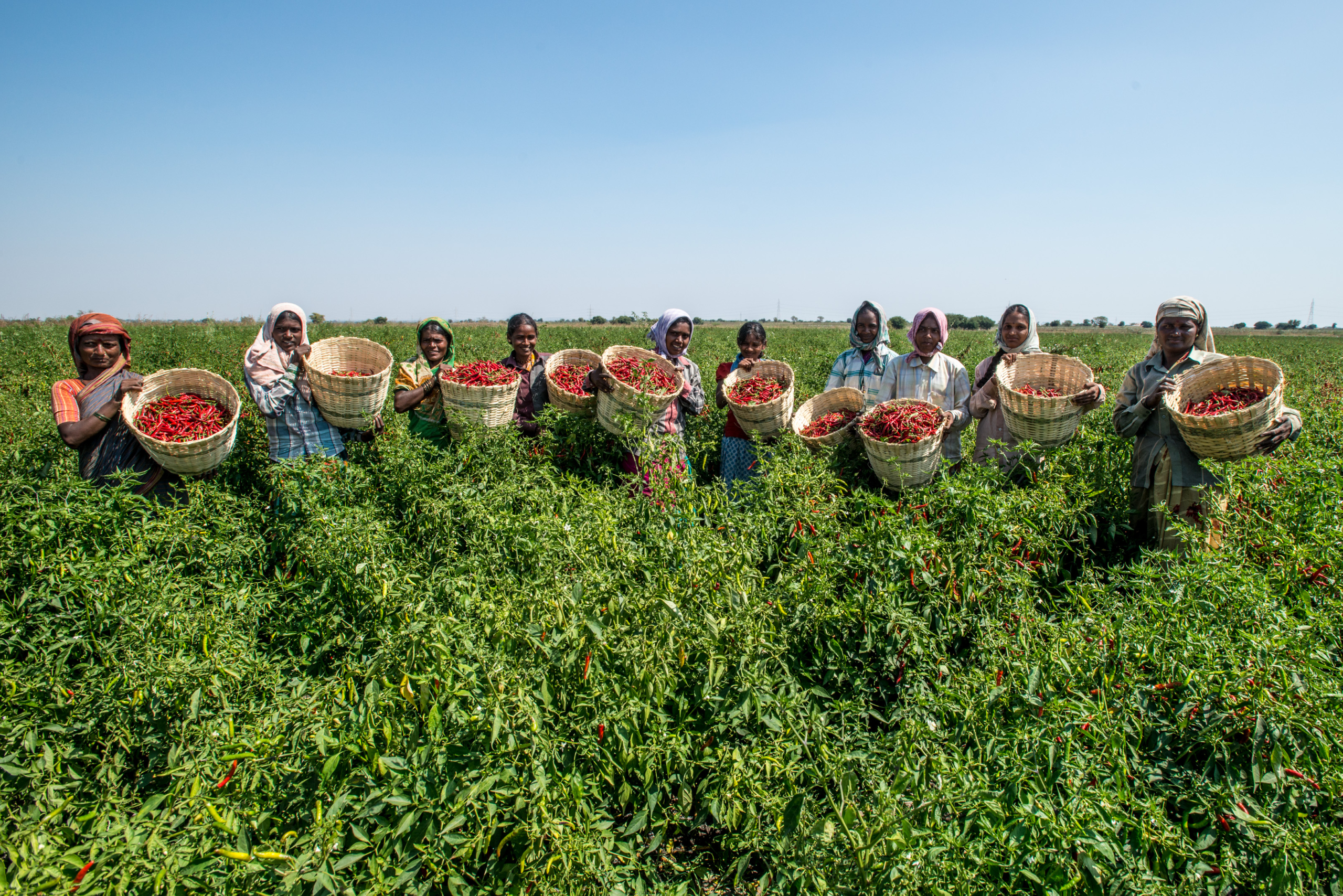 Diversification of production implies a shift from crop farming to nonfarming activities. Diversifying production in India has employed millions of small and marginal farmers. It has helped them navigate sustainable ways of making a livelihood. Nonfarming activities, including but not limited to animal husbandry, fisheries and horticulture farming, have been sustaining farmers in India throughout the years by serving as alternative sources of income.
Animal Husbandry
Animal Husbandry, also known as livestock farming, refers to the rearing of animals for meat, hide, milk and other products. India has one of the largest livestock populations in the world, serving as an alternative source of sustenance for a large number of farmers throughout the country. More than 20 million workers in India are engaged in livestock farming and 87.7% of livestock is owned by “farmers of marginal, small and semi-medium operational holdings.”
Under the Government of India, the Department of Animal Husbandry and Dairying incentivizes subsidies to farmers to set up their own livestock farms and gain more income. Since a large portion of India’s farming population is multidimensionally poor, it is advantageous for them to indulge in livestock farming because livestock can be reared by extremely low-income families as well.
The only risks involved in animal husbandry are the chances of livestock diseases. Though many diseases affecting livestock are curable, the focus of treatment is mostly on larger livestock and smaller livestock is often ignored. However, steps are being taken by the government and other charitable organizations to immunize livestock by employing women to nurse them back to good health without farmers having to incur any extra costs.
Fisheries
Fishing is a large-scale activity in India and employs more than 28 million people nationwide, “especially [those from] marginalized and vulnerable communities.” As of 2024, under the administration of the Department of Fisheries, more than 26,000 fishing facilities, 6,498 replacement boats, 586 cold storages and 720 Fish Farmers Producers Organizations (FFPOs), among others, have been approved by the Pradhan Mantri Matsya Sampada Yojana (PMMSY).
The PMMSY was established in 2020 to regulate the functioning of the fisheries sector in India. The Department of Fisheries has also approved more than 59,000 fisher families to get “livelihood and nutritional support during fishing ban/lean period.” Alongside this, the Department also supports farmers during circumstances of loss of fish stock due to natural calamities.
Horticulture
Approximately 43% of India’s population is employed in the agricultural sector. Horticulture is a type of agriculture that encompasses the farming of fruits, vegetables and ornamental plants. The horticulture sector in India “provides alternate rural employment opportunities, diversification in farm activities and enhanced income to farmers.” Transitioning from agriculture to horticulture is, however, a difficult task for farmers because horticulture happens to be labor-intensive and therefore entails more capital requirements.
Government schemes like the Operations Greens help farmers overcome this burden by assuring Minimum Support Price (MSP) for their produce, which would thereby “help to a great extent in shielding farmers from external variables.” The focus is placed on increasing farmers’ incomes by guiding the gains of their horticultural produce.
Additional Remarks
In 2018-19, the Government of India extended credit facilities to fish farmers and animal husbandry farmers, enabling them to meet their working capital requirements. Such efforts by the government and other organizations have helped uplift farmers from a bare minimum to a more comfortable flow of income. Diversifying production in India through the three sectors mentioned above significantly contributes to the growth of the Indian economy. It simultaneously serves as an additional means of rural employment.
– Adya Umesh
Adya is based in Bangalore, Karnataka, India and focuses on Good News and Global Health for The Borgen Project.
Photo: Wikimedia Commons
