Supporting Cambodian Farmers With Drone Technology
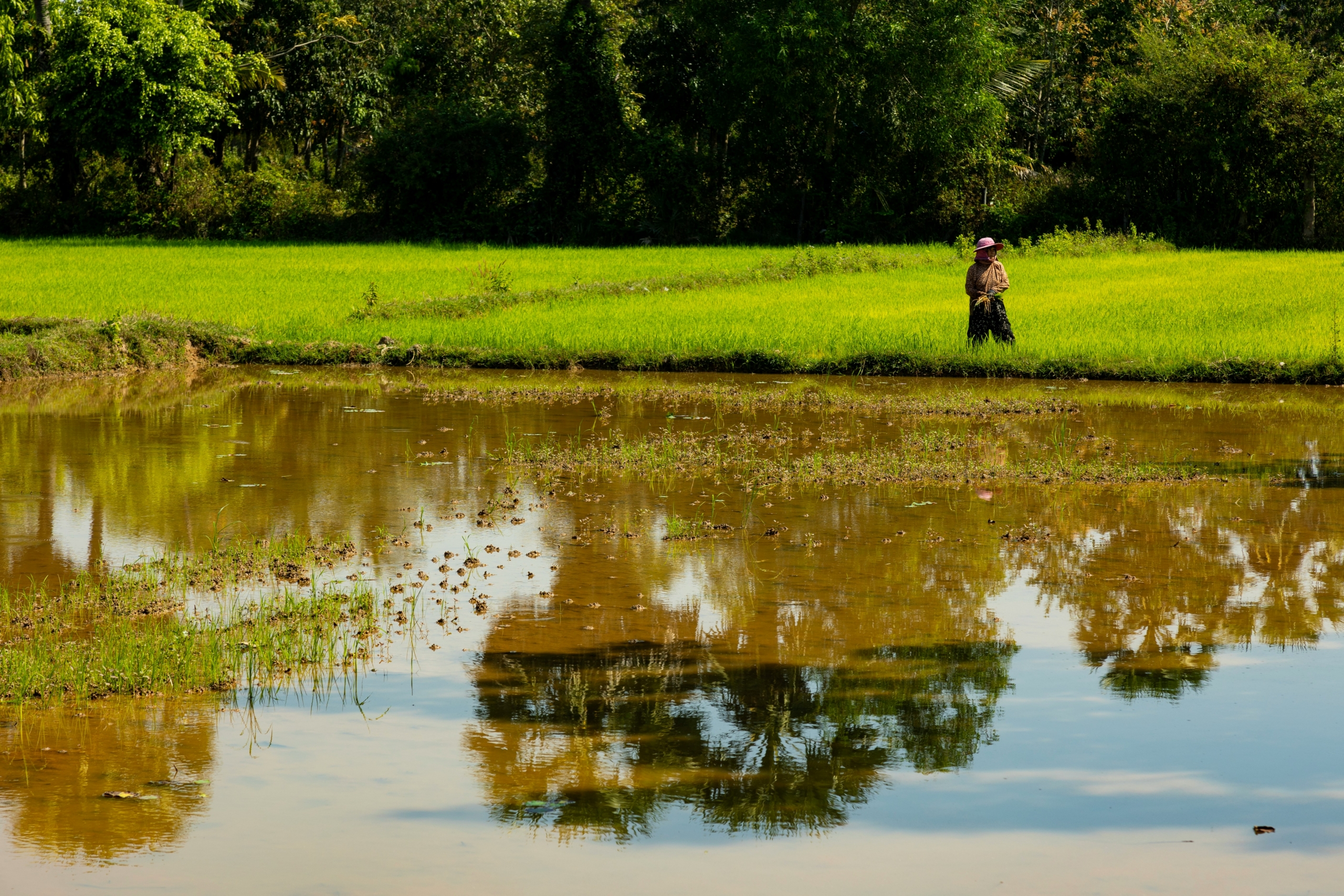 Cambodia, famed for its ancient temples, rich history and vibrant culture, offers unique natural beauty and historical importance. Located in Southeast Asia, its landscape spans the Mekong Delta, which has been an important source of vitality for its surrounding countries for centuries. The lower Mekong basin runs through the East of Cambodia, providing a livelihood for Cambodian farmers. More than 90% of total production in Cambodia along the Mekong basin is attributed to paddy production.
Furthermore, more than 50% of total agricultural production in Cambodia is attributed to rice production. Due to its proportion of national production, the development of this sector can bring great returns to Cambodians. The agricultural sector needs reforming to support the crop’s commercialization in the region, a process encouraged due to its export value. If the government’s aim to make the country a “rice basket” (a major rice exporter) is to be fulfilled, using new technology can aid this endeavor.
The Economic Situation
Cambodia is both one of the most impoverished countries and one of the fastest-growing economies in Southeast Asia. The genocide from 1975 to 1979, which saw the killing of almost one-quarter of the population, has undoubtedly left its mark on the people of Cambodia and the economic health of the country. About 16.6% of Cambodians are multidimensionally poor, meaning they suffer from multiple aspects of poverty beyond monetary means.
One legacy of the genocide is seen in the poverty rate of areas near where the atrocities took place. Villages nearer mass grave sites suffered an increased 4% poverty rate in a study done in 2023. Agriculture is a huge proportion of Cambodia’s production. It is an area where the country can focus on improving to compete further in the export market. Its status as a less-developed nation in the region makes it an attractive prospect for investors, especially investment in the agricultural industry. This makes Cambodia’s agriculture industry a prime sector for increasing overall wealth and reducing poverty.
Cambodia’s Paddy Problems
Paddy production increased by 2.9 million tons from 2012 to 2020, sitting at 10.9 million tons in 2020. Cambodia’s capacity for paddy production is clear. However, it is vulnerable to climatic conditions and the export market is strict about the type of rice seed it accepts.
Varying climatic conditions threaten to lower rice yields as both flooding and shortages of water can reduce the total rice yield for the year depending on the type of rice seed. To make Cambodia’s paddy production sustainable, investing in new technologies can aid the commercialization of the crop and its climate-resistant capabilities.
Drones Can Be a Solution
Drone usage is an example of a technological innovation that can help the government and individual farmers achieve greater efficiency in paddy production. Particular drones can be used for aerial fertilization, saving time during a typically time-consuming part of the production and increasing the safety of administering pesticides and insecticides.
The Cambodian Agriculture and Research Institute (CARDI) has partnered with Queensland University to develop the technology and to deliver training to Cambodian farmers and government officials on how these drones can be used. A woman in Battambang province has been providing spraying services to farmers in her province for two years already, proving to be a profitable and reliable business venture. She is among a group of women who have invested in drone technology to provide this service, which is guaranteed to use less water than traditional methods.
Another type of drone has been used in the Siem Reap province to sow rice. The community in Siem Reap has successfully used drones to sow the Neang Ang rice seed, covering 70 hectares of rice per day. This is a huge proportion of ground covered, improving the livelihood of Cambodian farmers and providing food security to the community.
Looking Ahead
The successful case of drone usage and the current partnership between CARDI and Queensland University spell optimism for the development of Cambodia’s rice seed systems. The greater efficiency provided by drones can be used to produce greater yields of climate-resistant rice suited to the export market.
This innovative technology can simultaneously improve farmers’ livelihoods and make Cambodia’s export market more sustainable in the face of adverse climatic conditions. Innovation and investment in agricultural technology can be the key to achieving sustainable growth and subsequently reducing poverty in Cambodia.
– Lauren Alkhalil
Lauren is based in London, UK and focuses on Technology and Solutions for The Borgen Project.
Photo: Unsplash
