Improving the Rights of Marshallese Women
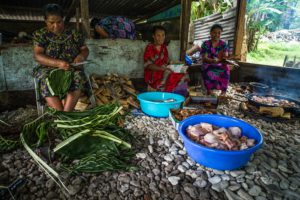 According to the Constitution (1979, Rev 1995) of the Republic of the Marshall Islands (RMI), “Every person has the right to freedom of thought, conscience and belief; to freedom of speech and of the press; to the free exercise of religion; to freedom of peaceful assembly and association; and to petition the government for a redress of grievances.”
However, according to multiple organizations canvassing for gender equality, an unacceptable degree of gender “inequality” exists for women of the RMI. The tradition of matrilineal heritage, unratified discrimination rights of Marshallese women and extensive evidence of “gender inequality” combined challenge the validity of women’s rights. Moreover, 54% of women who have encountered domestic violence refrained from reporting the incidents due to either perceiving the abuse as justified or fearing reprisal.
Furthermore, they cited reasons such as a lack of awareness about their rights, the financial implications of legal proceedings and/or the distance to access courts. Therefore, the Committee on the Elimination of Discrimination Against Women (CEDAW) has stated that the Constitution of the RMI needs to be amended by including a definition of discrimination and addressing discrimination against women.
Matrilineal Tradition
The RMI is one of a few countries that maintains traditional matrilineal property systems. In this system, the property is passed down by the maternal, not the paternal line. Despite potentially having substantial land rights in the RMI, many women reside away from their ancestral land, which results in a loss of respect, influence and security, as they often relocate to their spouse’s land, away from their support networks.
Furthermore, by limiting women’s involvement in public office and electoral politics while prioritizing the education and advancement of men, commercial enterprises have marginalized women, relegating them to powerless and insignificant roles within their society.
Women’s Rights Organizations
According to the Pacific Community of the Organization of Human Rights and Social Development (HRSD), Marshallese women are entitled to equality, dignity, education and trust. The challenges of gender inequality faced by women and girls, as well as the rights of Marshallese women, remain focal points for numerous women’s organizations. Some of these organizations include:
- United Nations (U.N.) Women in the Pacific: This group has been working with governments and nongovernmental organizations in the region to fight against gender inequality, “empower women and build more inclusive societies.”
- Pacific Women Lead (PWL): This organization aims to ensure “Pacific women and girls are safe and equitably share in resources, opportunities and decision-making with men and boys.” Within five months of its inception, the group coordinated funding for seven projects in the Pacific.
- Women United Together Marshall Islands (WUTMI): This is a prominent women’s organization dedicated to advocating for the rights and well-being of Marshallese women. WUTMI has played a crucial role in raising awareness about issues such as domestic violence and the prevention of substance abuse by women and girls.
Final Remark
The rights and dignity of Marshallese women are deeply rooted in both tradition and written laws. Supported by many women’s organizations, the rights of Marshallese women remain subjects of ongoing explanation, analysis and debate.
– Pamela A. Fenton
Photo: Flickr
